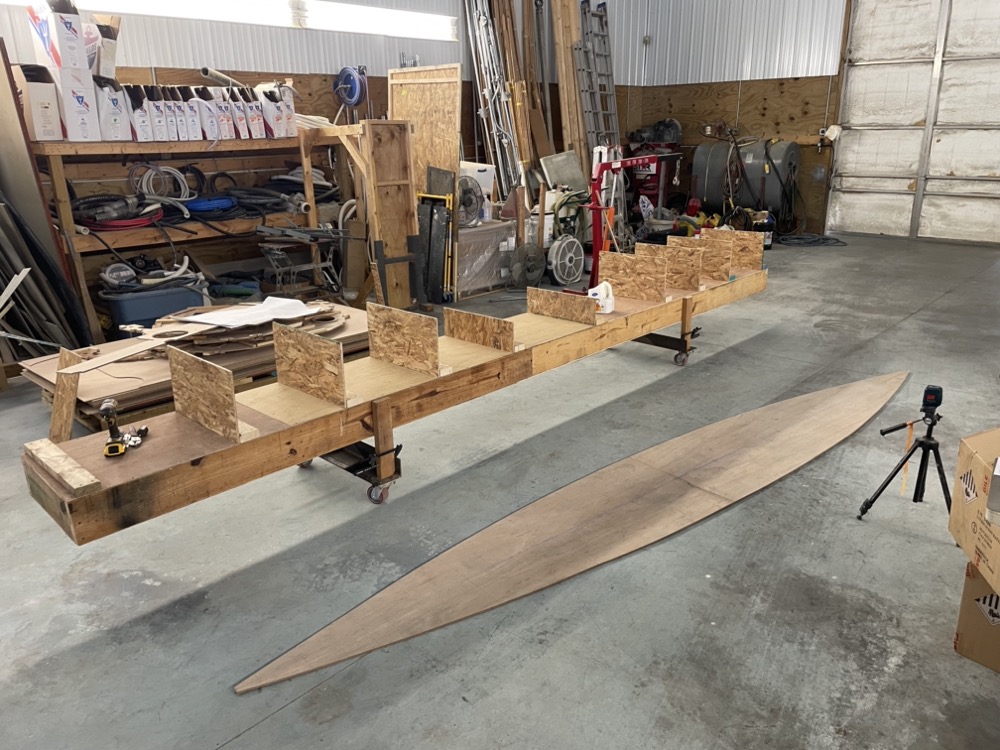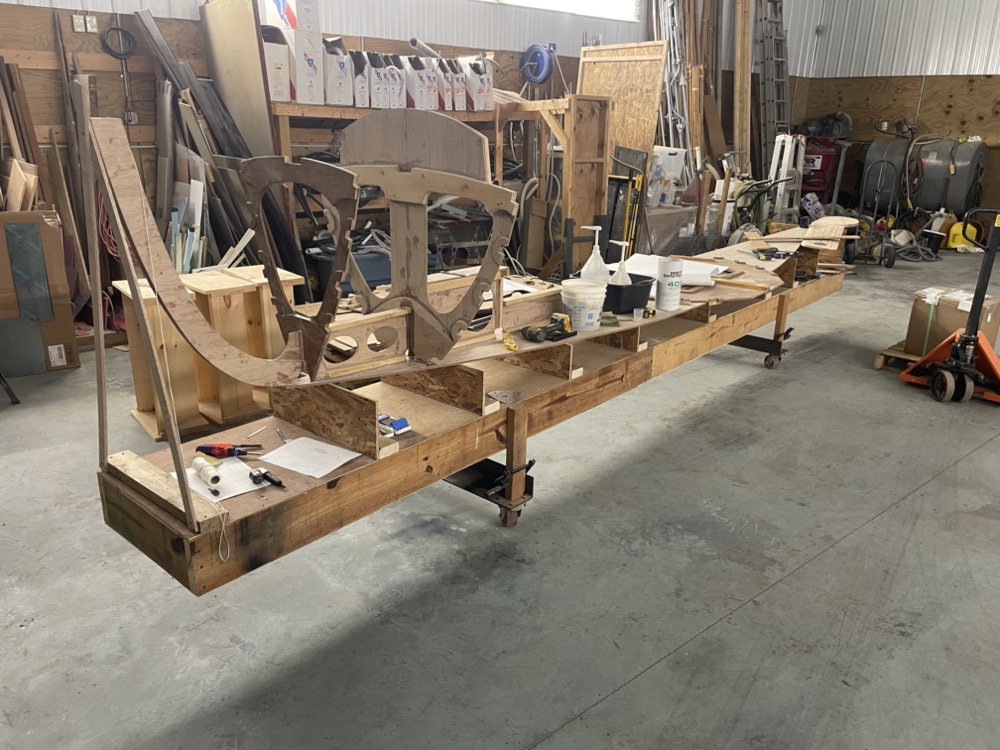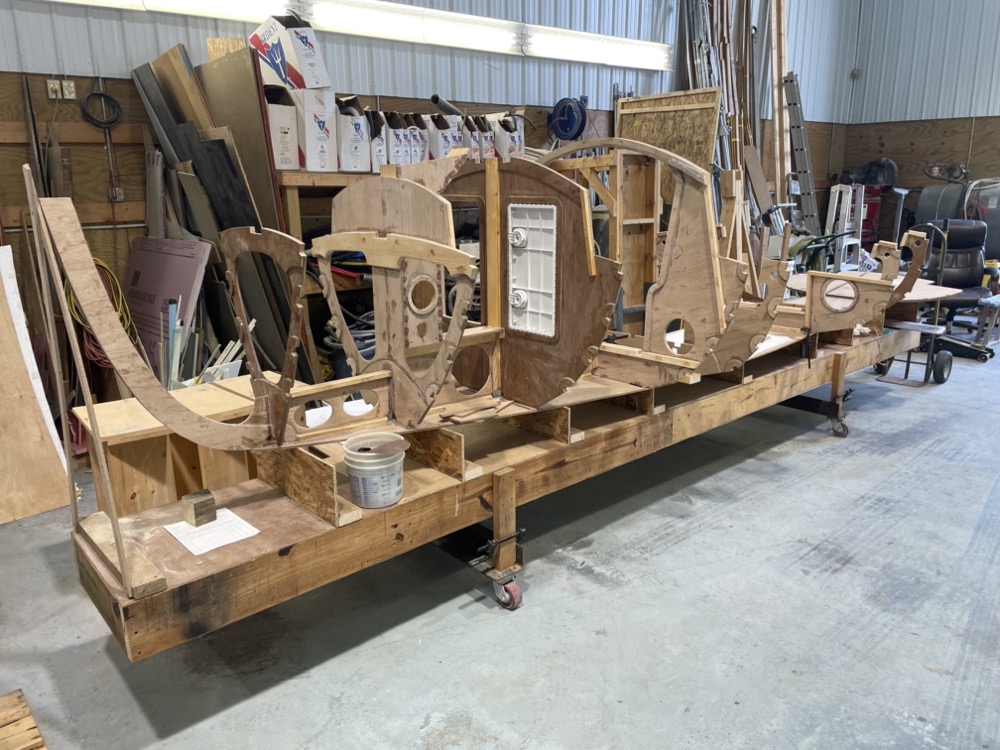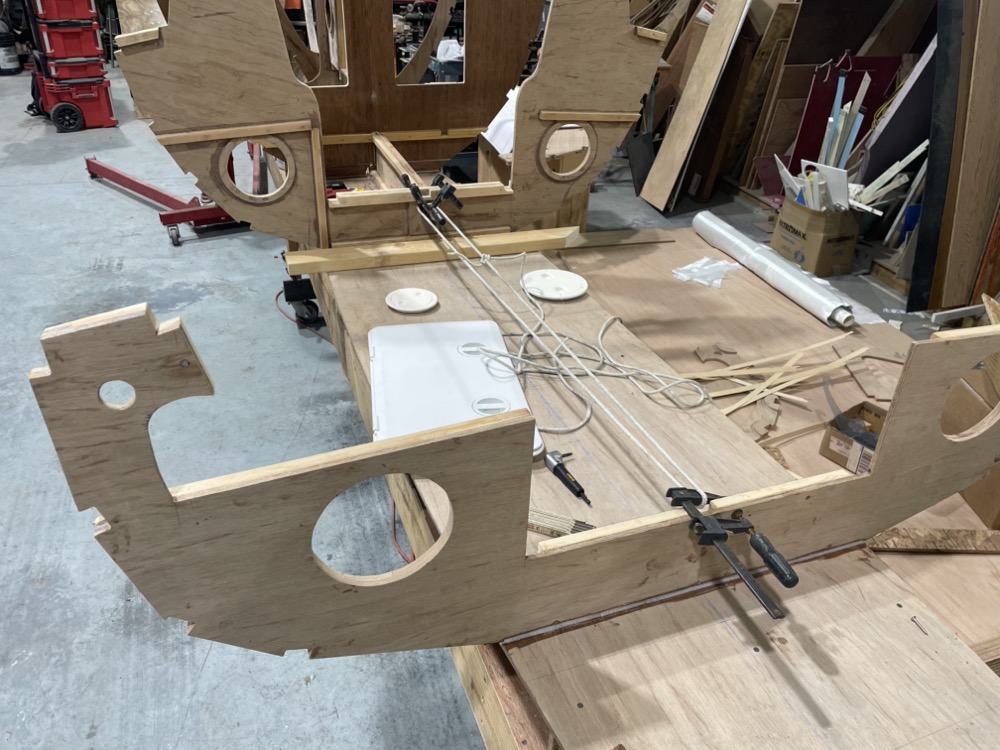
Long Steps Build #14

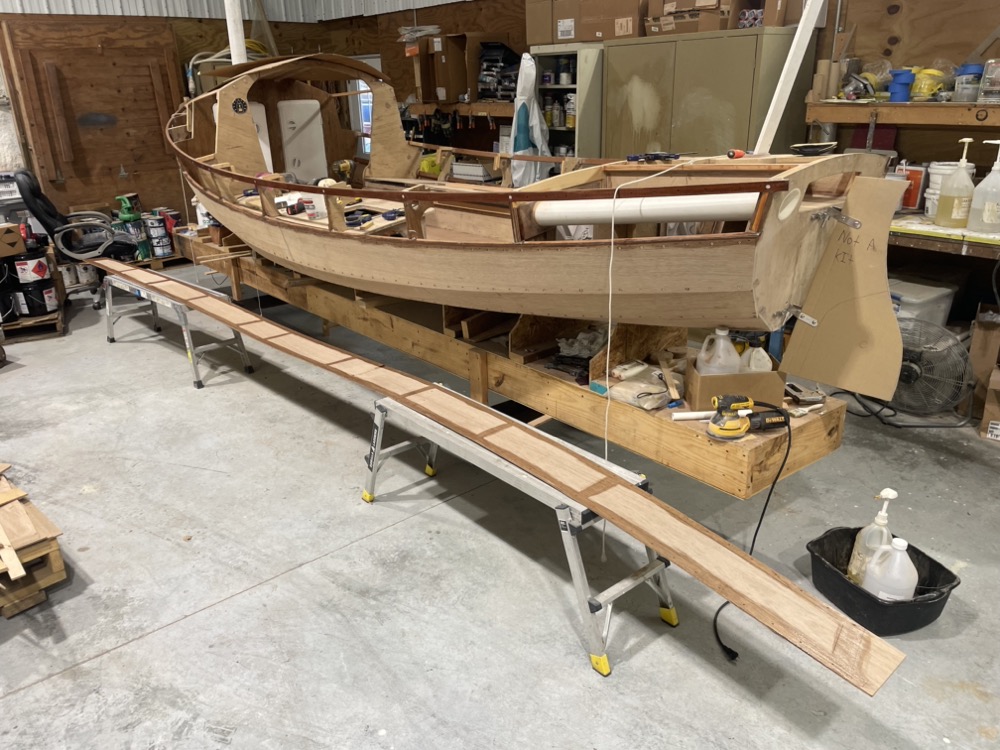
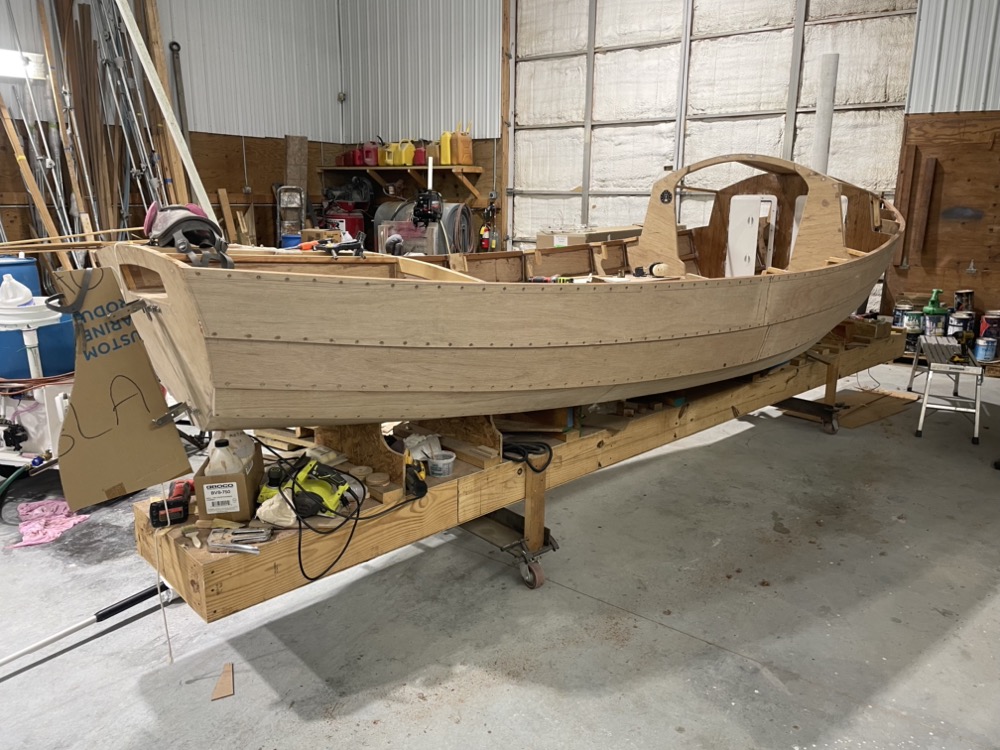
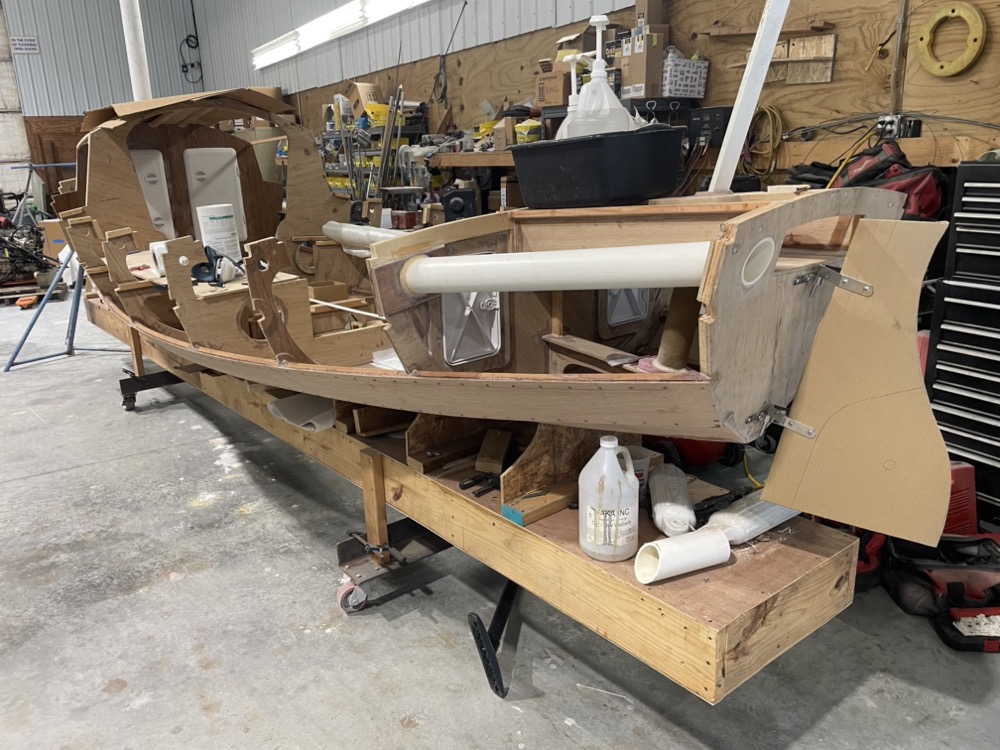
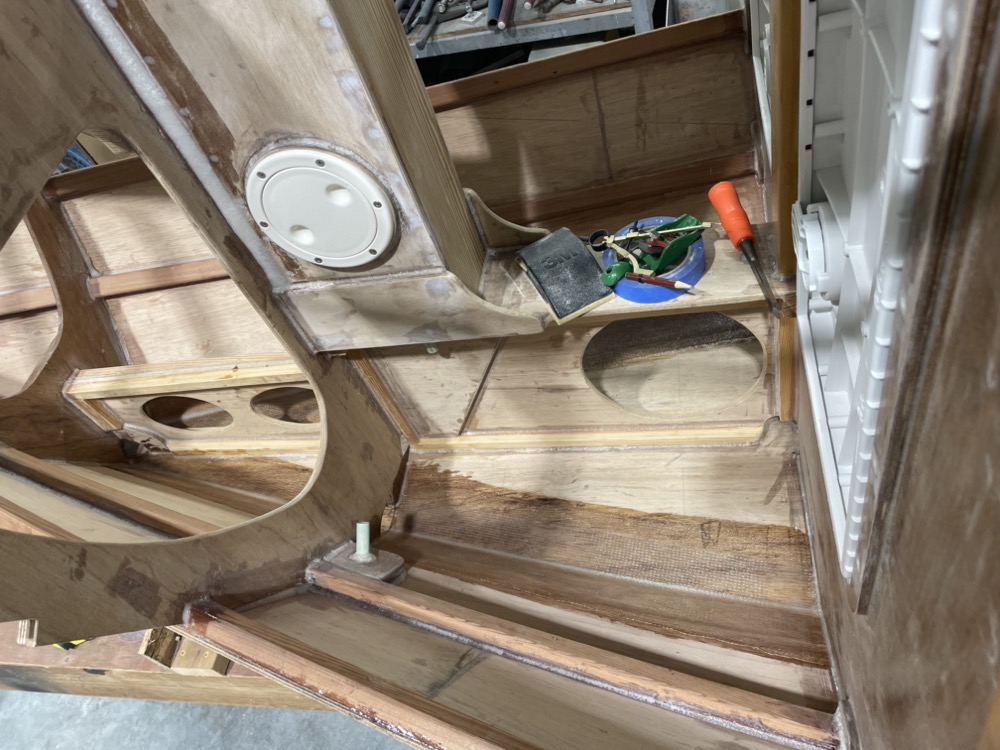
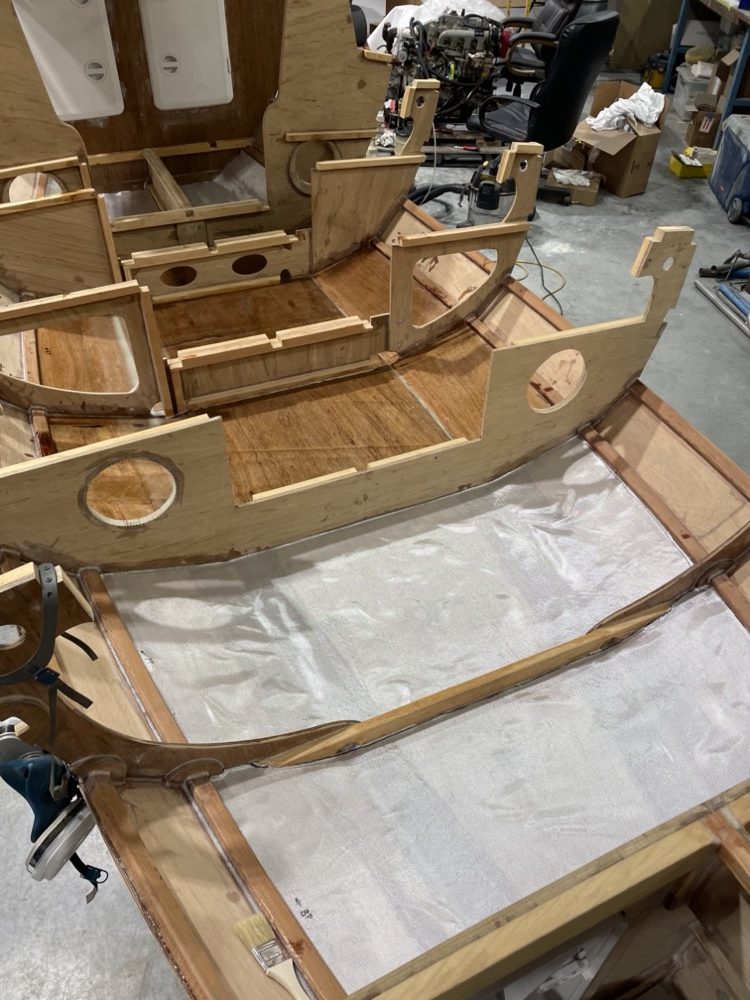
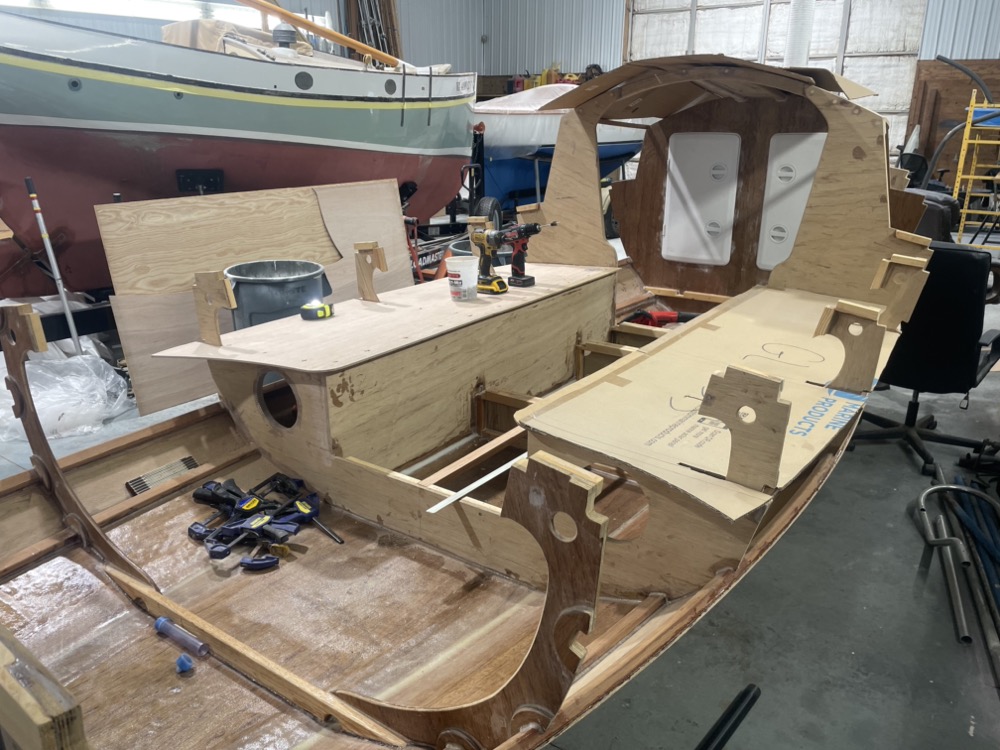
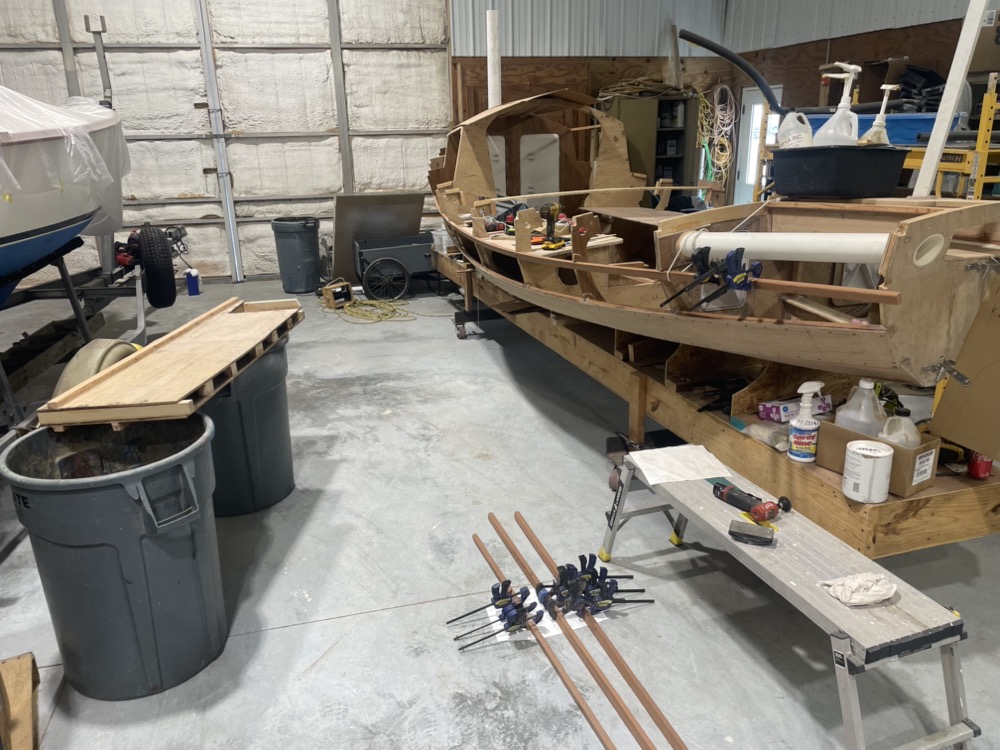
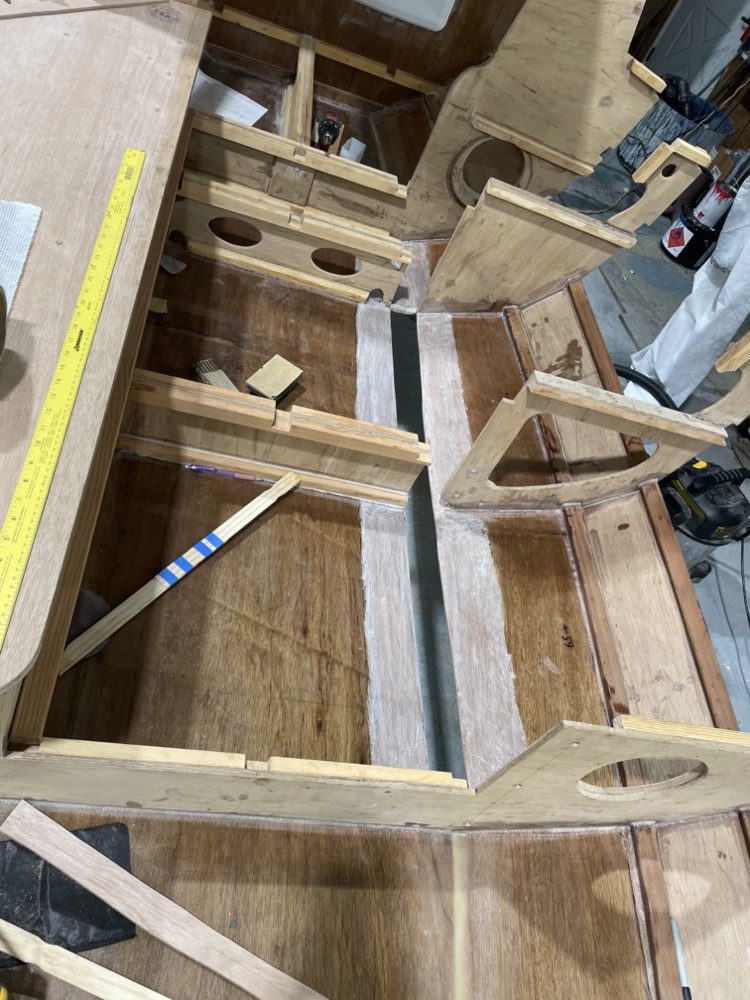
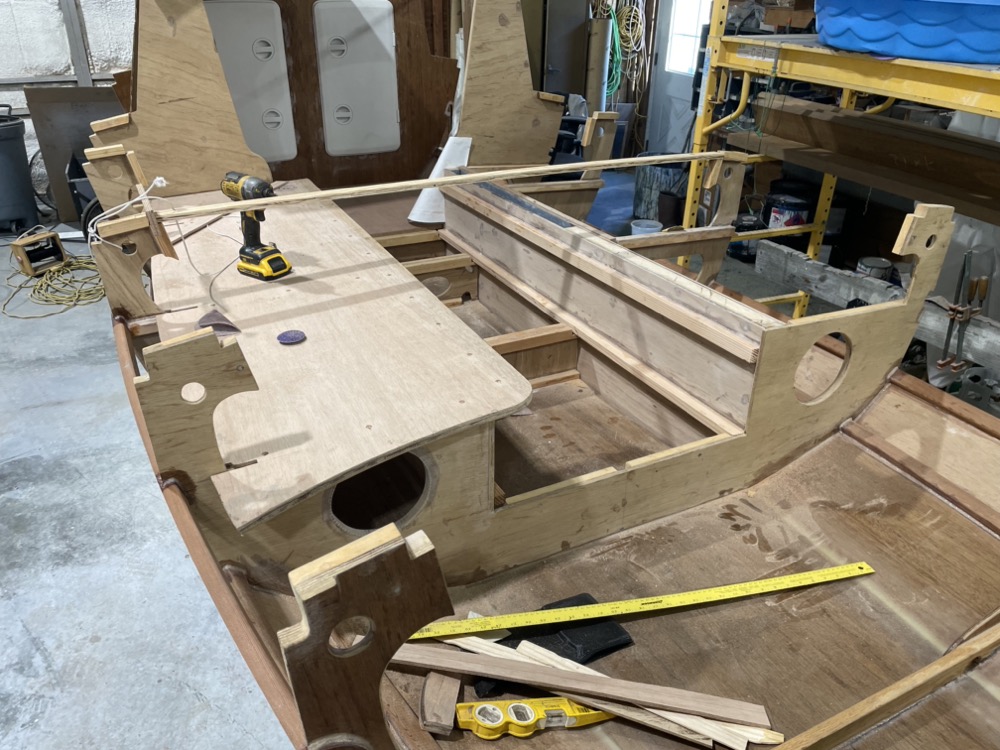
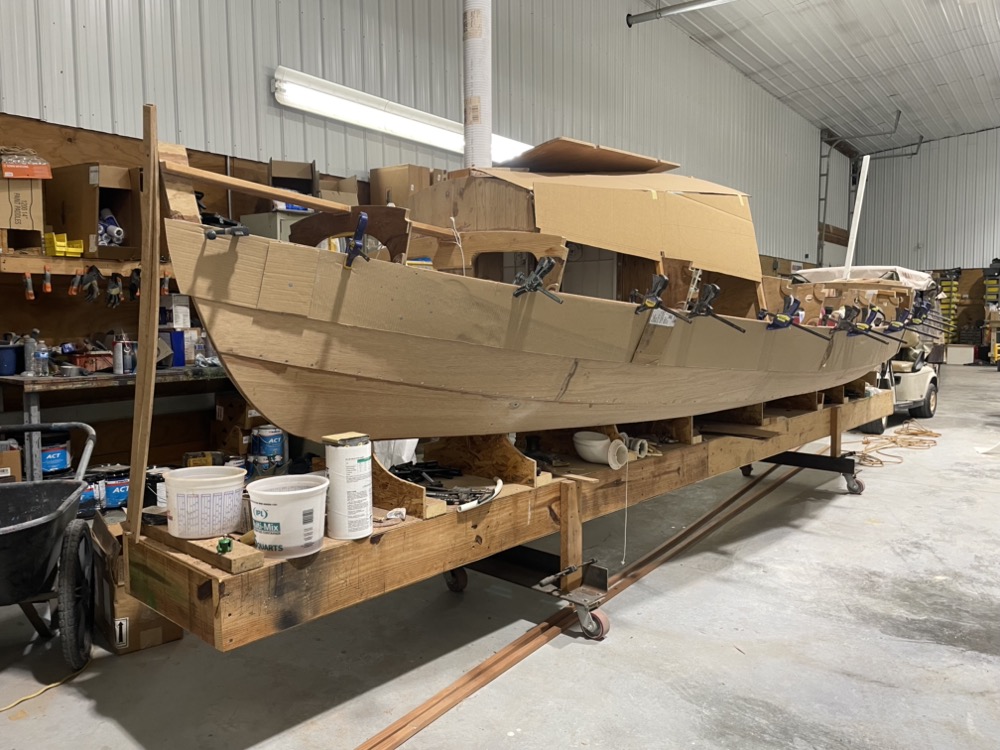
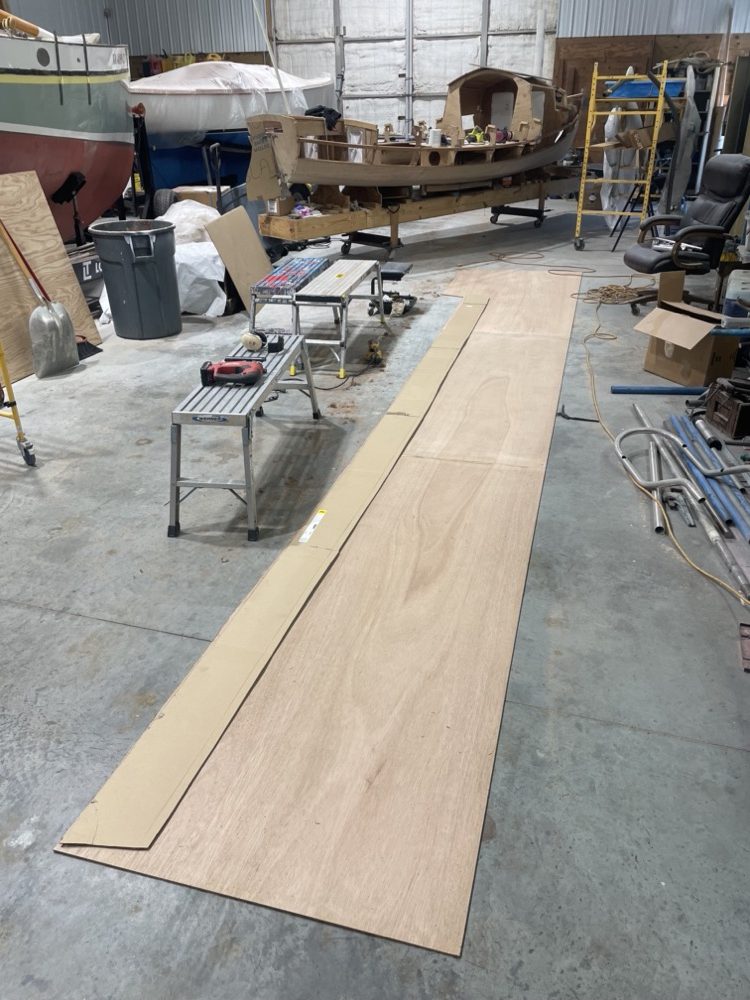
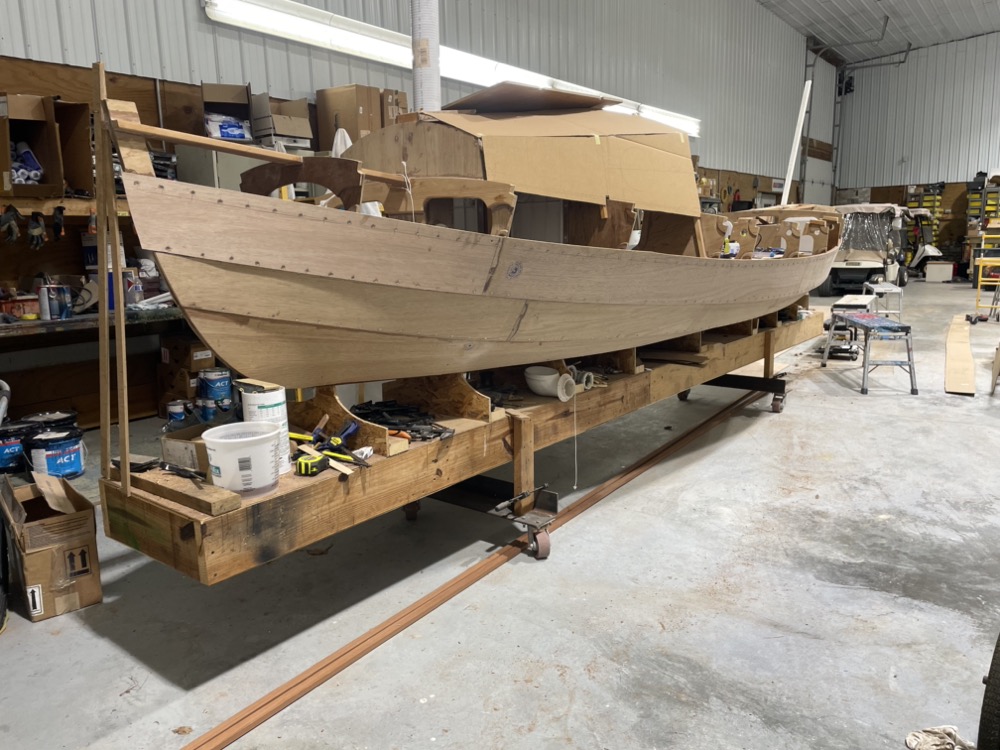
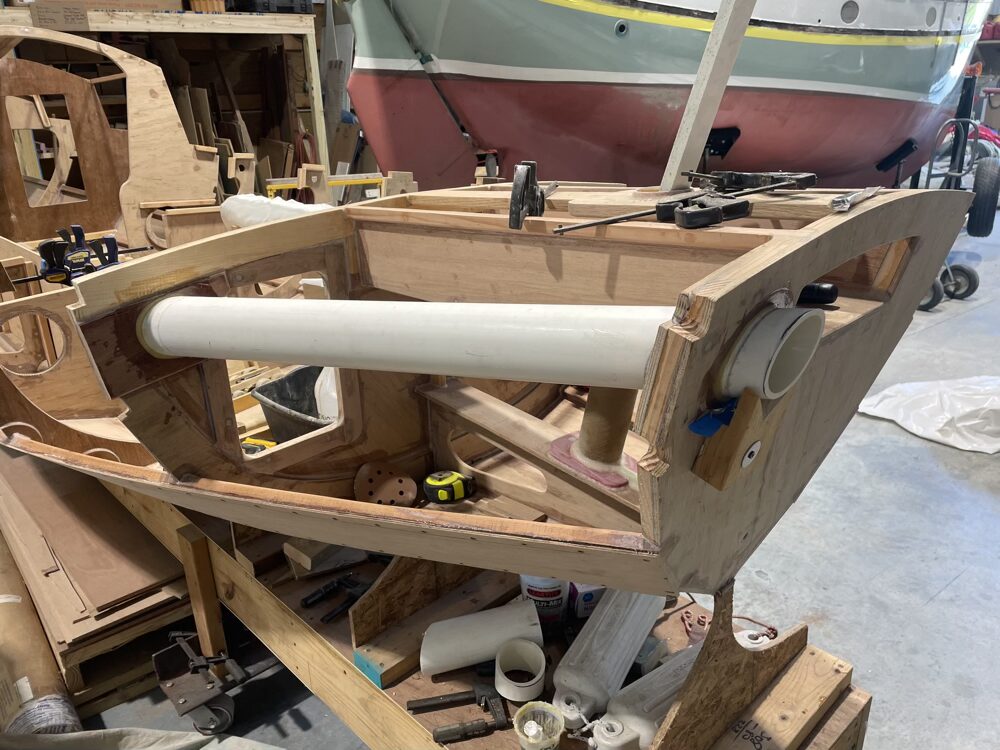
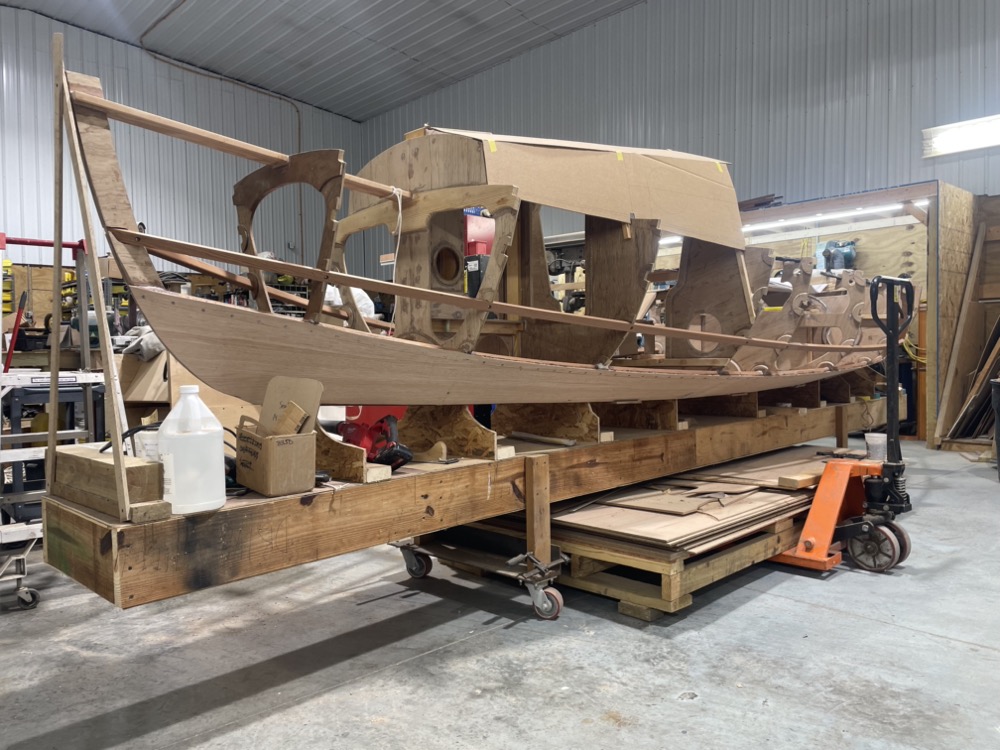
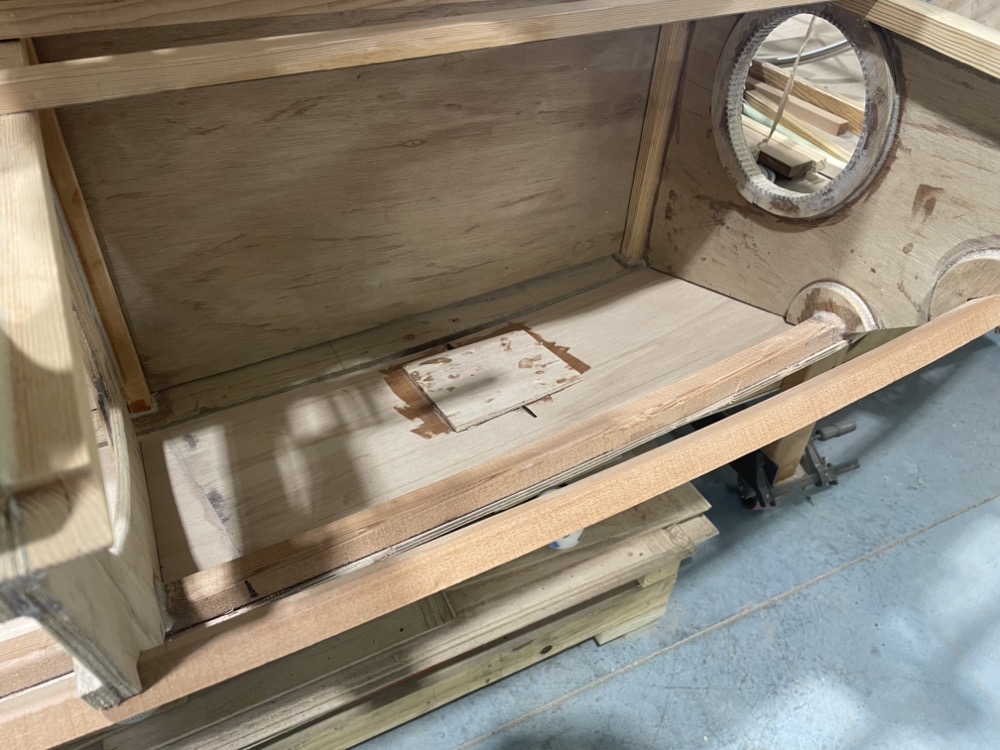
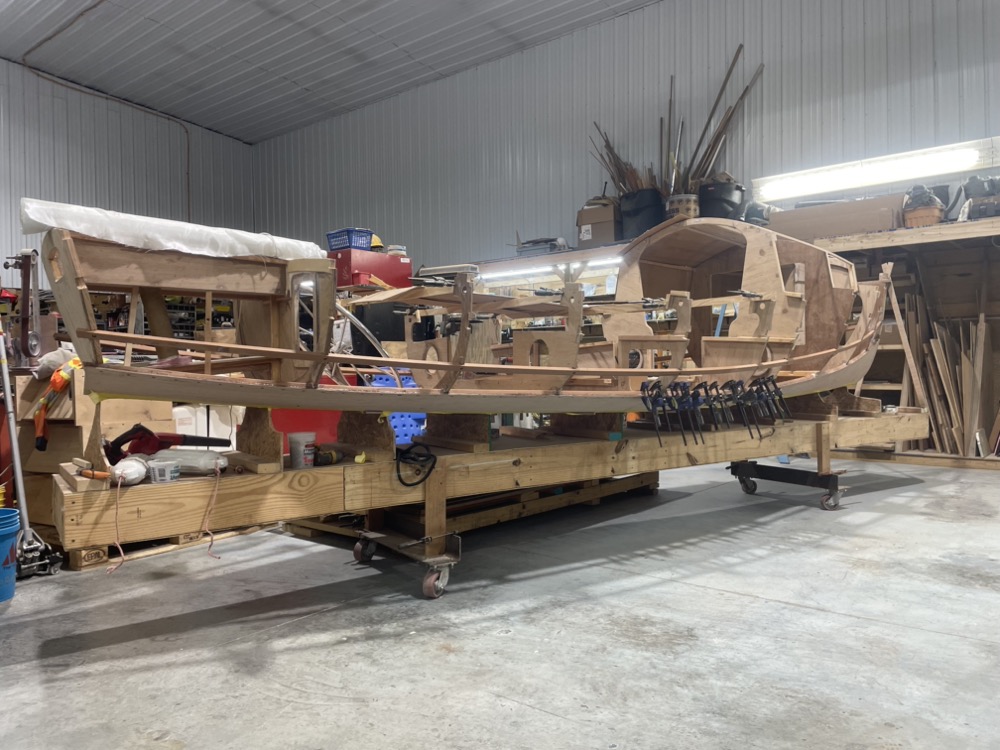
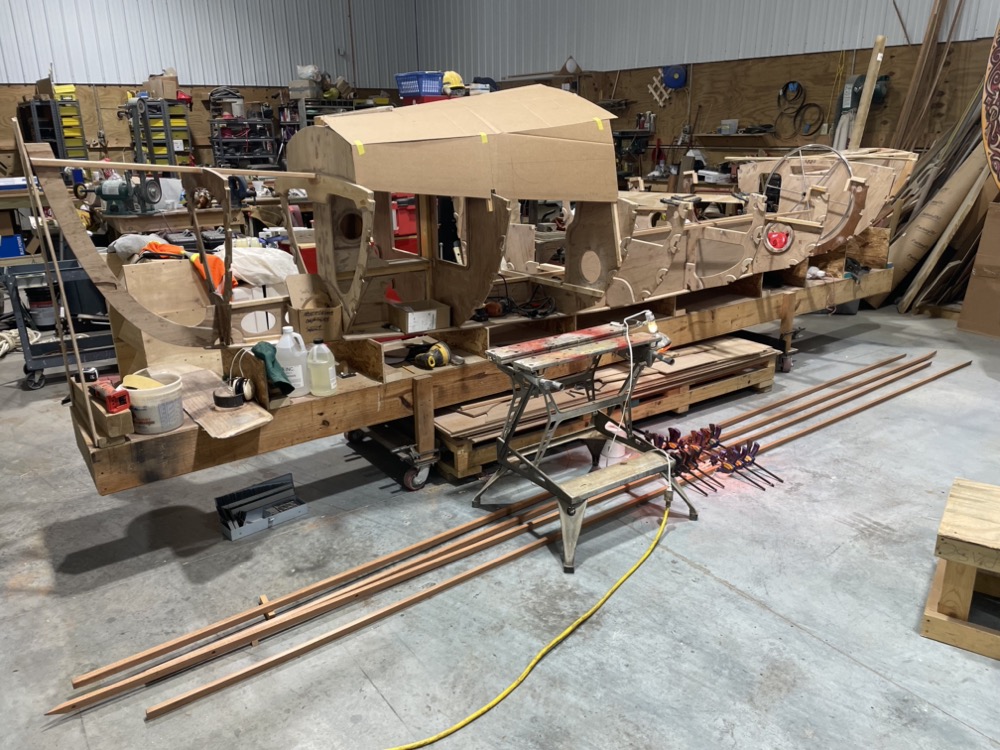
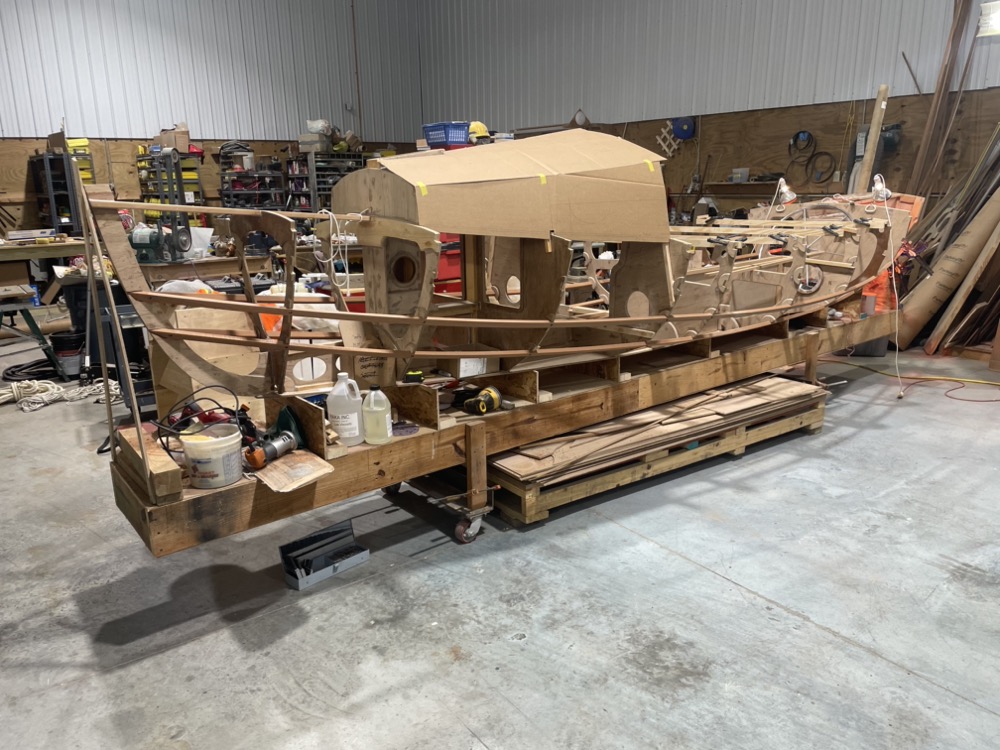
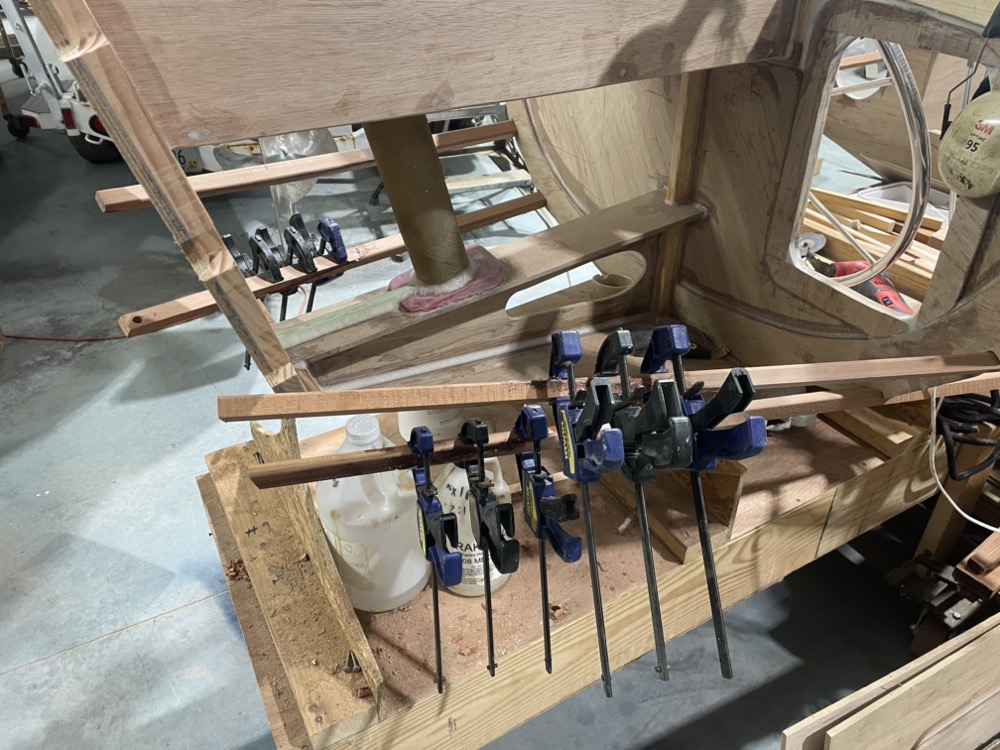
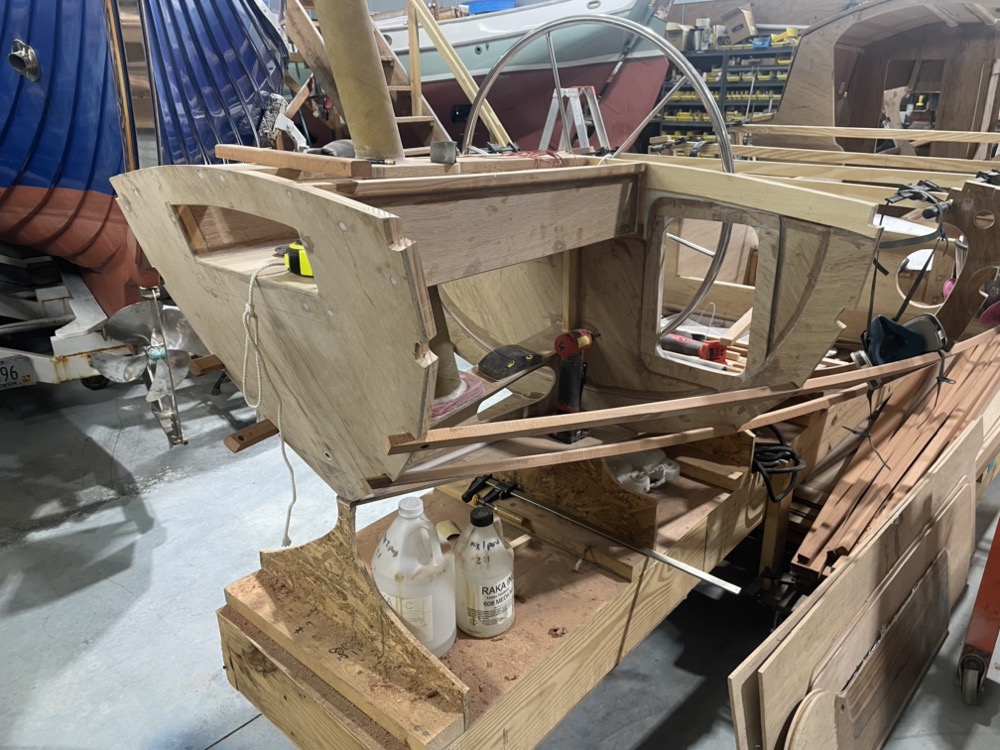
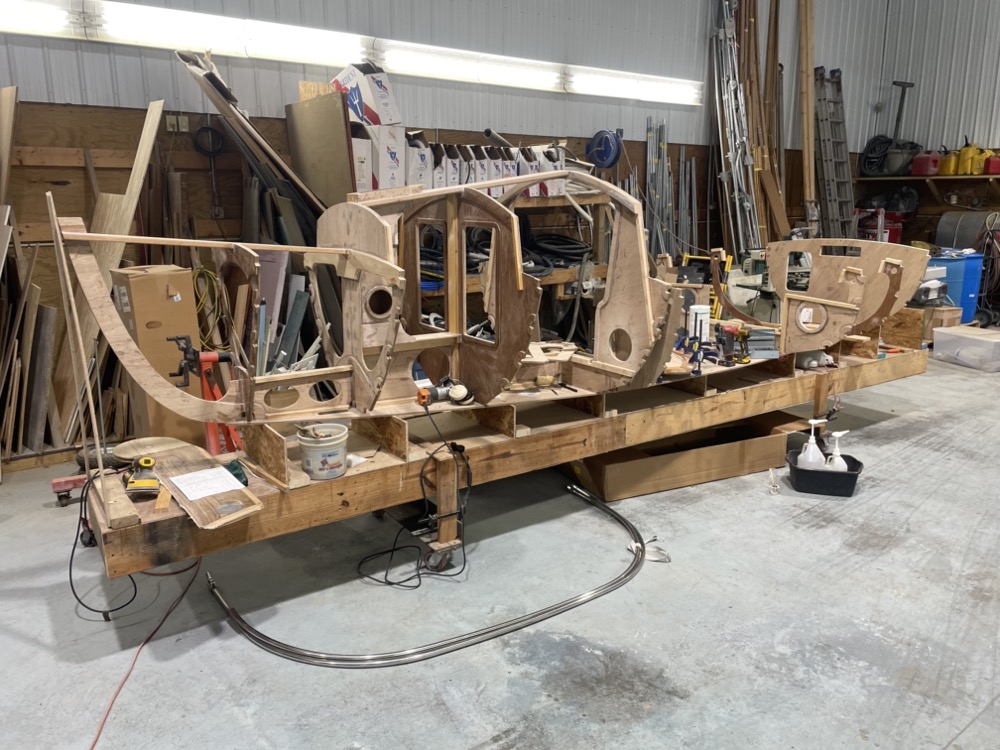
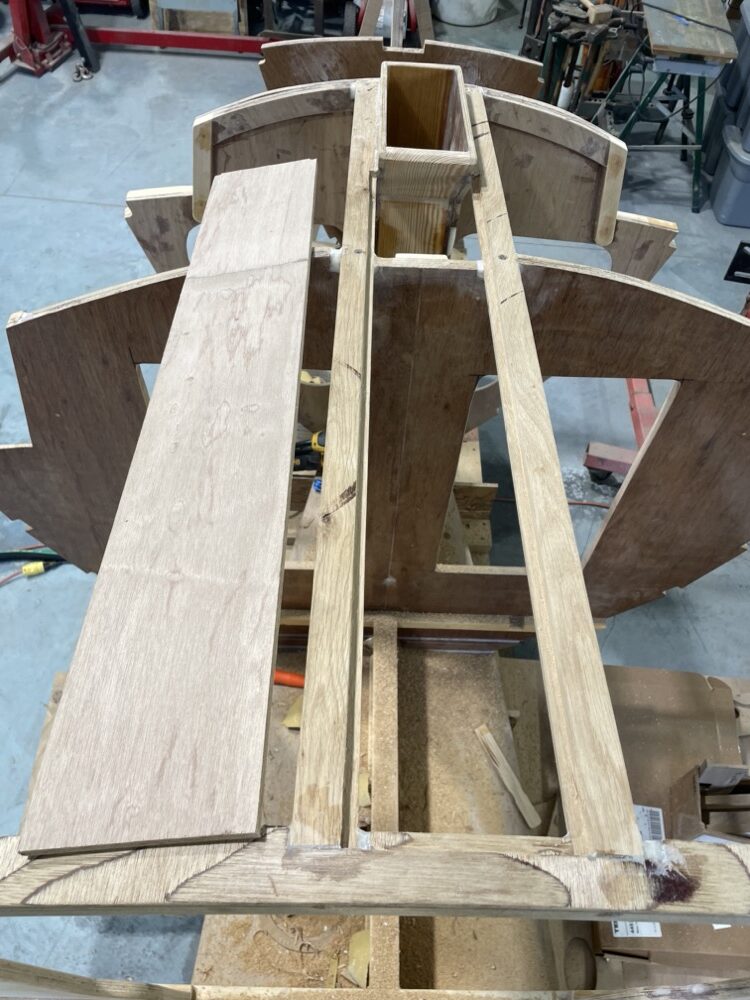
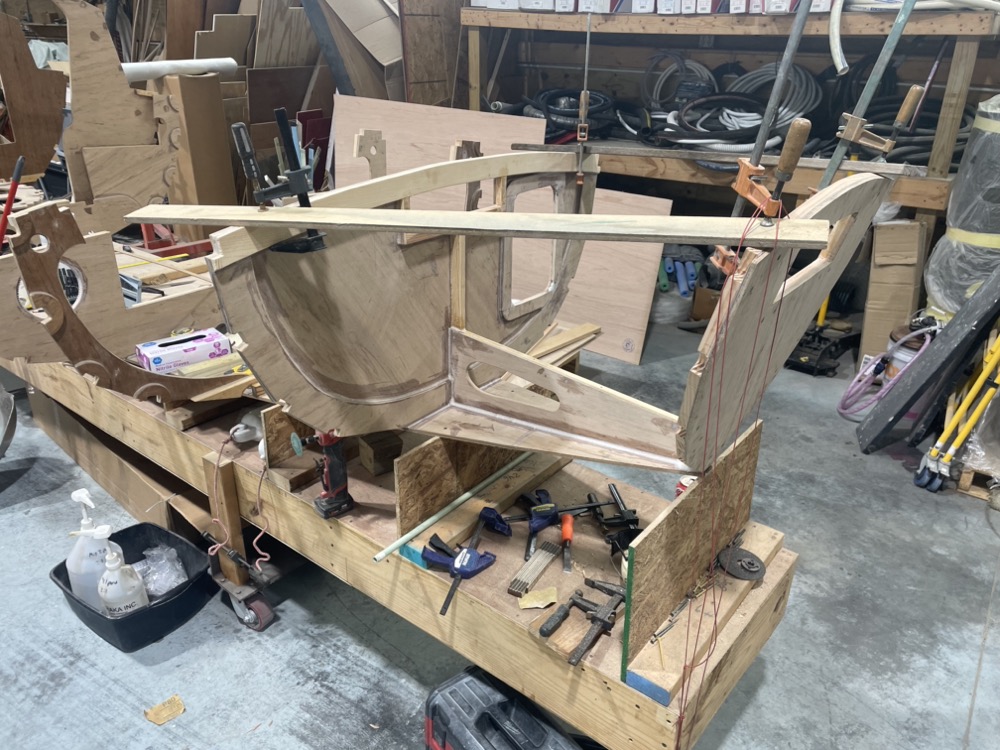
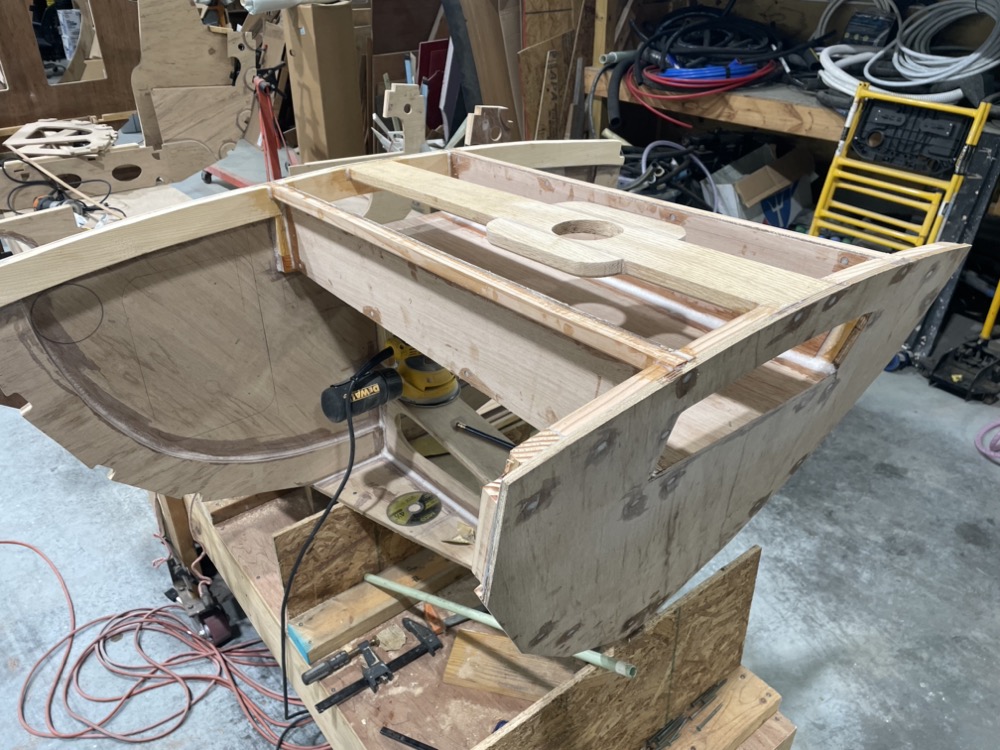
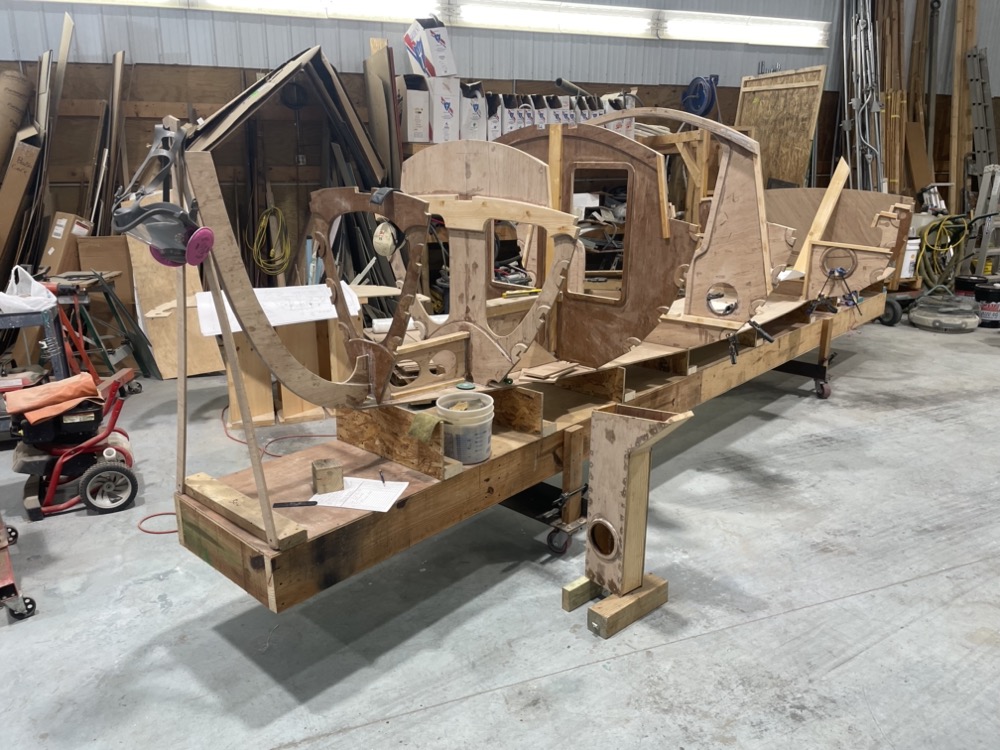
It’s been a while since I’ve had much to post. December was super busy hauling boats out so not much got done. Since then I’ve been working on a lot of smaller jobs on my boat but not really completing much of anything. Plus we have a varnish job in the shop which has put a bit of a crimp on how much dust I can make at times. But I have been doing lots of epoxying and filleting under the two side seats so hopefully soon I can paint them and glue the lids on. I’ve also been working on the ballast tank plumbing and electrical glands and conduit.

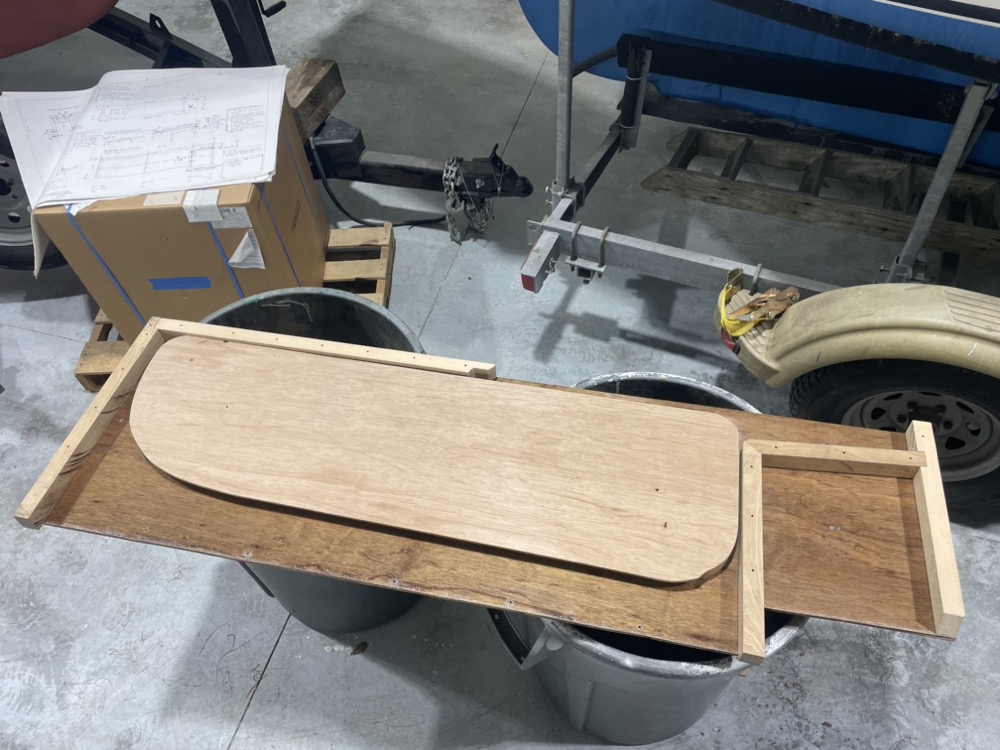
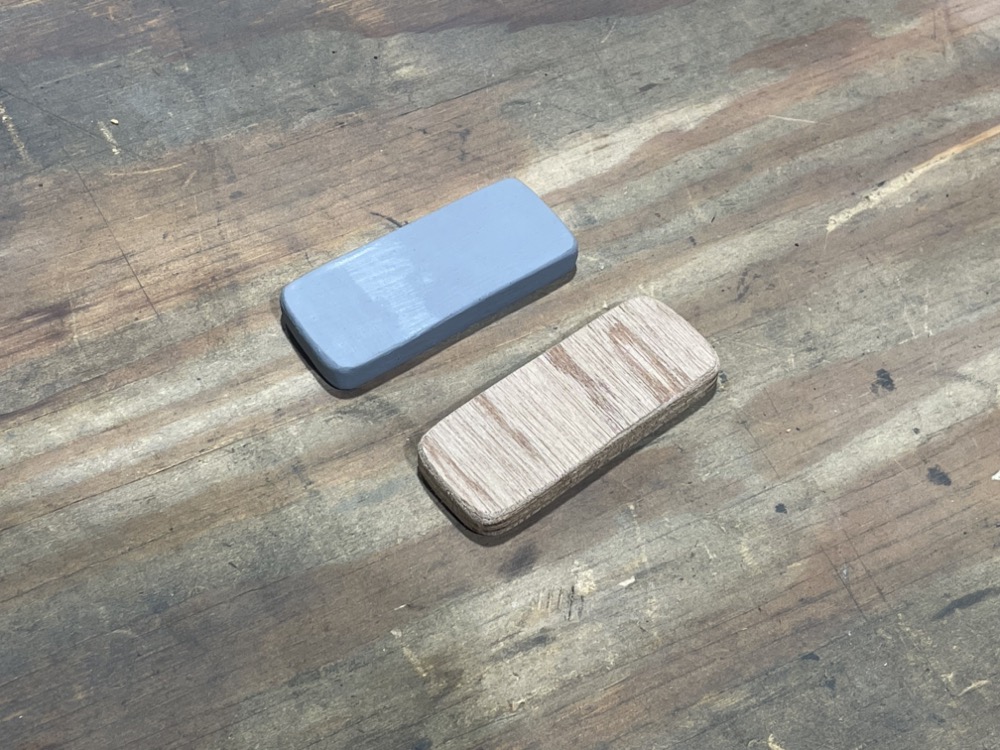
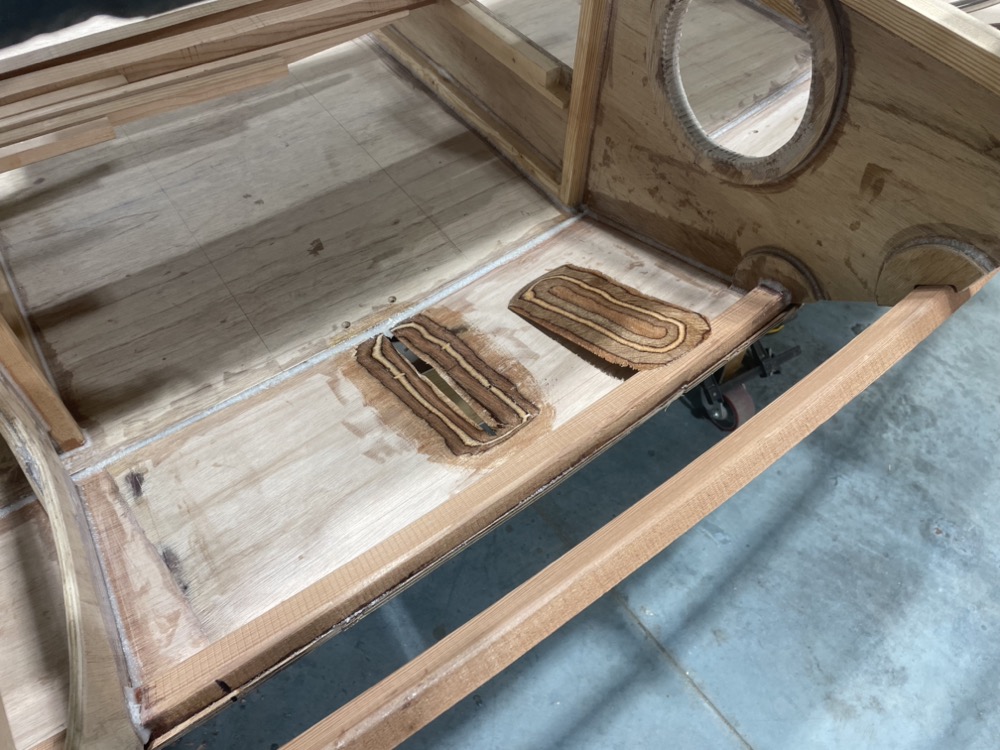
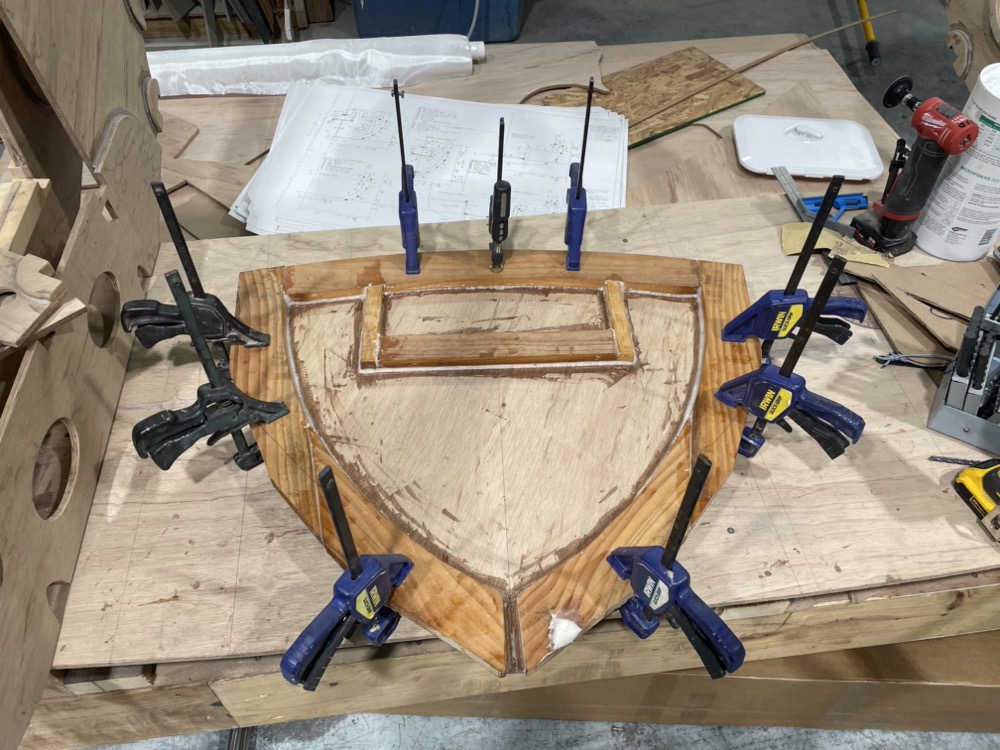
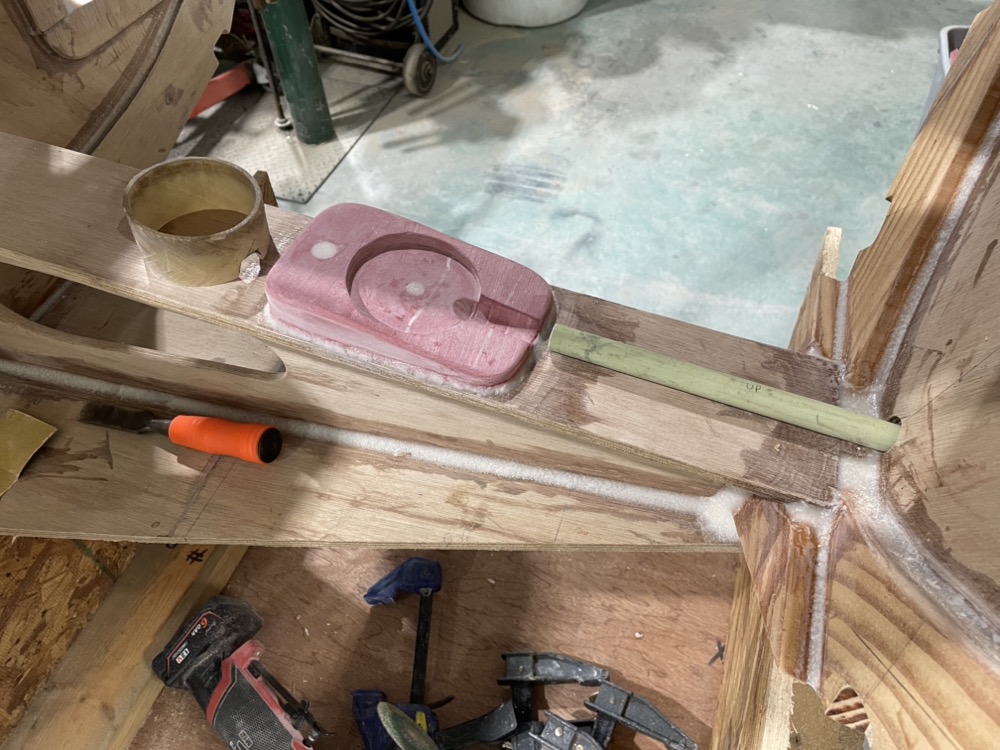
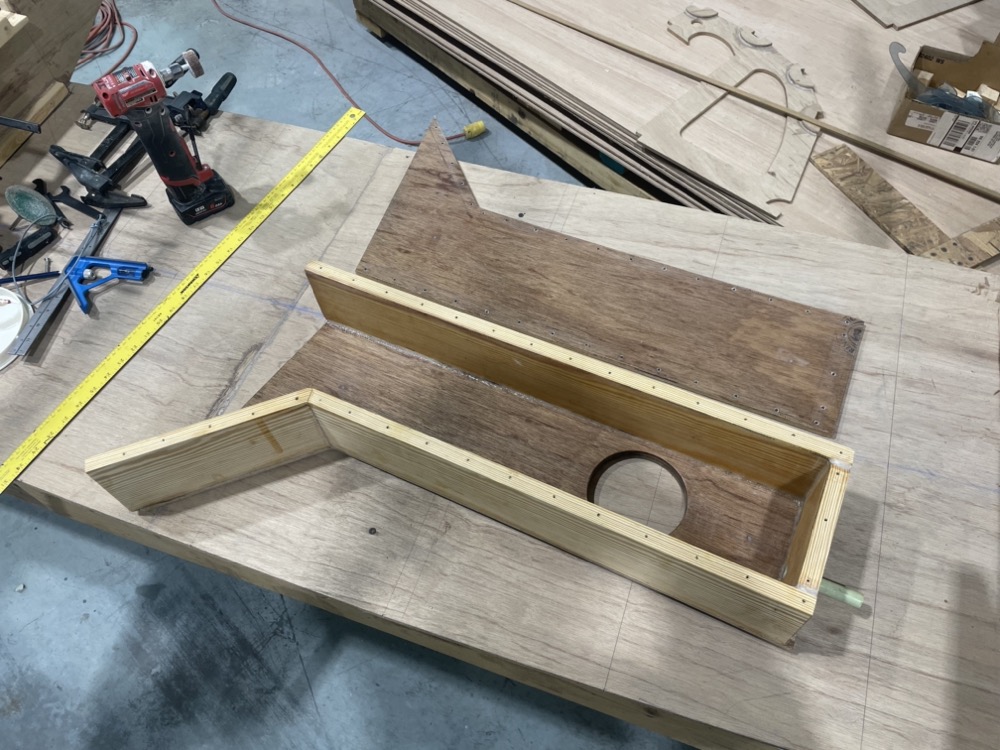
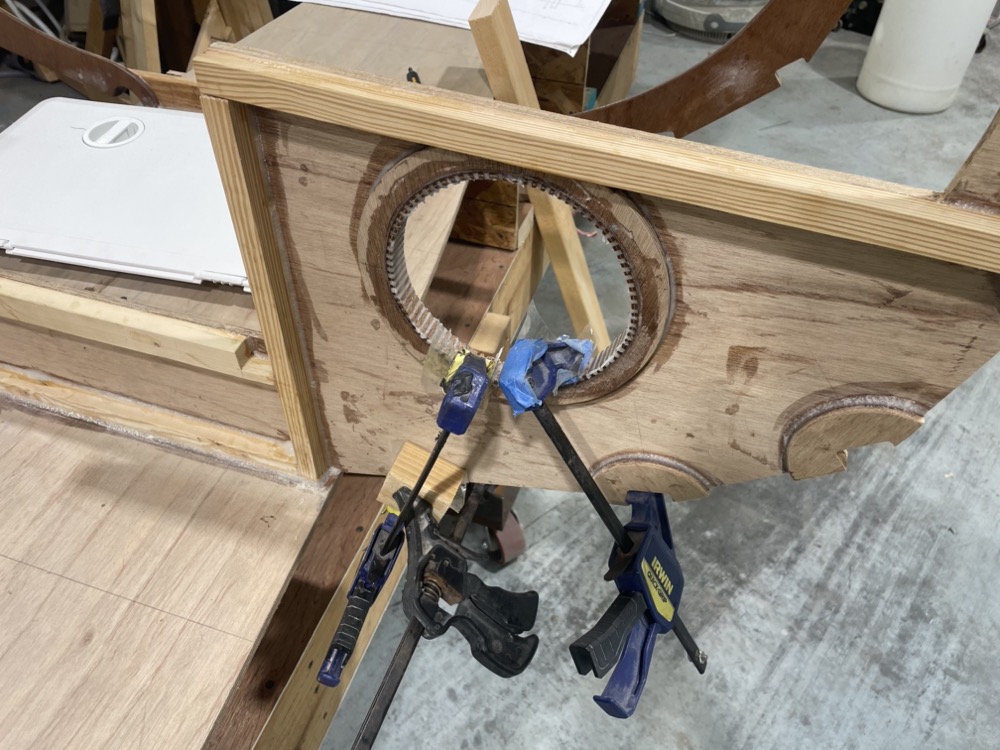
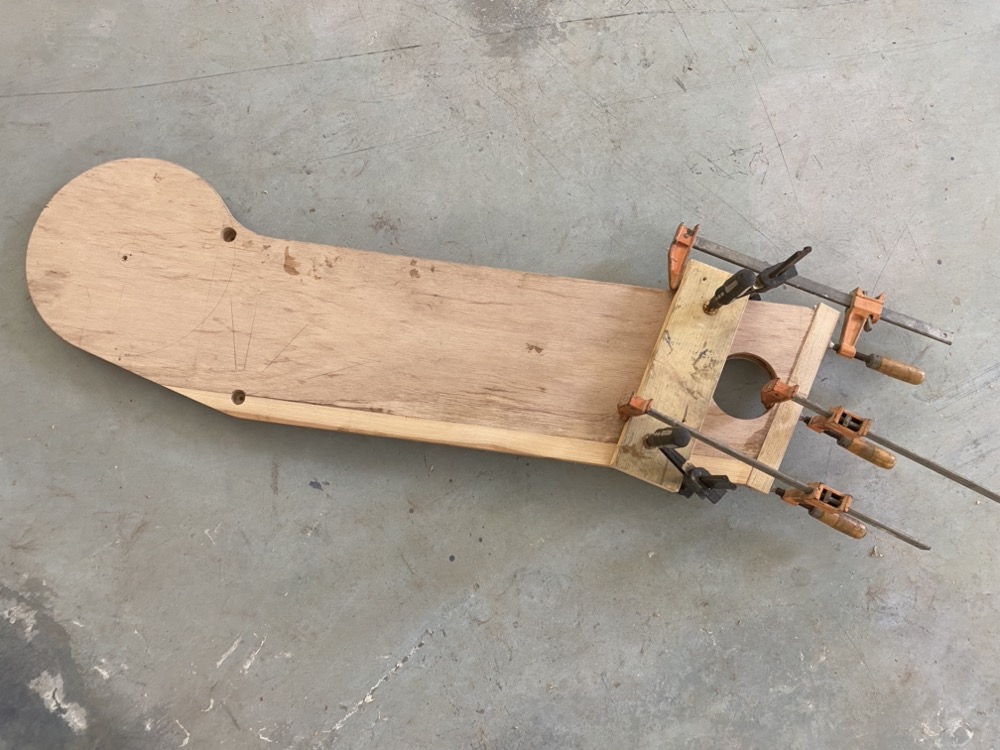
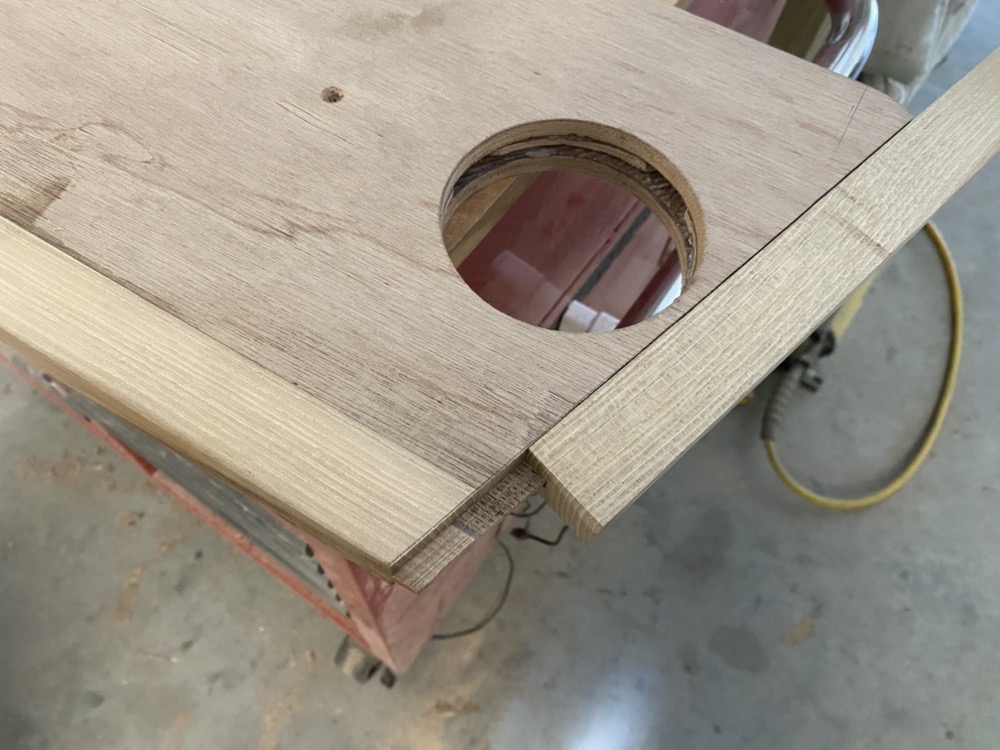
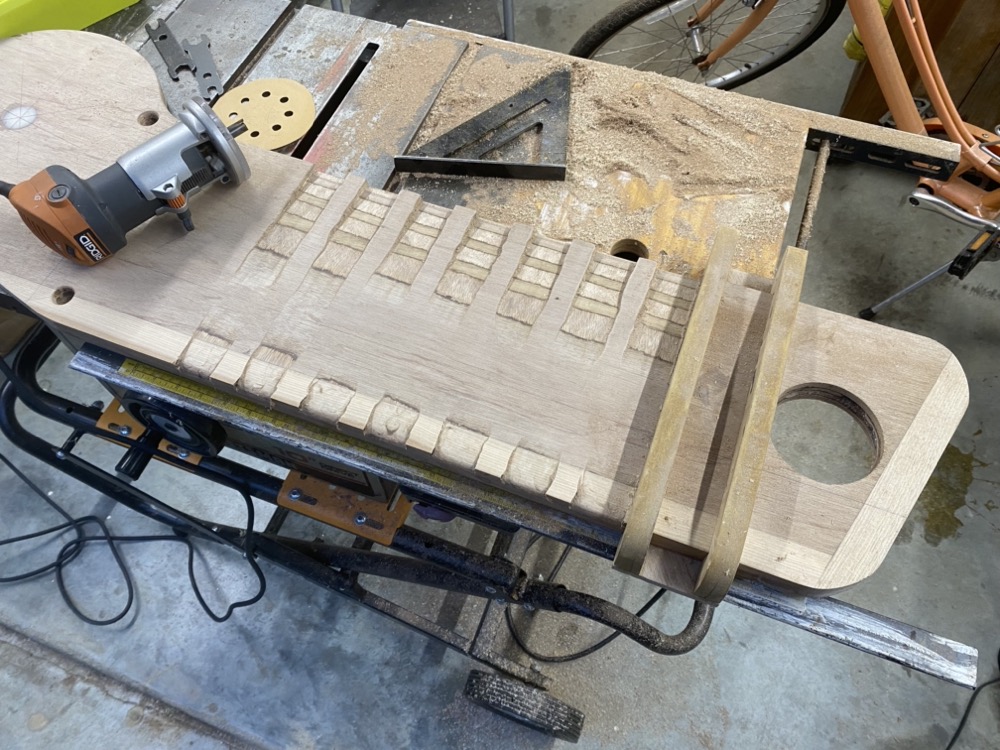
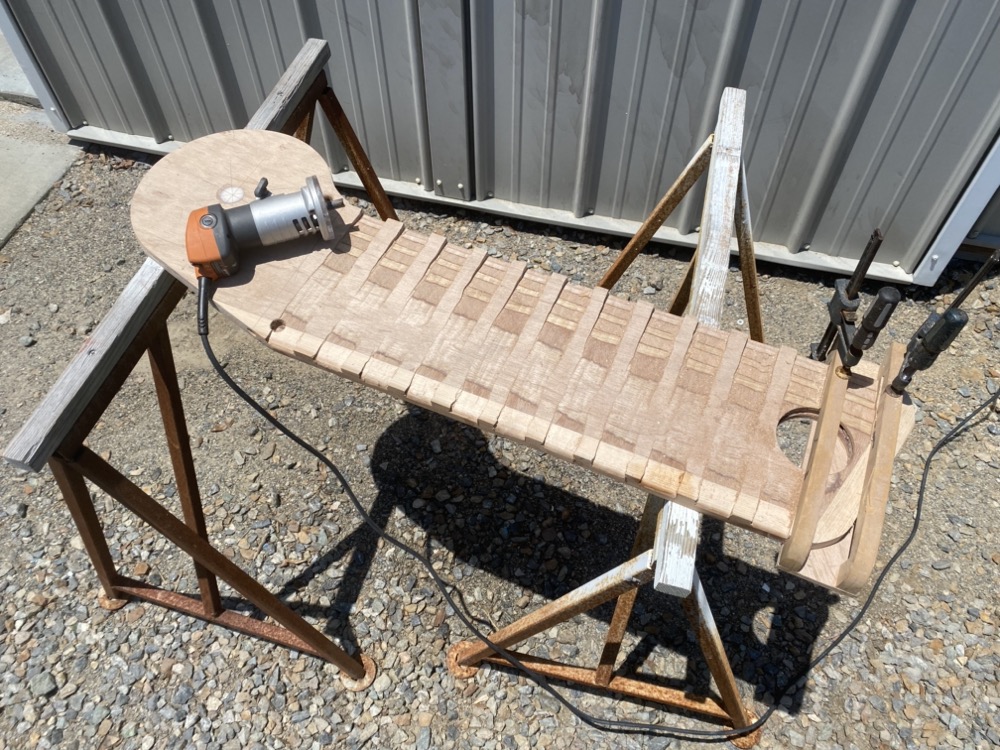
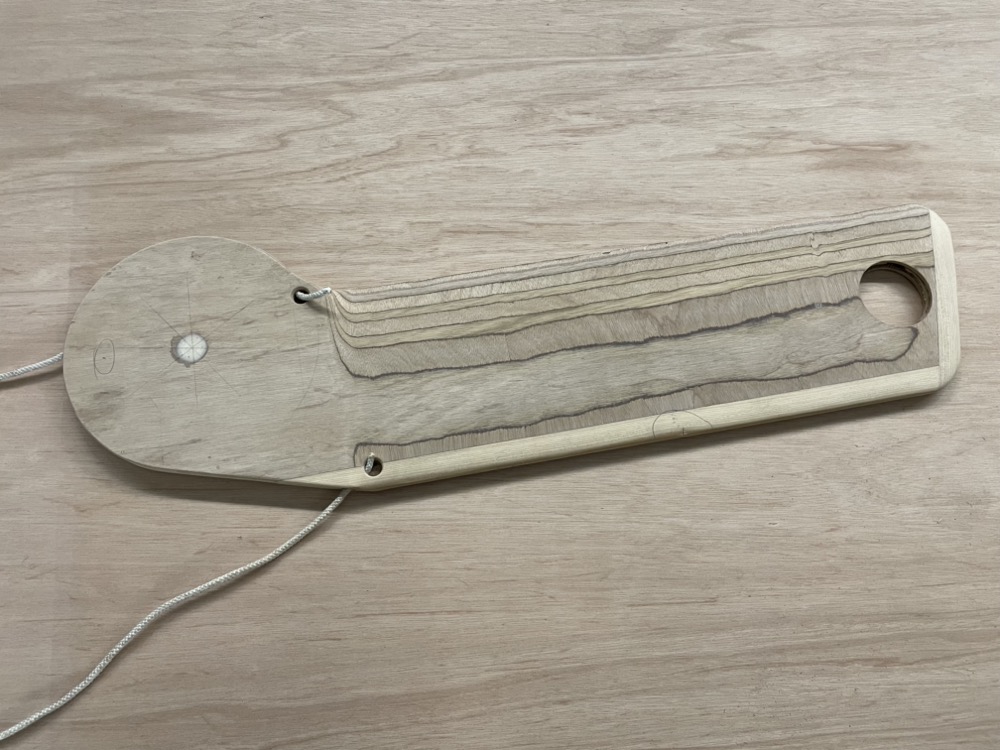
One job I’ve completed is the off-centerboard pin. The trunk makes up the starboard side seat front so it’s out of the way for sleeping on the centerline. The pin is below the waterline and inaccessible on one side and awkward to get to on the other, so I’m trying to pay particular attention to make it watertight and rot proof. The inboard side has a plywood cap epoxied on inside the ballast tank while the outboard side has a removable cover so the pin can be removed. I made the cover from 1/4″ fiberglass. The spot for the pin itself is epoxy thickened with 404.
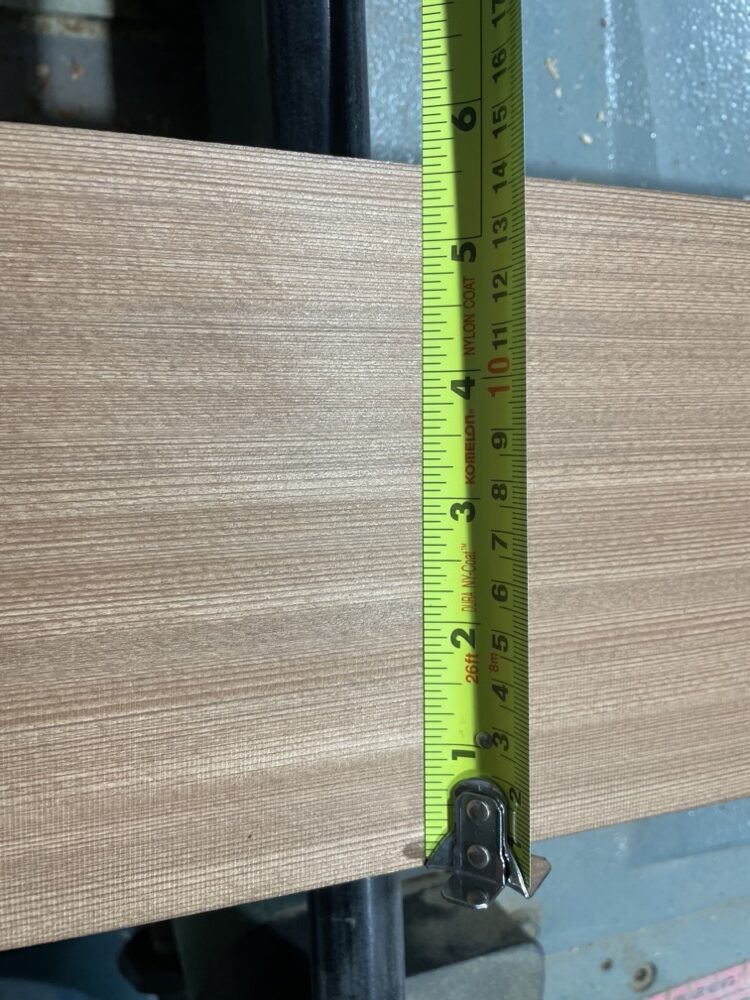
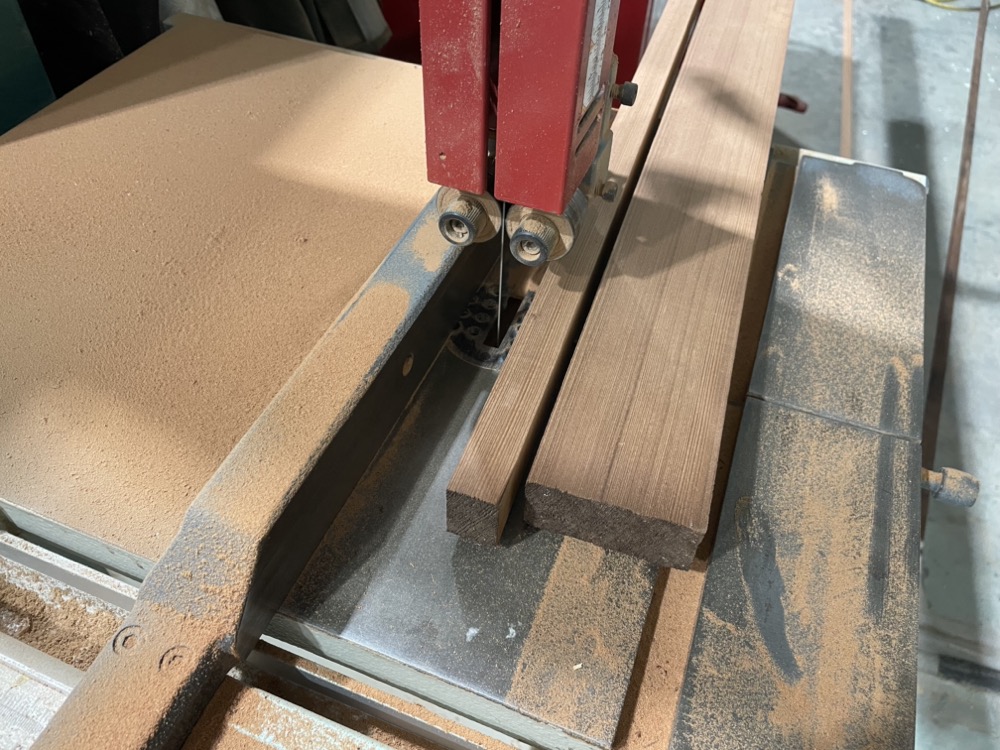
I could have drilled and tapped the oversize holes, but it would be difficult to do and I likely wouldn’t have drilled the holes perfectly straight. So I made some fiberglass threaded bushings, screwed them to the cover plate, and glued them in. I covered the plate and plywood with packing tape so I’d be able to get them off again.

Then I glued it in place. The bushings were about 1/16″ long so after it cured I removed the cover plate and sanded everything down flush.

Next I put the cover plate in my lathe and turned a groove for the 4200 to form a bit of a gasket. I also heavily countersunk the holes so they’d have plenty of sealant too. A notch at the 12 o’clock position provides an alignment reference, although I laid the holes out pretty accurately so it might fit in any orientation.

Next I needed a centerboard pin. I’ve had a 1″ diameter bar of titanium floating around after I machined my wife’s engagement and our wedding rings from it. I haven’t thought of anything better to do with it in nearly a decade so I made the pin out of what was left. I don’t recommend parting with the tailstock, but I forgot to take a picture until after I’d already cut it off. So I just stuck it back in place for the photo.

Next I drilled a 15/16″ hole and reamed it out to accept the pin with an adjustable reamer. There’s a 3/8-16 hole so I can get a bolt on it to pull it out when I need to remove the board. The starboard seat insides are finally done and ready for epoxy and paint, and the port side is not far behind.

Long Steps Build #13

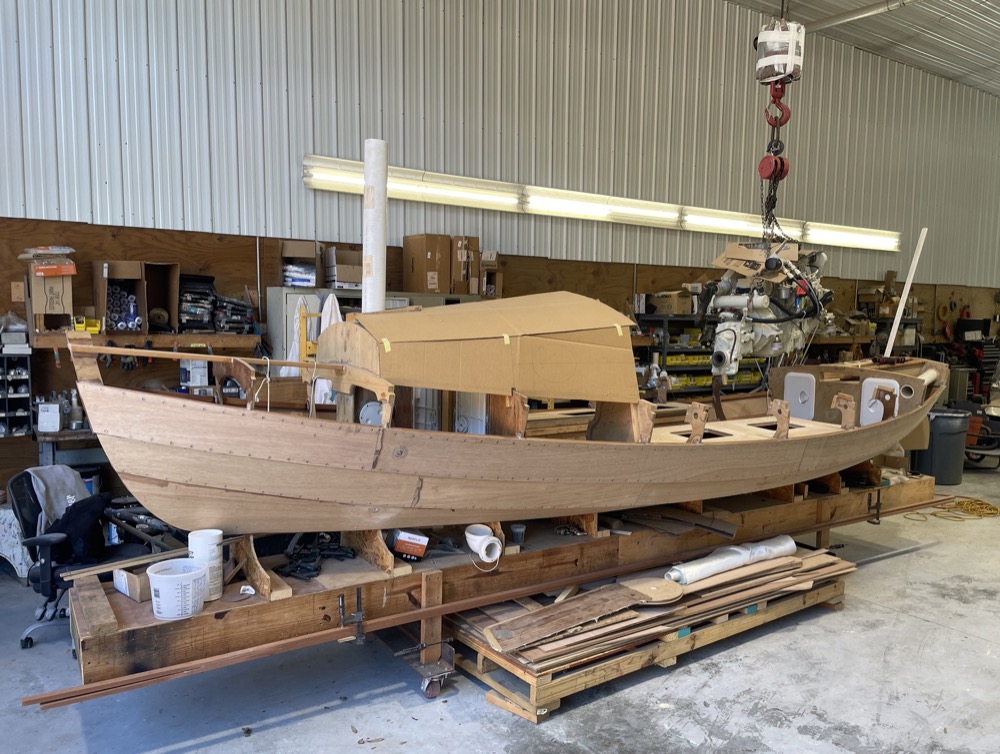
Not being the biggest fan of rowing, my buddy and I tried to set a Universal 5432 engine into the boat to see how it’d fit. It looks like it’ll be a little large, but the V drive should help with the angle.

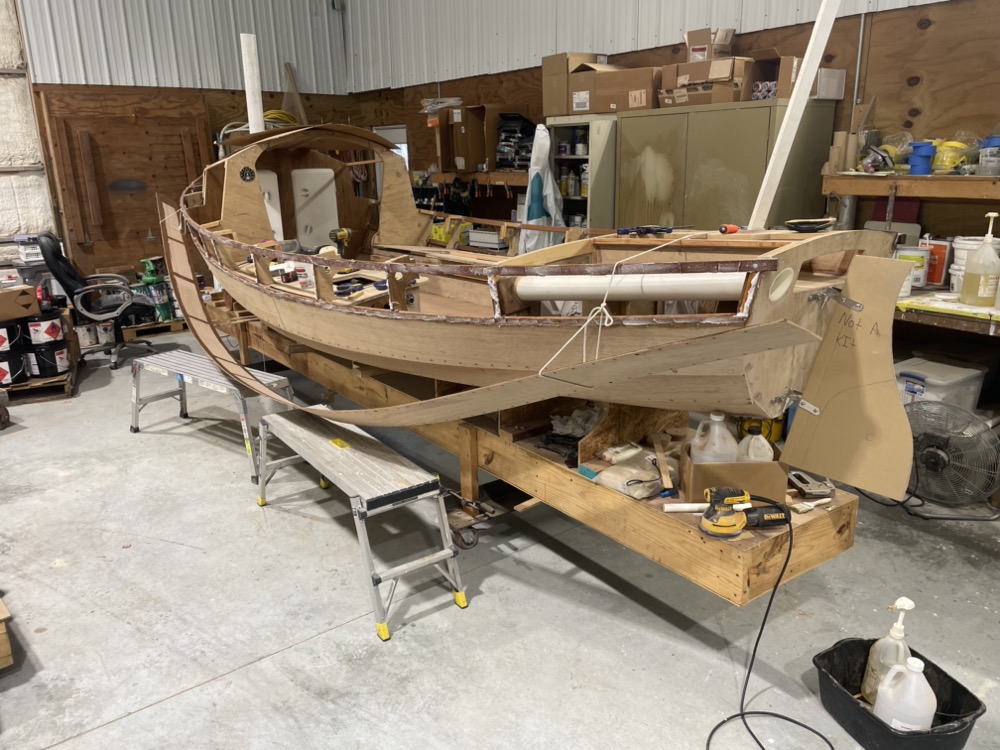
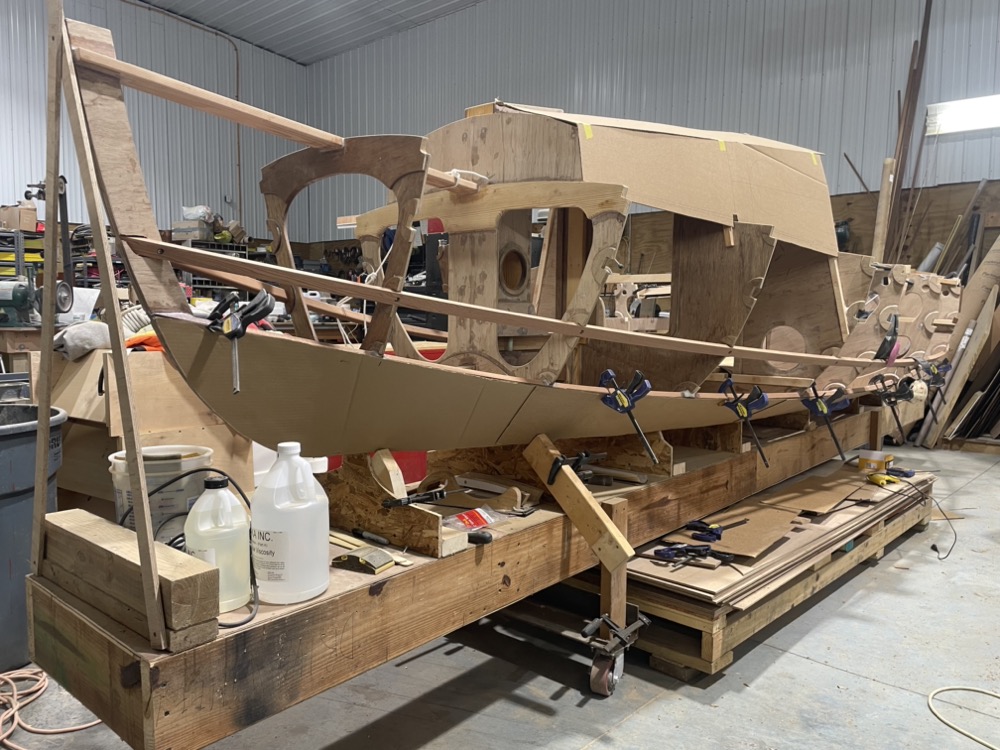
Finally working on the last pair of planks. After dry fitting I primed everything with straight epoxy so the wood won’t absorb the resin out of the 403 microfibers.

Then I slather on the thickened epoxy with a notched spreader and use my two hanging strings and work platforms to support the plank. It’s been difficult hanging planks alone, but it all works out. I don’t generally take pictures during this step since my hands are gooey but I figured I’d take a few since this is the last set.

Then I come back and drive all the screws in, clean up the squeeze out, and make nice fillets at all the interior joints. It takes about 2.5 hours to install a plank and about 12oz of epoxy.

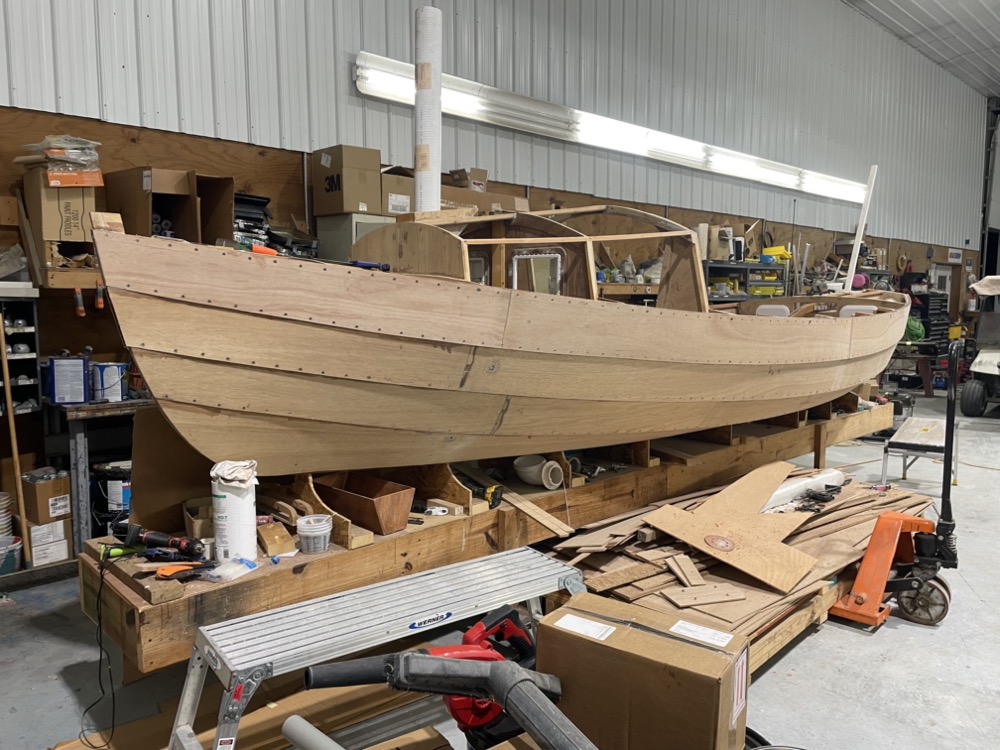
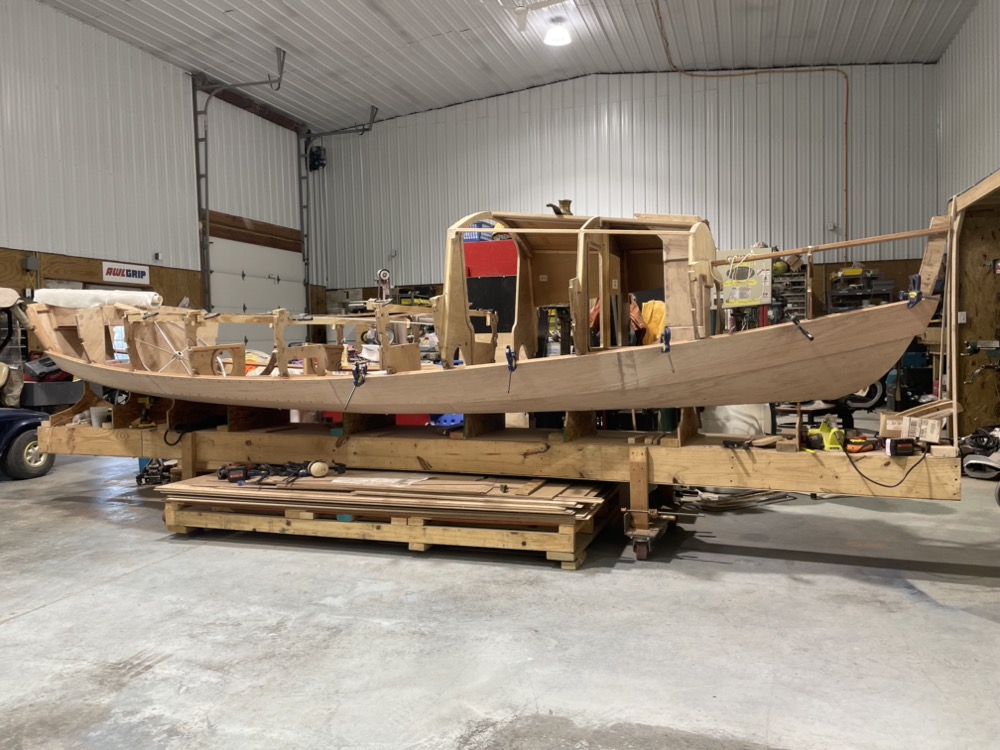
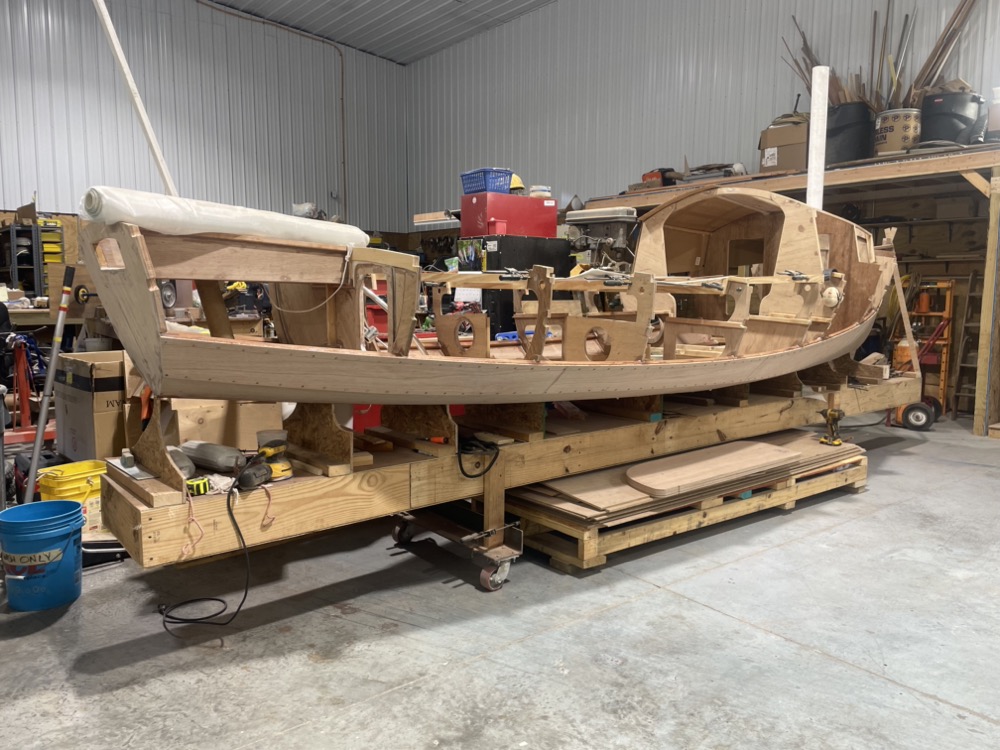
Planking is finally finished! Finishing the inside is going to be more difficult, but my wife has been out of town and I figure it’s a better use of the larger chunks of time I have. Between now and Christmas we’ll be non stop hauling boats out for the winter so I won’t have much time at all to work on it.

Long Steps Build #12

Next I installed the rudder hardware and made a mockup of the rudder head. I plan to weld it up from aluminum so it will all be one thing instead of building it up from plywood and bolting on the horizontal top that the push/pull rods from the tiller attach to.

Up forward I epoxied a doubler and some 5/8″ fiberglass pipe through the hull that will take a drain line from the mast box. I think the plans call for running it aft through the bulkhead and into the cockpit area, but I figure this will be tidier.

Then I put a big fillet between the bottom and lowest plank, two staggered layers of 12ox fiberglass tape, and then 6oz fiberglass cloth on the inside of the hull.

Here’s the port seat front installed and the top dry fit. The centerboard case makes up the front of the starboard seat.

It seemed like the centerboard case was the next logical thing to make, so I started on that. The edges are white oak and it was a lot of fun fitting everything together.

I wanted to help lock the frames in a little better before cutting the centerboard slot so I put on the next set of stringers. Here I’m scarfing the last foot or so on. The centerboard case is also finished on the inside and glued together. Two paint sticks taped together with a suitable radius worked ok for putting a fillet up inside.

Speaking of finish, I’ve been thinking about how to finish the plywood and especially the parts that will be impossible to get to like the inside of the centerboard case and the water ballast tank. I want this boat to be pretty bombproof so I decided on three coats of epoxy and two coats of Pettit Protect barrier coat. I put a single coat on a sample of plywood and buried it along with a control in the mulch of my wife’s flower bed. After a few months the control was soggy and starting to get soft while the other felt as light as ever and I didn’t see any signs of cracks or swelling. I’ll let them continue to marinate and see what they’re like in a few more months.

Next I cut out the slot for the centerboard case. It gets filleted and tabbed into the hull. I was pretty anxious and procrastinated a lot on my first boat before cutting the slot, but on this time I just measured and went at it with the oscillating saw.

Here’s the case dry fit. I also scribed the seat top to the curve of the stringer and added a 3/8″ doubler around the edge.

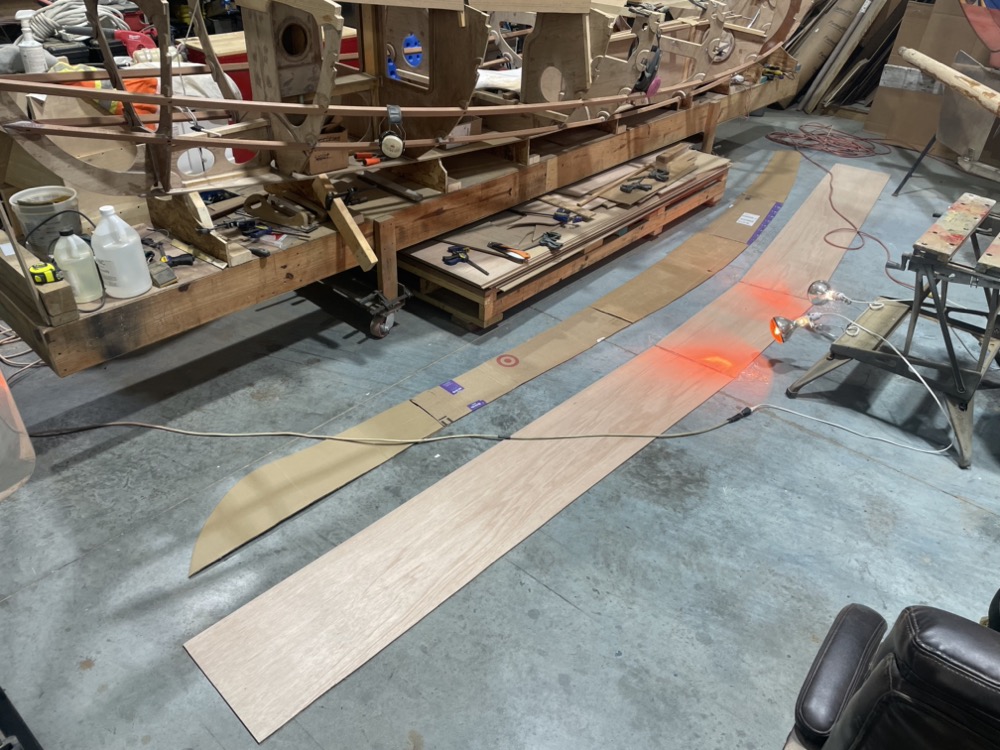
Once the case was installed I made a cardboard pattern for the next plank.

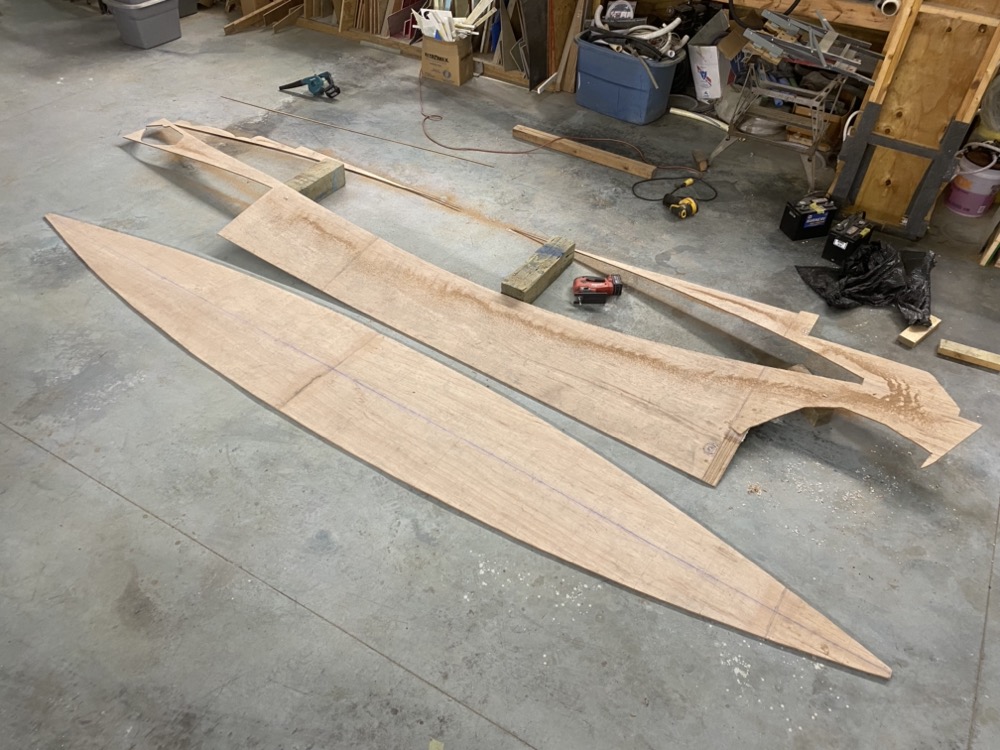
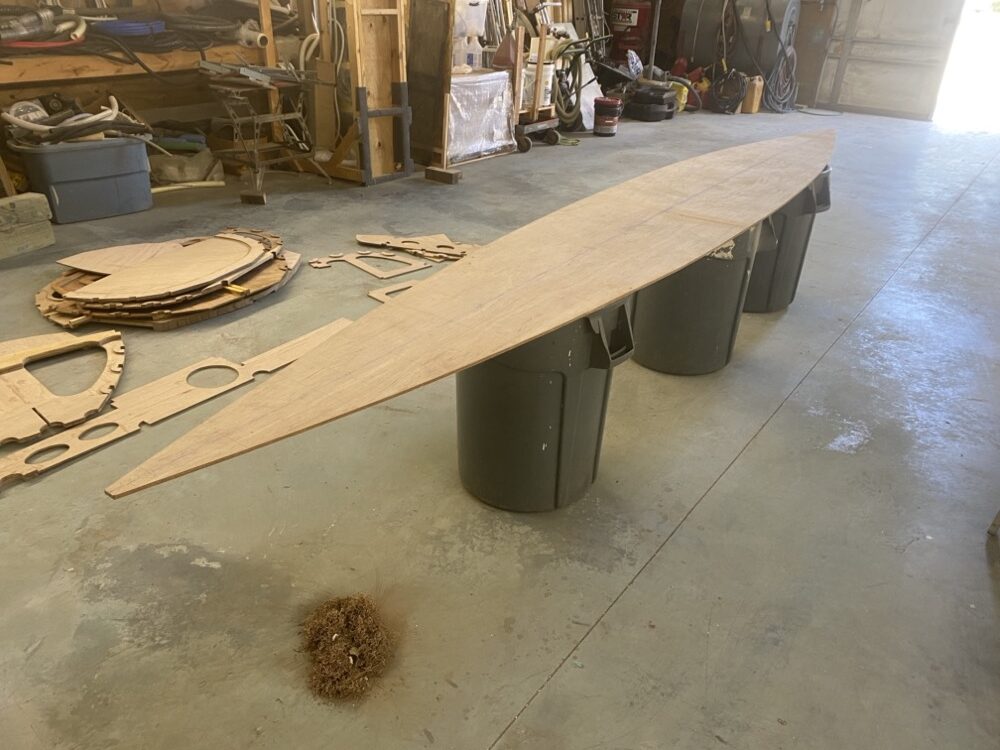
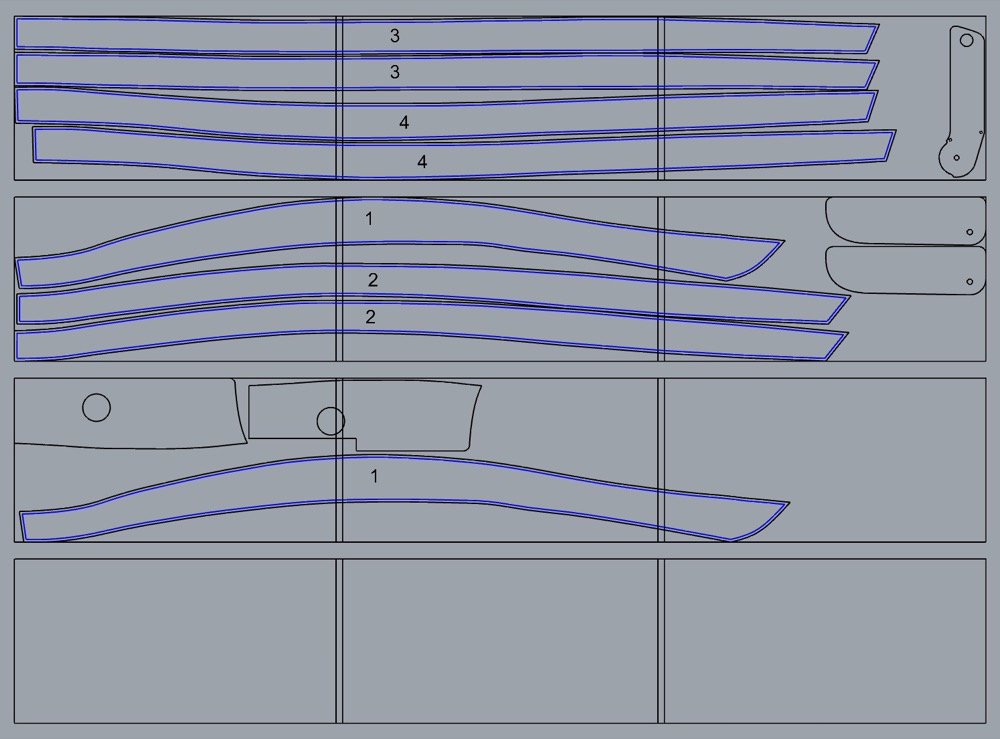
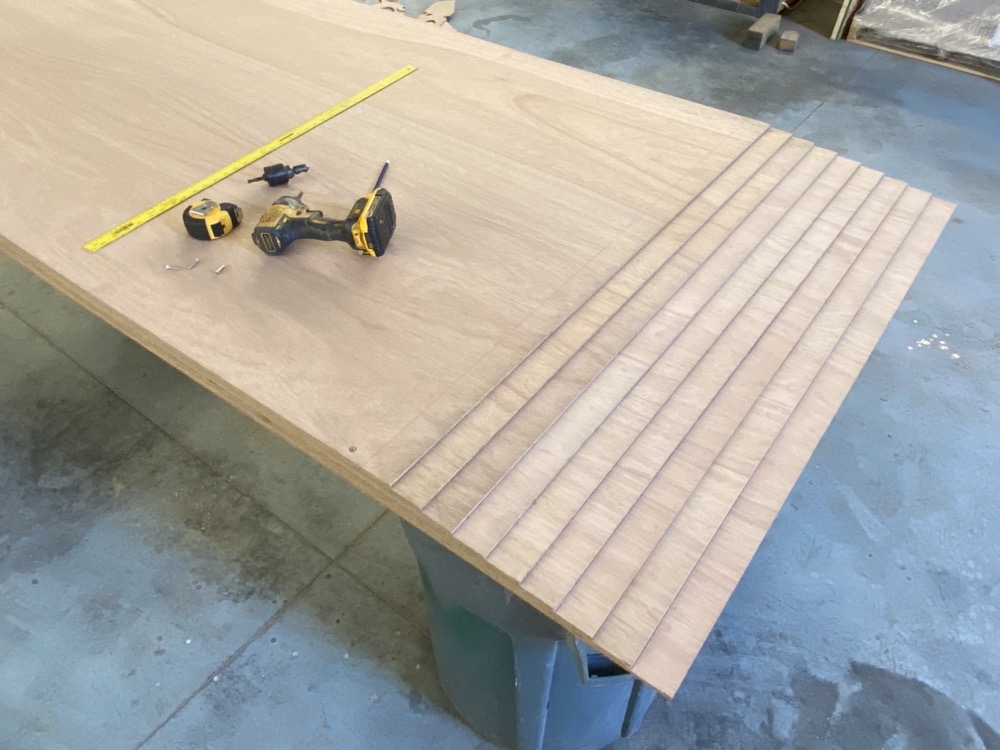
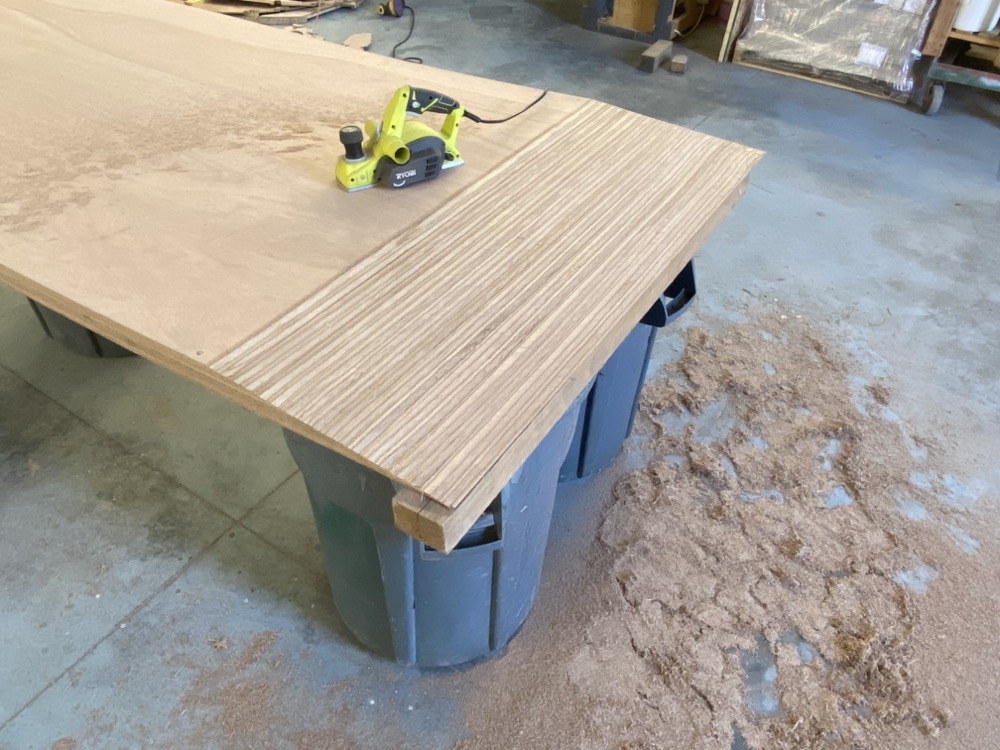
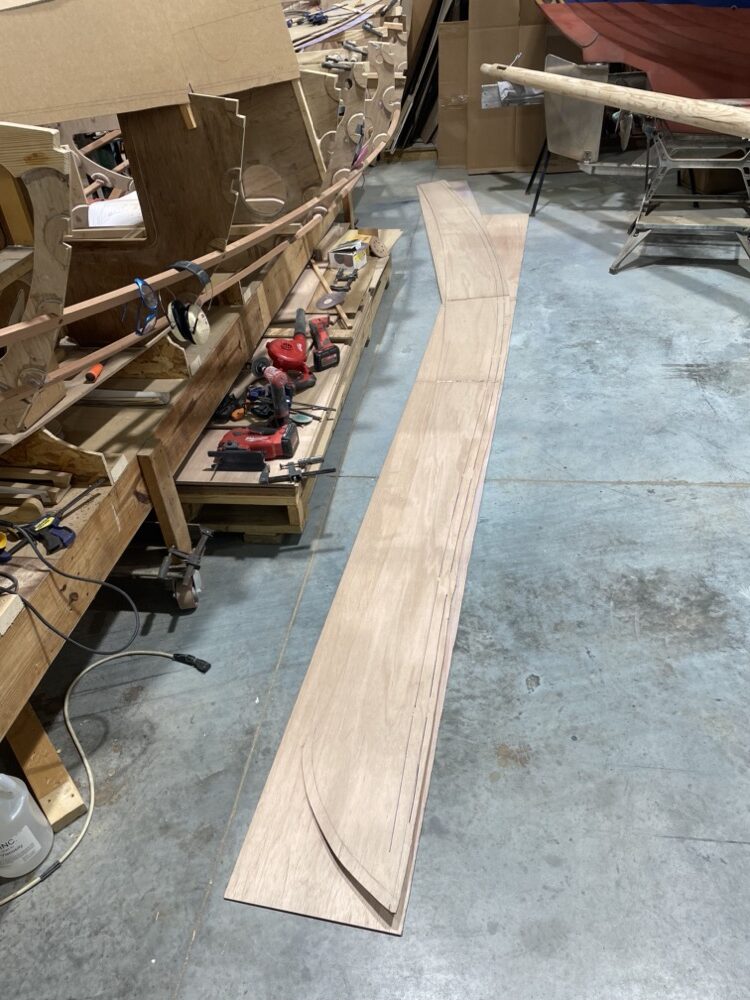
Then I scarfed up a 24′ long sheet of plywood and cut out two planks.

And here they are dry fit. I’m enjoying the height and angle of this plank since I could do all the drilling and screwing while sitting in an old rolling office chair.

And here’s the stringer beveling setup in action. It works really well and so far I’ve been able to avoid hitting any of the screws.


Long Steps Build #11

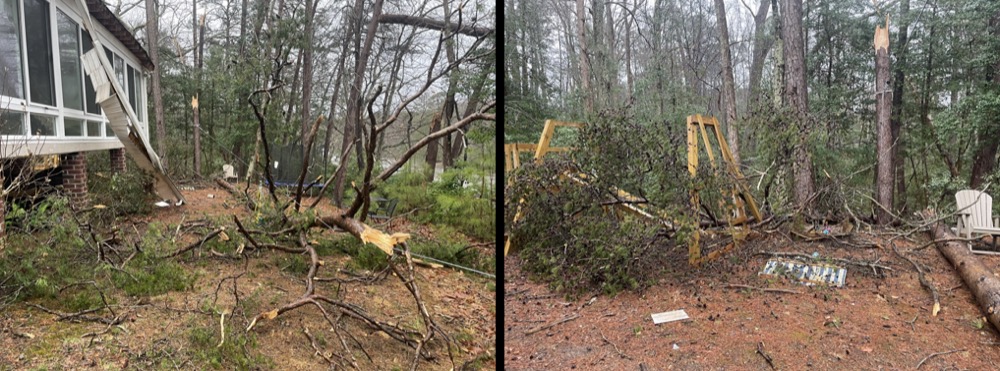
Back in March we had an 80 mph straight line wind storm that took out a pair of trees close to the house. One hit the corner of the sunroom and the other took out my son’s play set and a zip line I’d built. So most of March and part of April were filled with rafter repairs, 2′ x 32′ of shingling, hunting down a leak that ended up just being rain blown under the unfinished soffit, cutting down and removing trees, and rebuilding the play set and zip line. Could have been a lot worse though! A house down the street had a couple huge oak trees fall on it.

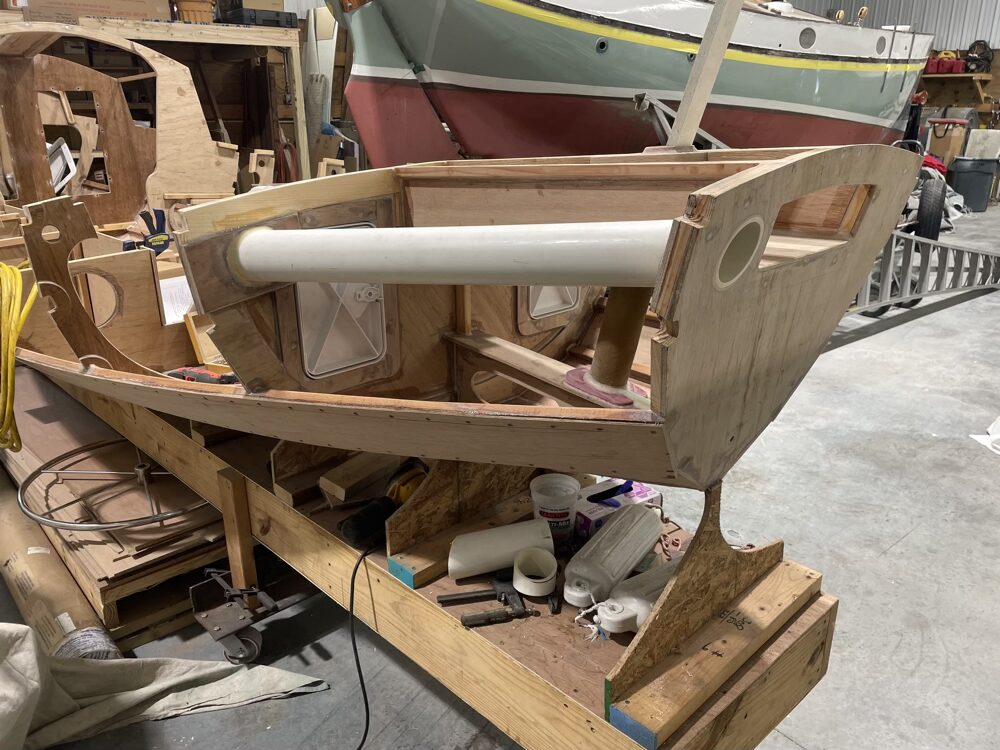
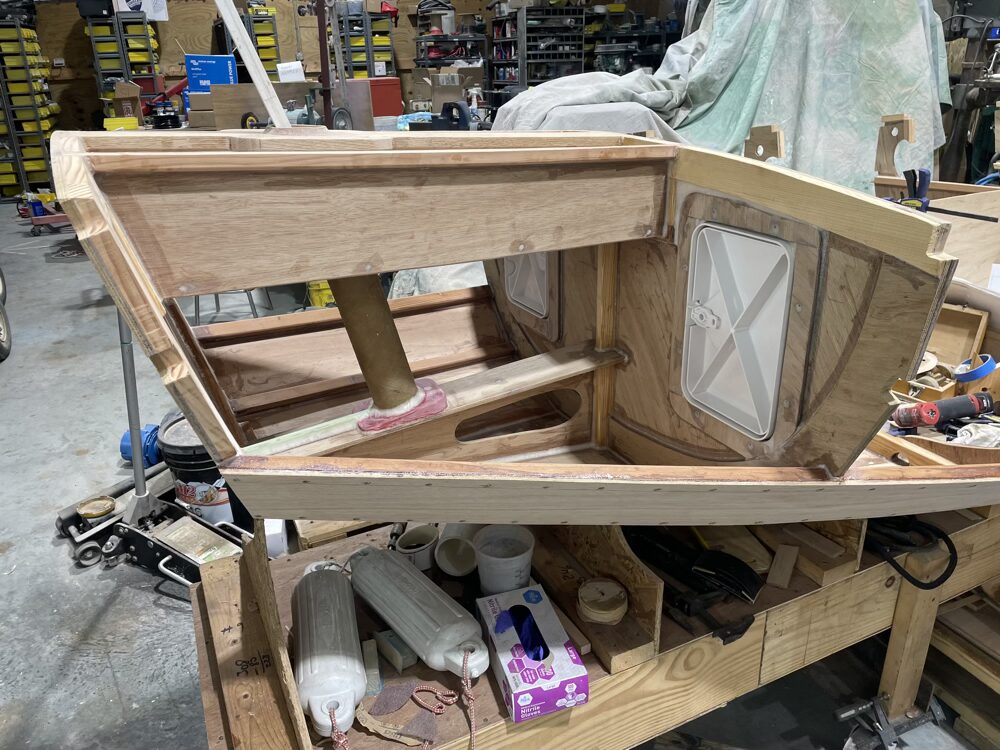
After finishing house repairs and yard beautification for a visit from the in-laws I decided to work on the boomkin tube. I changed this from the designed plywood box to a 3″ PVC pipe for lack of maintenance inside and increased space in the aft compartment. After hole sawing and die grinding the holes I screwed on some 2×4 V blocks to hold the tube centered. I glued the tube in place with GFlex thickened with 404 after sanding to 80 grit, alcohol wiping, and flame treating. It’s pretty impressive how well the epoxy bonds to the PVC compared to a test piece with factory finish.

After the epoxy I packed into the holes cured I put a big fillet around the tube and cut and sanded the ends off flush. My plan is to epoxy a collar onto the boomkin so it will mate up to the angle of the transom which will keep it from sliding forward. Then a pin or some other mechanism in the cockpit area will keep it from slidding backwards. I’m thinking the boomkin will be hollow and the mizzen sheet will come through to a cam cleat mounted right onto the heel of the spar.

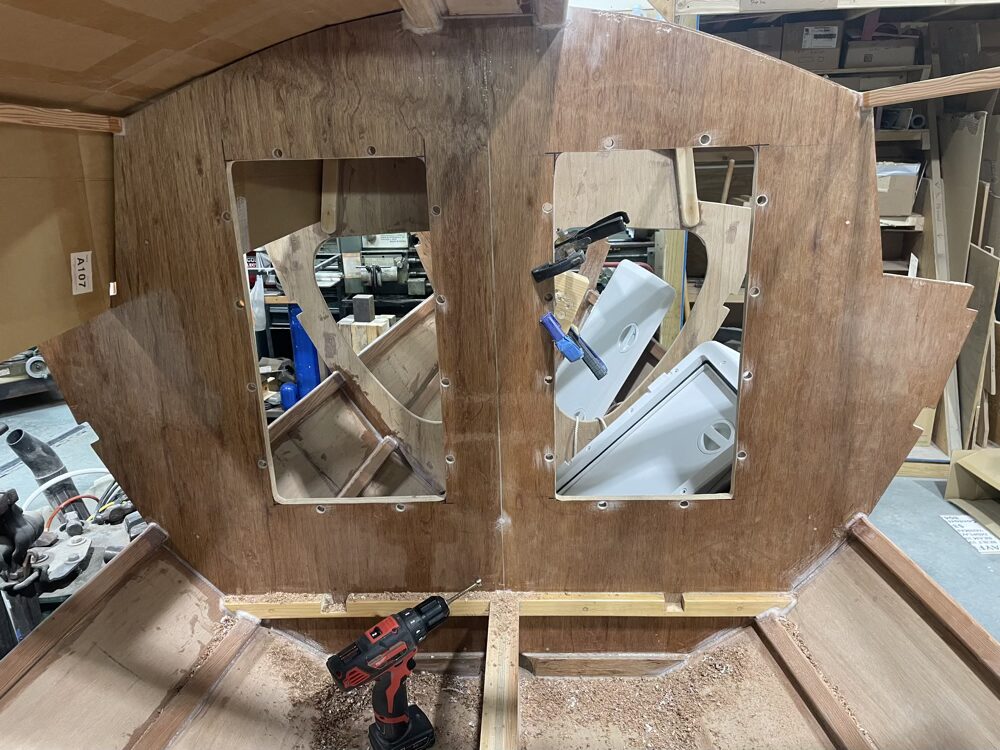
Next I dry fit a pair of hatches for the aft compartment. The plans only call for one, but by making the boomkin a PVC pipe I have enough room for one on the port side. The fasteners are just tapped #10-24 into 1/2″ holes of 404. Should work fine, but if not it’ll be easy to drill them out for through bolts.

Moving forward I drilled some holes to be filled with 404 for the hatches in the dodger.

Long Steps Build #10

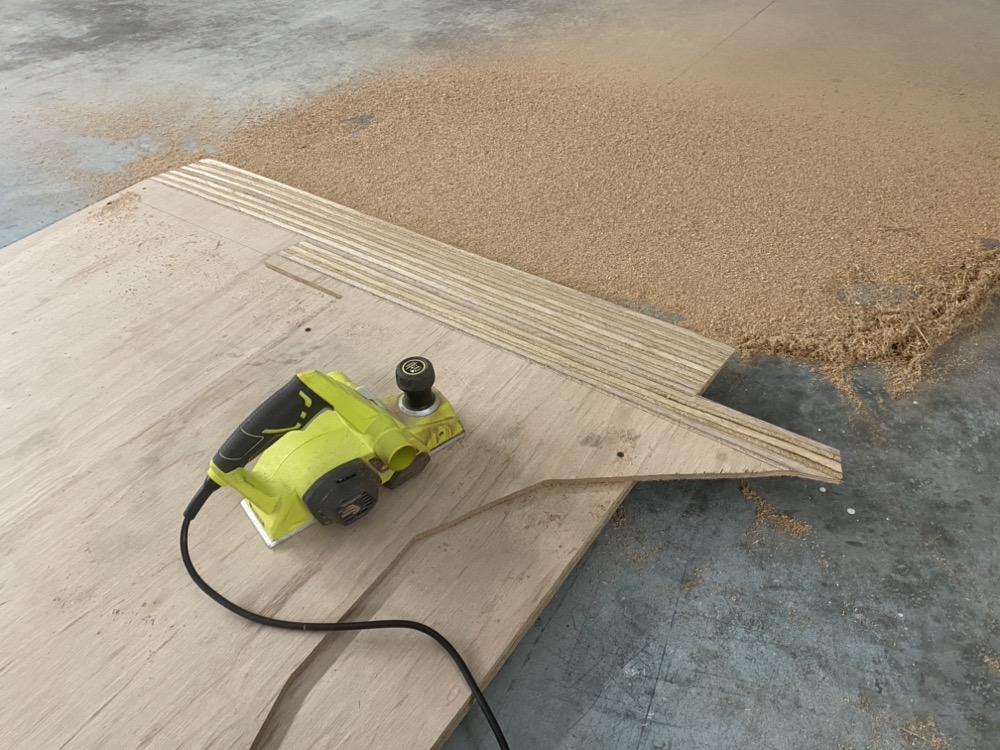
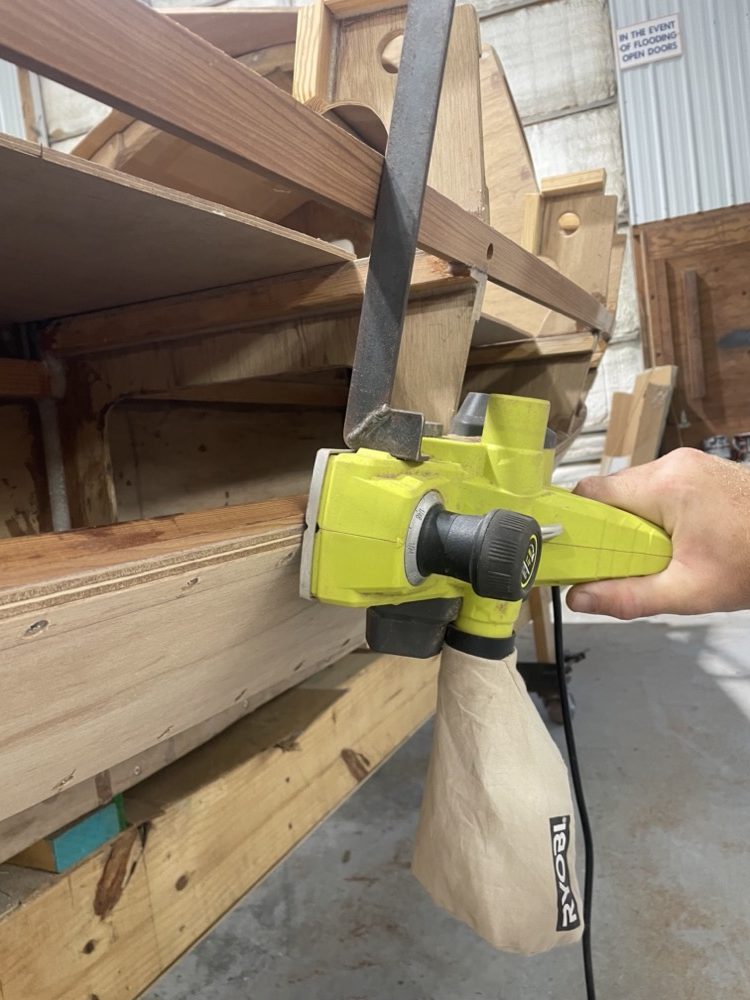
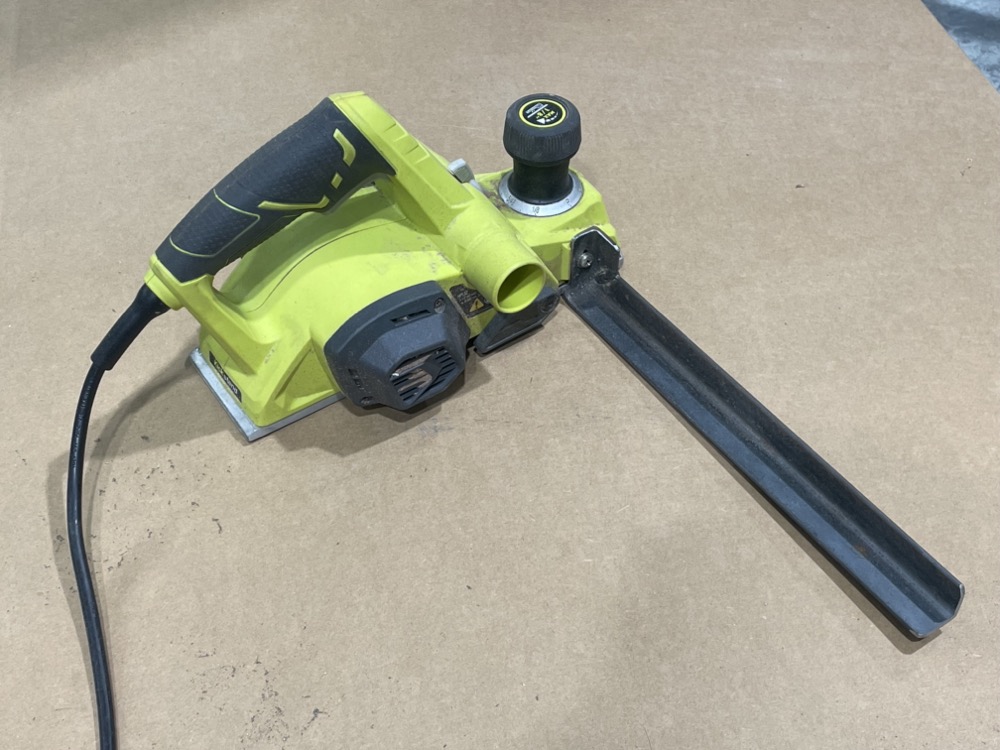
I decided to add the next plank instead of fiberglassing the inside, so that means I need to bevel the stringers so the planks will lay flat. I briefly tried a hand plane and decided that was way too much work and too slow, so I rigged up a guide on my electric planer which did a really nice job. The bar is level with the sole of the plane and rides along the next stringer to cut a rolling bevel on the stringer and plank below. I gave this planer the full Louis Sauzedde treatment and it’s really been a nice tool to use. (https://www.youtube.com/watch?v=_a1HCqK5i-A)

I was able to reuse my cardboard pattern with some slight modifications since this plank is narrower and has less sweep to it. I can’t really keep a 4’x24′ sheet of ply laying around the shop for ages, so I use the pattern to scarf up individual planks. Probably a little more wasteful than drawing them on a 24′ sheet, but I should have enough ply to do it. I’m getting more confident in my process so I’ve cut the excess margin from 1″ down to 1/2″.

Checking the fit. I clamp the plank in place, make a witness mark to aid future alignment on the stringer, and then trace the stringers onto the back. Then the lower mark needs to be offset the width of the stringer. I also chiseled out an ~8″ gain up at the stem so the plank will sit flush. Once this one is screwed down and dry fit I’ll take it off and use it as a pattern for the port side.

Eventually I got the two lowest pairs of planks epoxied on so now the hull is stiff enough to start finishing the inside while I can still lean inside easily. Once the inside is done I’ll put the remaining two pairs of planks on and the deck.


Long Steps Build #9

Next I made a plank pattern out of cardboard. I looked for some copper roves and rivets for the butt blocks, but in the end I just hot glued them on.

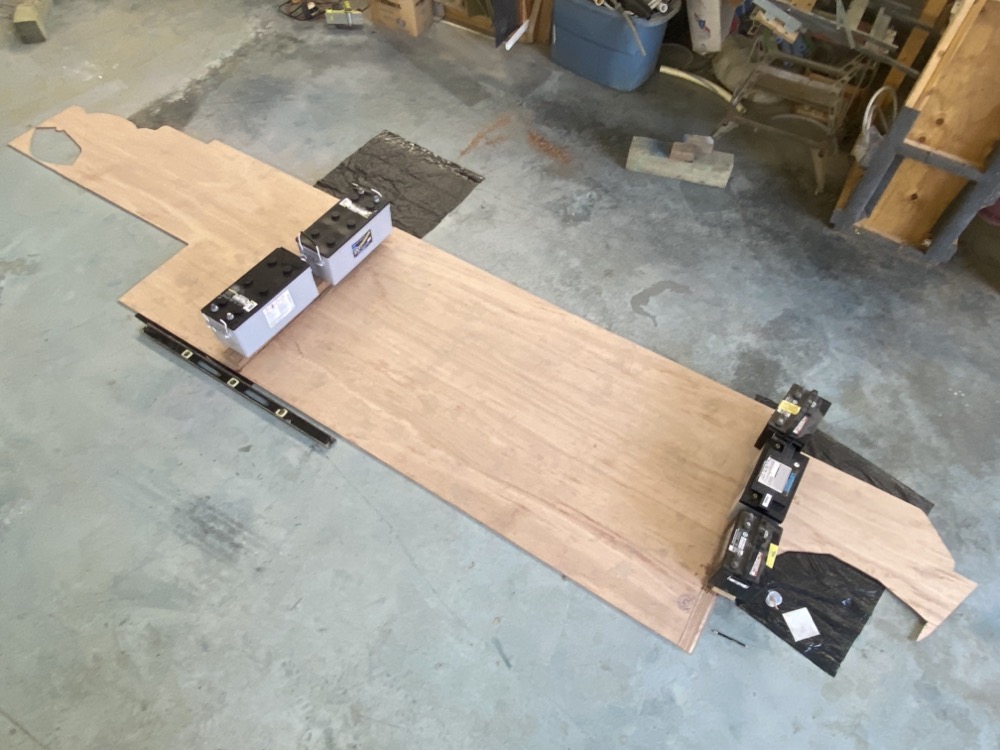
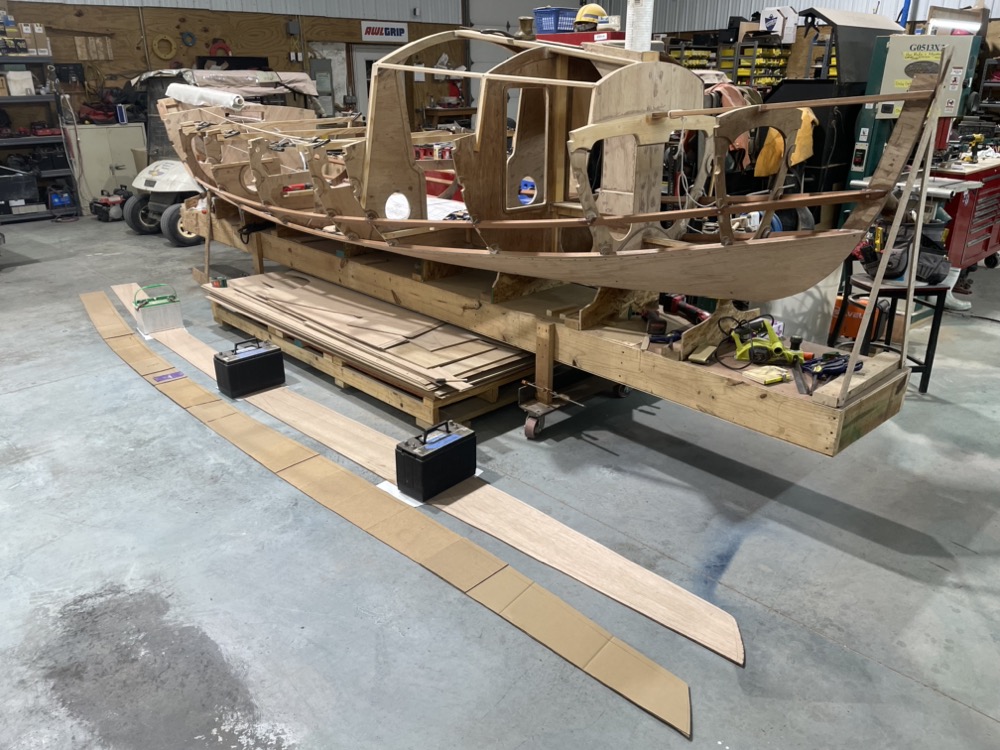
Using the cardboard pattern I scarfed up some ply to fit. After tracing I jigsawed about an inch oversize because I wasn’t sure if the cardboard would distort when I laid if flat. To clamp the scarf joint I used a group 24 battery sitting on top of a 2×4 wrapped in packing tape.

Once I got the port plank fitting nicely I used it as a template for the starboard side. I cut the top edge an inch oversize but the bottom edge fit the bottom panel almost exactly. Hopefully that means the boat is fairly symmetrical.

When dry fitting the port plank I found I had a bit of a pucker when I tried to screw the bottom of the plank up to the frames. I assume it was from distortion when I laid out the cardboard.

To fix it I cut a dart while the plank was on the boat and epoxied a butt block on. After this I used it as a template for the starboard side which fit really well.

After gluing the plank on I chiseled most of the butt block off and sanded the remnants out with a die grinder. Then I beveled out the ply and made a plug to fit. 36 grit roloc disks make short work of scarfing! This plank will have fiberglass on the inside and either fiberglass or possibly kevlar on the outside, so strength wise I doubt it changes anything.

And after a 5 hour marathon session I got the starboard plank glued on as well. I’ve been putting a small popsicle stick radius of thickened epoxy at every joint in the build to make painting and eventual cleaning easier and it’s incredible how time consuming it is. Especially since I try to scrape up all the excess so I don’t have to chisel and sand it off later.

Long Steps Build #8

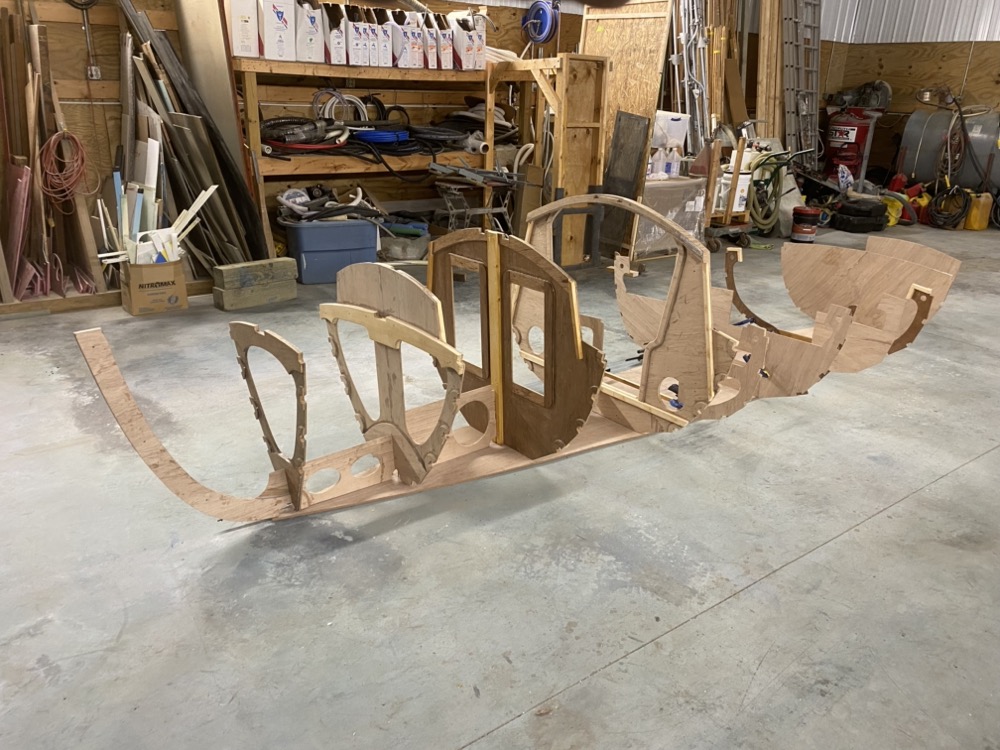
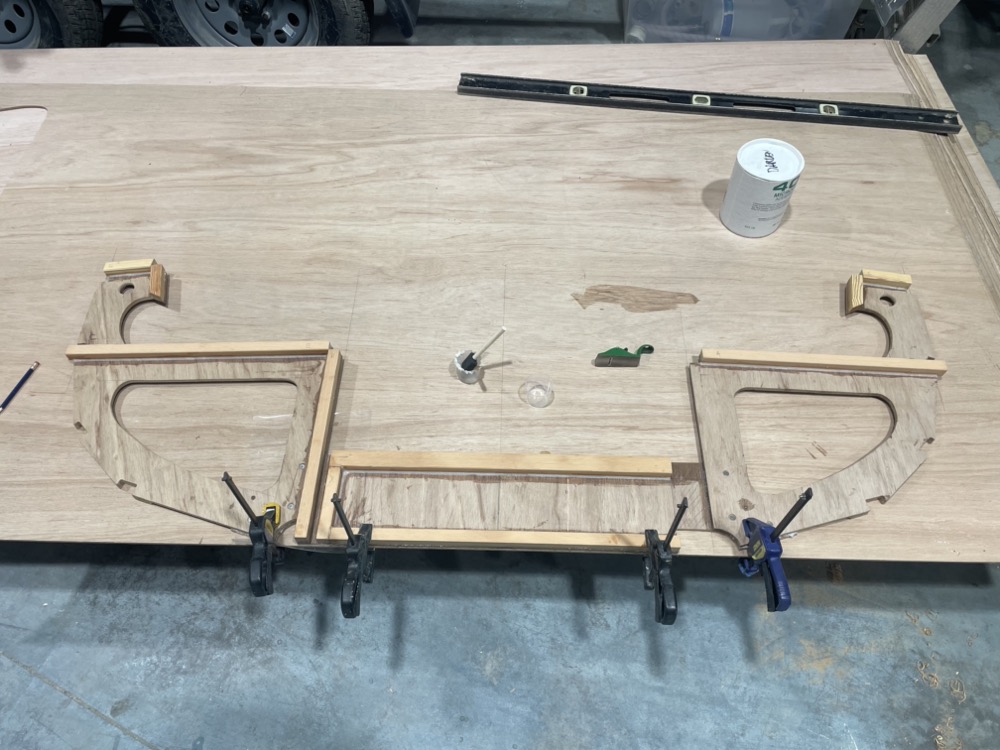
Finally I got the last bulkhead put together. The centerboard case makes up the front of the starboard side bench, so that hatched bit of ply gets cut away after the bottom two pairs of planks go on. The center section will form the end of the water ballast tank.

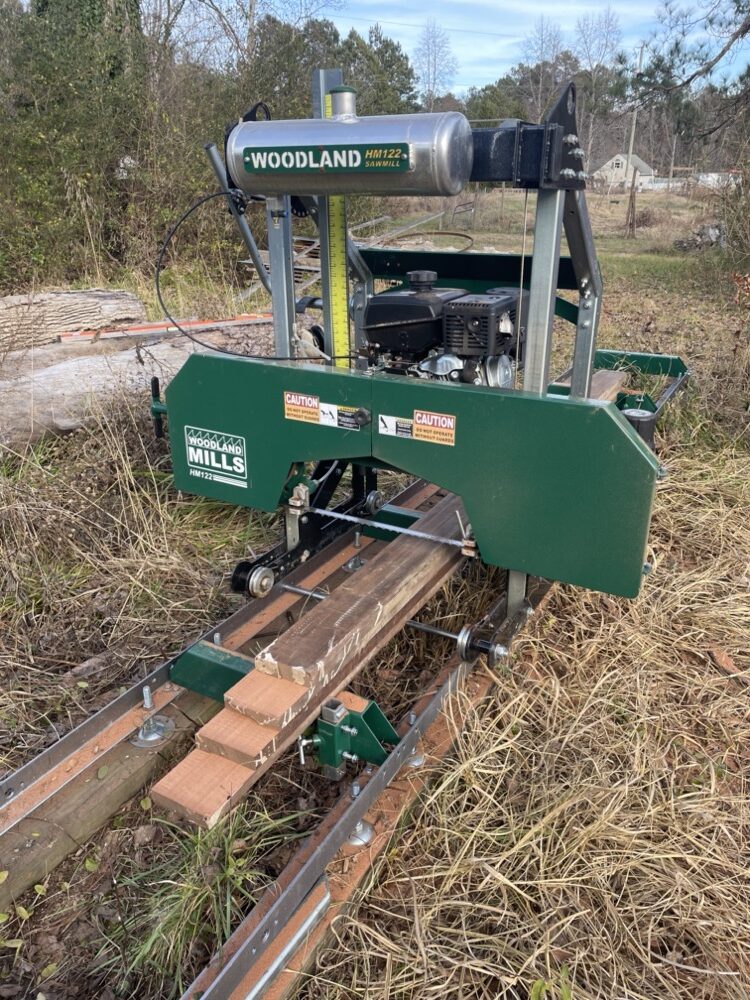
With the bulkheads all in place it was finally time to work on the stringers. For nearly 10 years I’ve had a 9.5′ long redwood 6×6 I found when I moved my metalworking shop into an old boss’s workshop. He had it for over 30 years and I’ve never really known what to do with it since it seemed too nice to cut up. I figured this was a worthy project so I took it over to a buddy’s sawmill and sliced it into four equal slabs. In a previous job I helped design and manufacture a portable sawmill and it was really interesting seeing how this company solved the same problems we came up against.

After running the slabs through the planer I found the tightest sections had about 45 rings per inch!

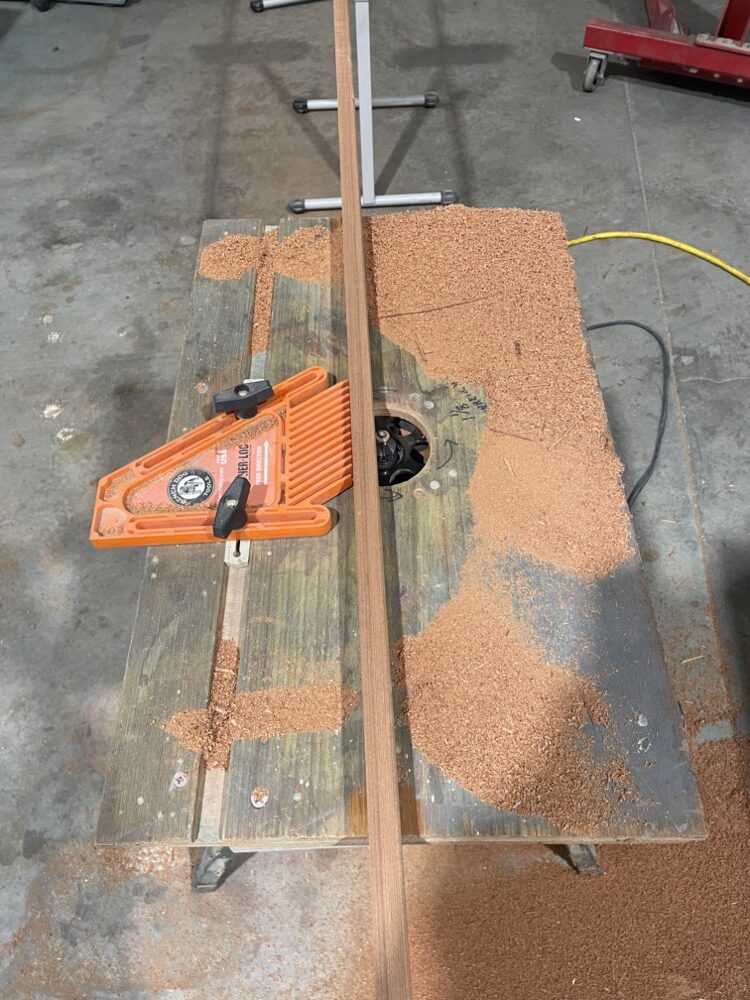
Next I ripped six strips per slab and planed everything to 30mm x 3/4″. This build has been a hodgepodge of metric and customary. The plans are metric but I’ve built most of the stuff that doesn’t really matter to customary so I can visualize what I need to make or make use of common material thicknesses. Originally I thought I’d use 1x material for the stringers so that’s what I made my stringer notch router jig cut.

Finally I checked each strip for a bow and rounded over the edges on the inside of the curve. I figured it’s better to put the strips on the boat the way they want to bend rather than fighting them.

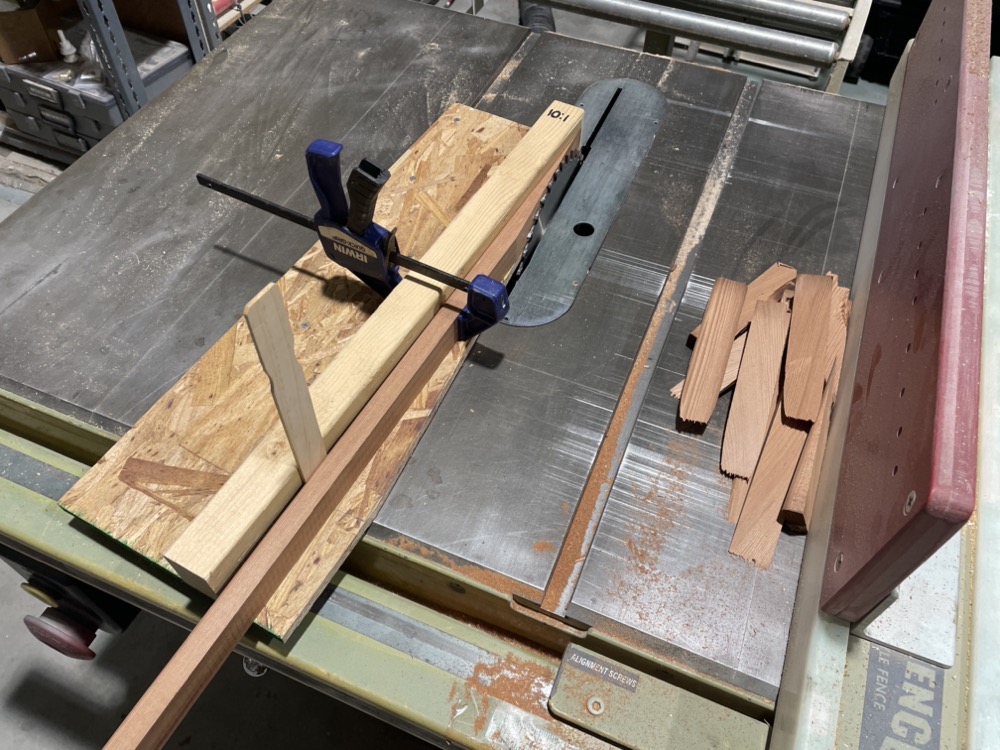
I’m going to need to do a lot of scarfing so I made a 10:1 jig. I think the fence might be a bit bowed or something because I found I needed a shim to keep the strips tight up by the blade.

Gluing up the scarfed sections. I ran a 36 grit disk over the joints to really rip them up a bit before priming with neat epoxy and then clamping with thickened. Heat lamps help things along.

Got the bottom two pairs screwed into place. I had to do some beveling on the notches in the frame with a burr in a die grinder and one of the notches seems to be nearly an inch off to get the batten to lay fair. After dry fitting I’d let the forward half spring out and glue them in place. Then the next day I’d do the rear half of a stringer. I guess it helps prevent distortion, but mainly that’s all I could get done during a lunch break!

Unfortunately my strips were about a foot too short so I had to scarf a bit more on.

Finally the strips are in and fairly fair. Next up I’ll build some cardboard plank patterns, scarf my plywood, and put the bottom two pairs of planks on. I trimmed the OSB bottom panel supports so the planks can lap over the bottom without interference. I figure I’ll leave the plywood oversize and scribe it to the bottom panel.

Long Steps Build #7

After installing the mast box I put in the white oak rooftop stringers along either side.

Then I routed and chiseled a rabbet for the 3/8″ ply filler piece.

Working on the transom stiffeners.

After installing the spine piece I epoxied the transom in place. Lots of measuring trying to get it centered, square to the centerline, and tipped at 14º.

Building the tunnel for the tiller to rudder bellcrank.

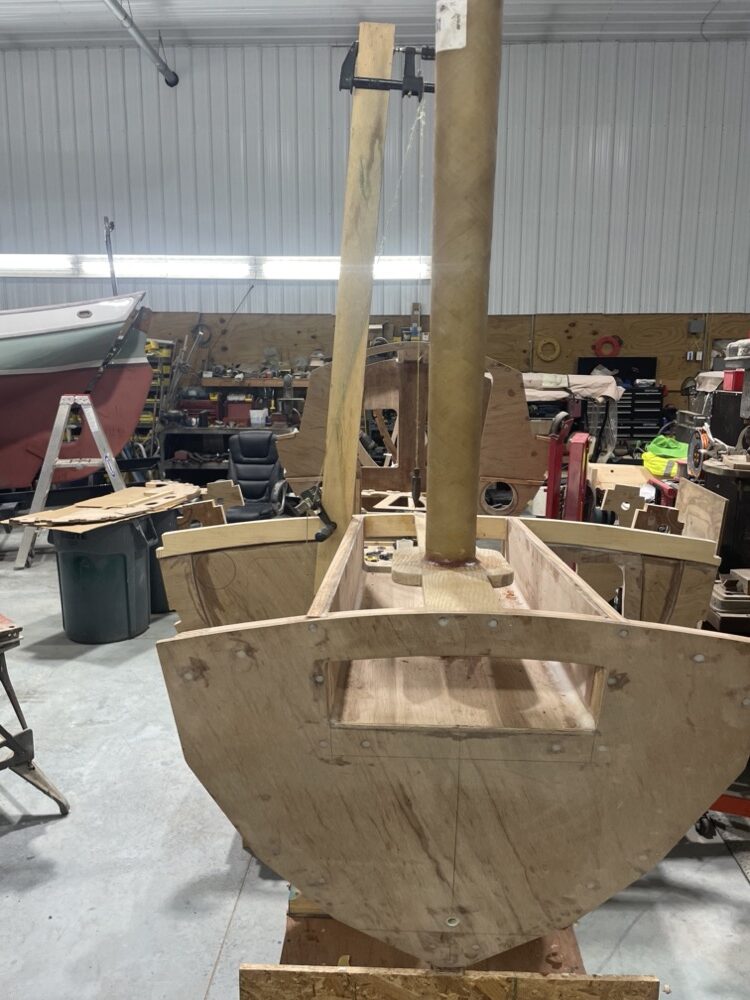
I wasn’t exactly a fan of the mizzen mast box design for a number of reasons. One, it takes up quite a bit of the already limited space. Two, I can imagine poking the mizzen through the deck and lining it up with the step could be difficult on the water. And finally I want something rot proof since it’ll be inaccessible short of major surgery. So I built the step out of FRP, mast guide from fiberglass exhaust tube, and a drain from G10 tubing.

Since the mizzen is raked I figured a plumb bob was about the best way I could think of to position the mast guide. Sighting down the edge to the hatches up forward looked pretty good too.

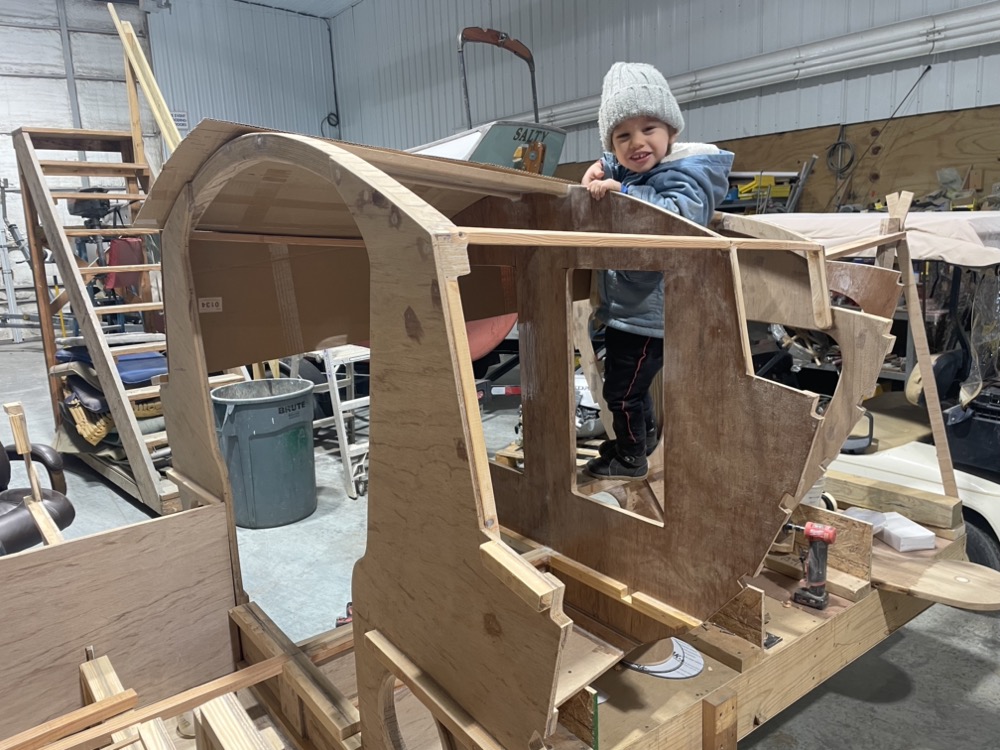
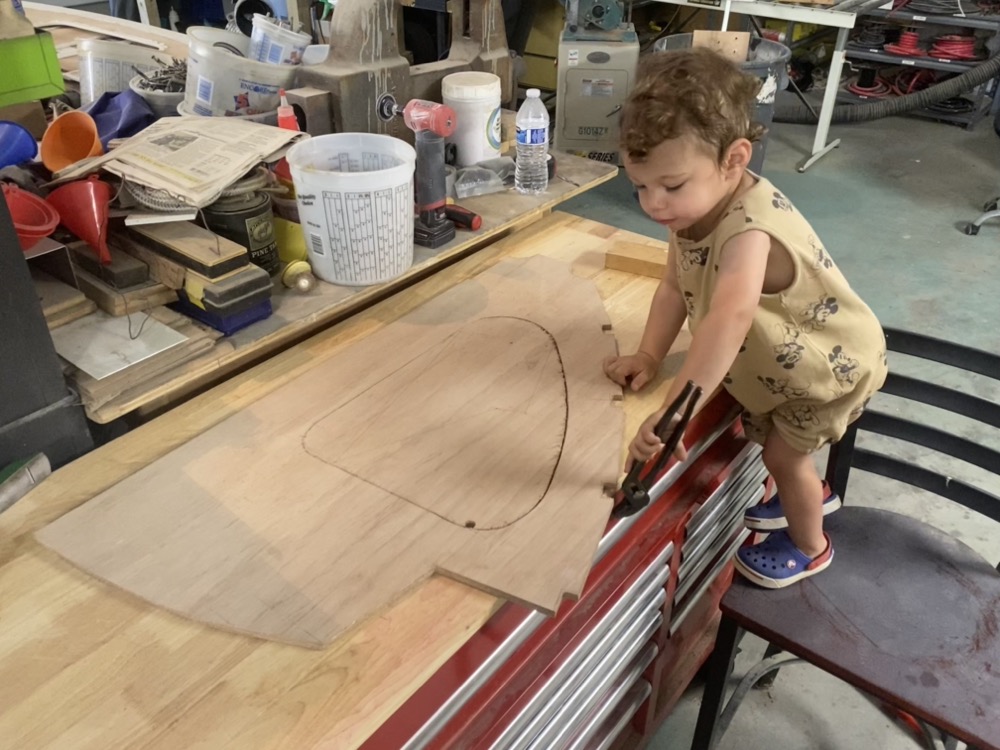
Up forward I added the roof carlins and made some cardboard templates of the cabin. I had two weeks off for Christmas and New Years so I managed to put in 3-4 hours a day on the build. In the mornings I’d bring my helper along to give my wife a break and then in the afternoon I’d get some actual work done during his nap. Here he is checking out his fo’c’sle accommodations.

Long Steps Build #6

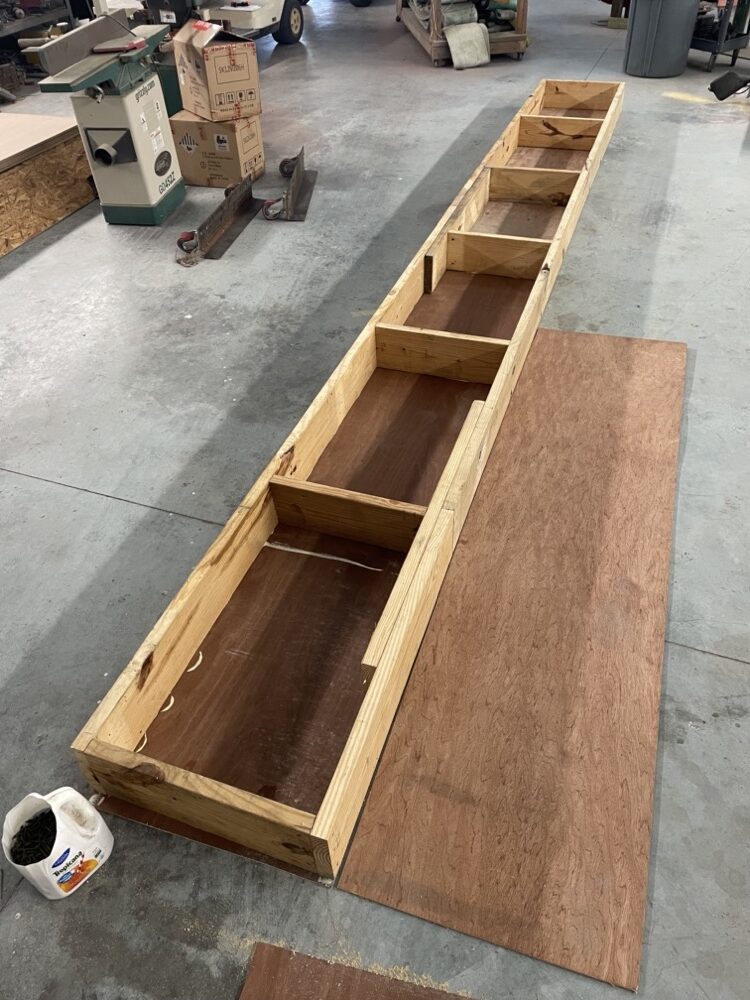
I built the strong back out of some 2×12’s and luan plywood I had laying around. I glued and screwed the plywood on to make a stressed skin box and I didn’t notice any sag when I picked one end up.

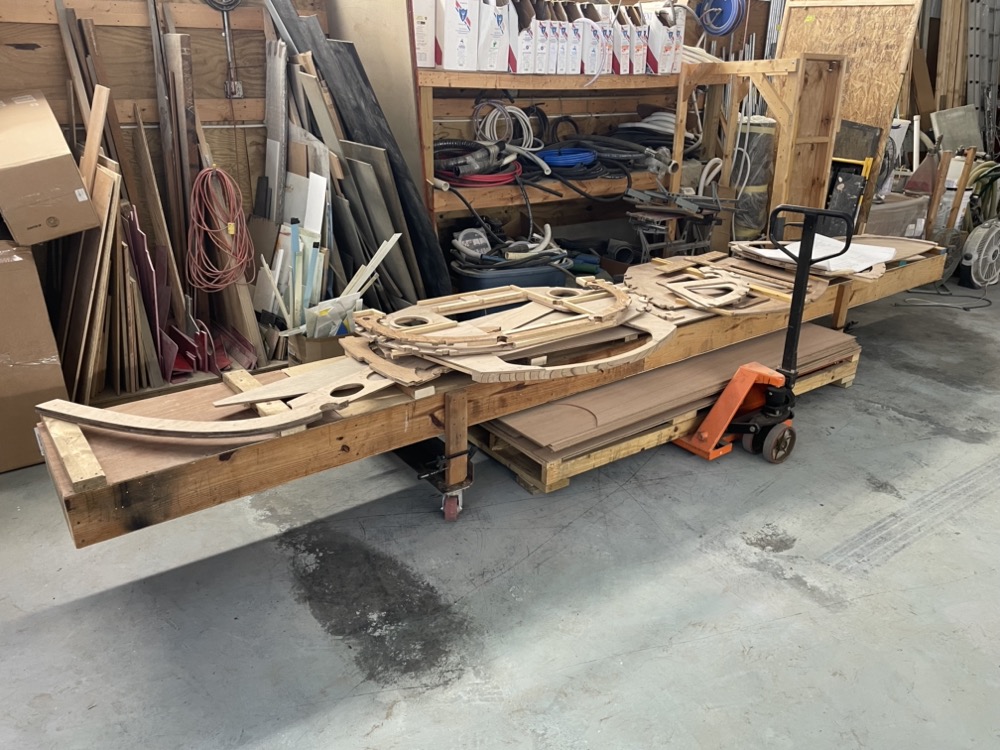
The legs are just long enough that I can store the remainder of my plywood underneath. The angle iron and casters are actually for moving my 2500 pound lathe. But since I don’t foresee needing to move it, they can stay on the strong back for a year or so.

Next I fastened down 2×4’s and chunks of the shipping crate my plywood came in to support the bottom panel. I made no special effort to make sure the strong back was square, flat, or level so I used a laser level and sharpied a waterline on the OSB panels. From that I could measure up to where the plans called for and trim off the excess. Plus I can always make sure the boat is level by checking the waterline with the level again.

With the supports trimmed I glued and screwed the spine and first two bulkheads.

The third bulkhead is glued in and I set up some of the others for motivation. I decided not to make my own hatches with a groove and surgical tubing so I cut off the lip to fit a 13″x23″ hatch.

I planed the bottom on an angle, but bulkhead #7 still needed some help to stay plumb while the epoxy set.

I spent two weeks of lunches building the box for the main mast. The plans don’t call for it, but I glassed the inside cause why not. There’s a piece of 5/8″ OD fiberglass tubing sticking out the bottom that will drain any rainwater or spray that gets in.

Somehow the hole for my access hatch got a little too big so I cut a ton of kerfs in a strip of ply and epoxied it in place. Later I cleaned the inside up with a flap wheel in a die grinder.

Mast box ready to go in.


Long Steps Build #5

Lately I’ve wanted to complete an item since the boat is coming along all at the same pace so I decided to build the rudder. It’s laminated from a 1/4″ piece sandwiched between two 3/8″ pieces. Here I’m gluing on some oak edge protectors.

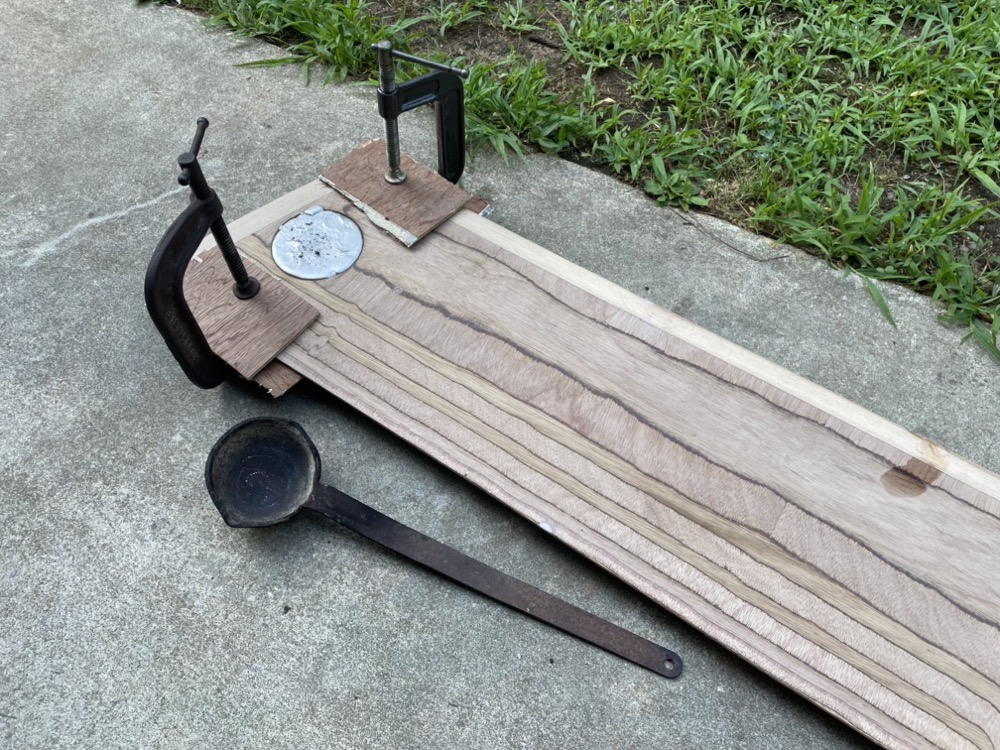
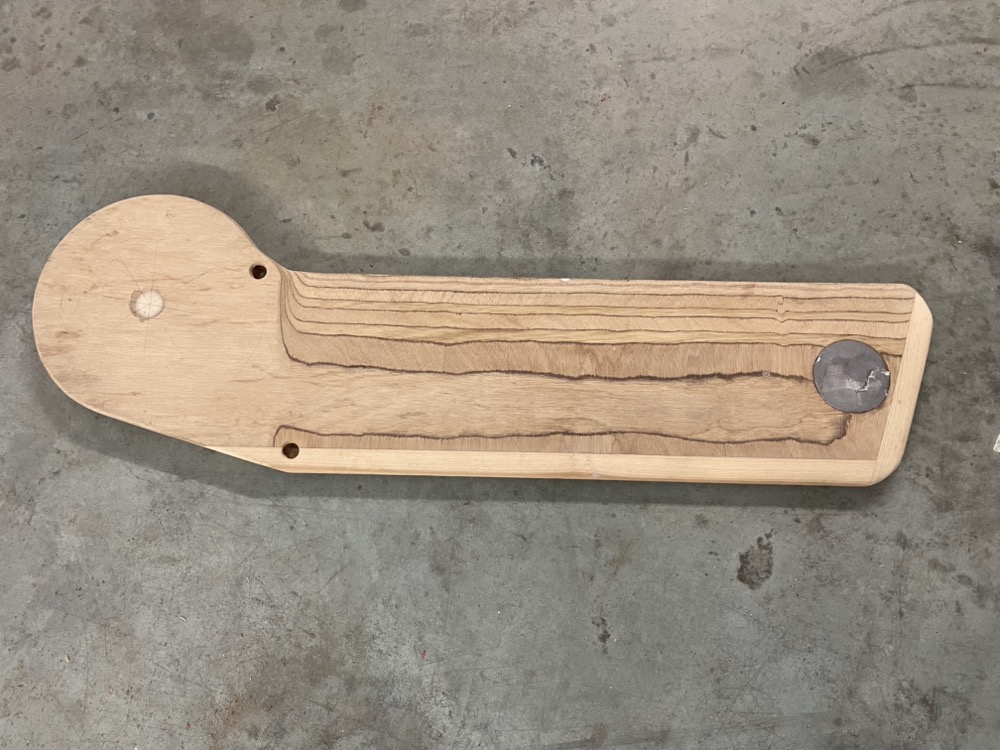
The edge protectors are tongue and groove and the hole is for lead ballast. I cut three little notches into the 1/4″ piece so the lead will flow in there and lock itself in place.

Next I made a router guide out of some MDF to cut the foil shape. It is tight enough to stay put on the rudder blank and I left the flat spots to I have something to index off of on the other side. The guide worked really well, better than I thought it would.

Towards the tip though it does need to be clamped on. A 36 grit Roloc disk in a die grinder makes short work of the flat spots and a DA sander cleans it up. It’s pretty easy to use the plys like a topo map to keep the shape right.

The holes are for stopper knots on the up and downhaul lines. The 1/4″ layer has a slightly smaller diameter so the two outside layers make flanges that guide the line around the pivot. I ran a drill bit on it’s side through there to clean up the epoxy and grind the wood into a nice smooth shape for the line to sit in.

Next I melted some lead shot to pour into the tip. Just a thin piece of ply clamped to the underside kept the lead from leaking out.

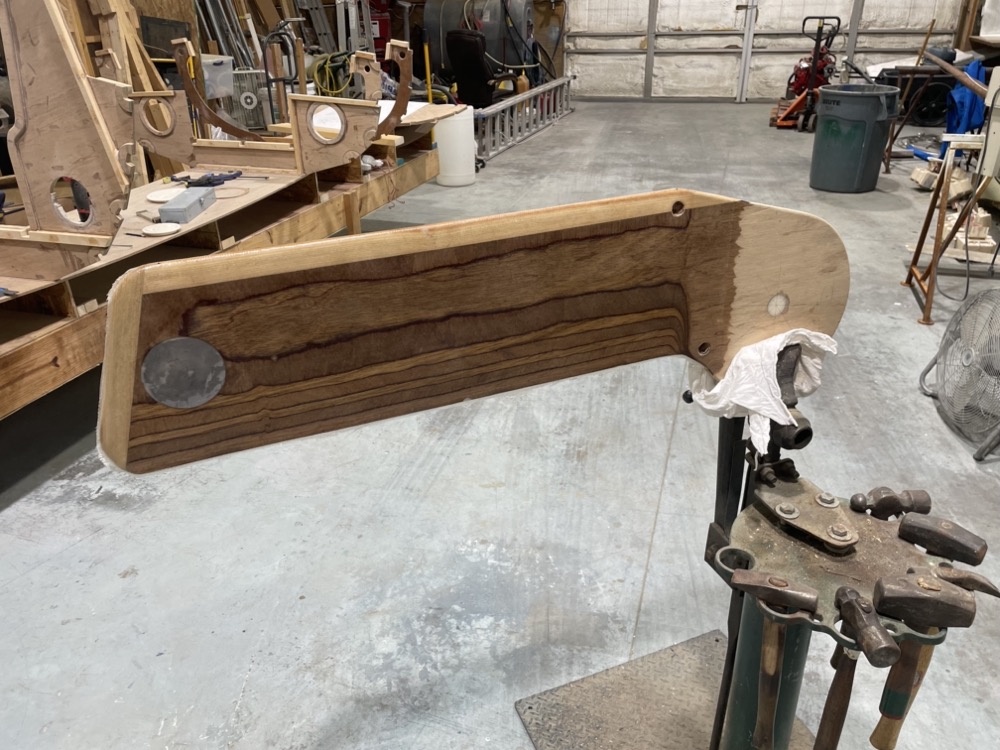
After a bit of power planing I brought the lead down to the level of the wood and after some minor fairing it’ll be ready for fiberglass!

First I wet out the board with epoxy, then I put a ~3″ strip of 6oz fiberglass cut on the bias around the bottom of the tip. I pre-shaped it dry a bit and it conformed surprisingly well. Then I draped on some cloth and wet it out.