Long Steps Build #9

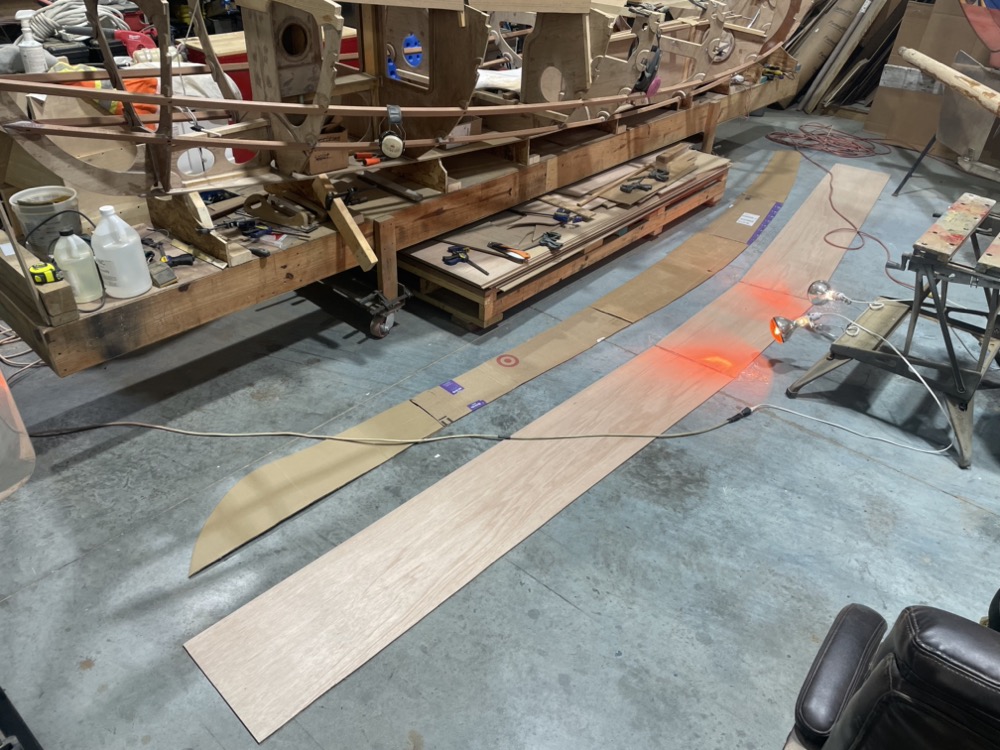
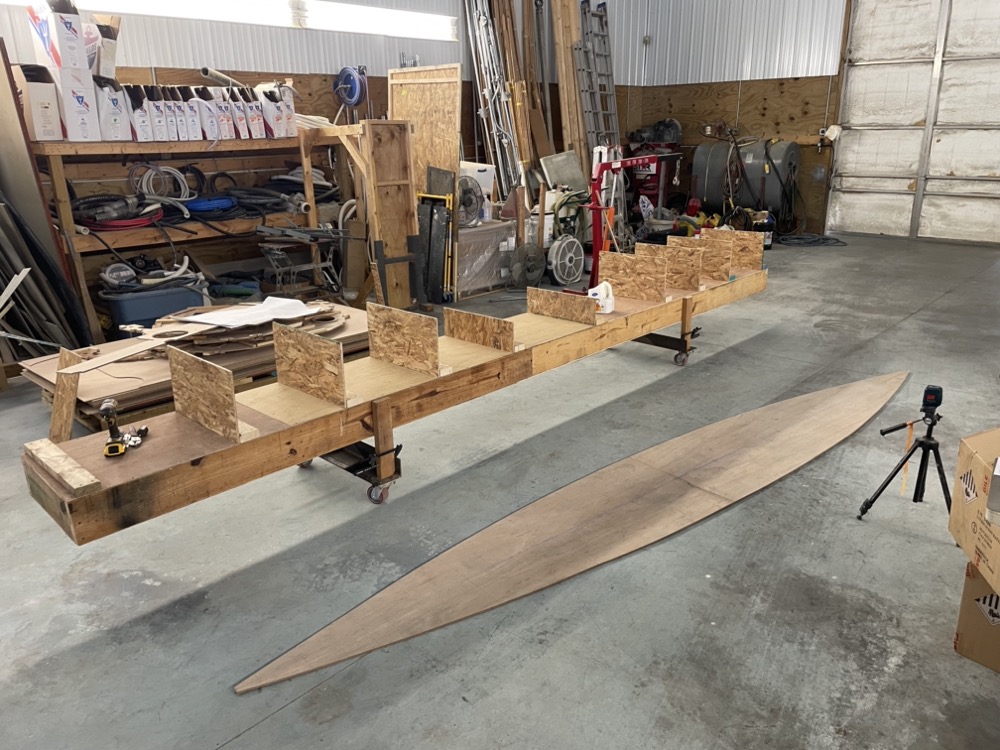
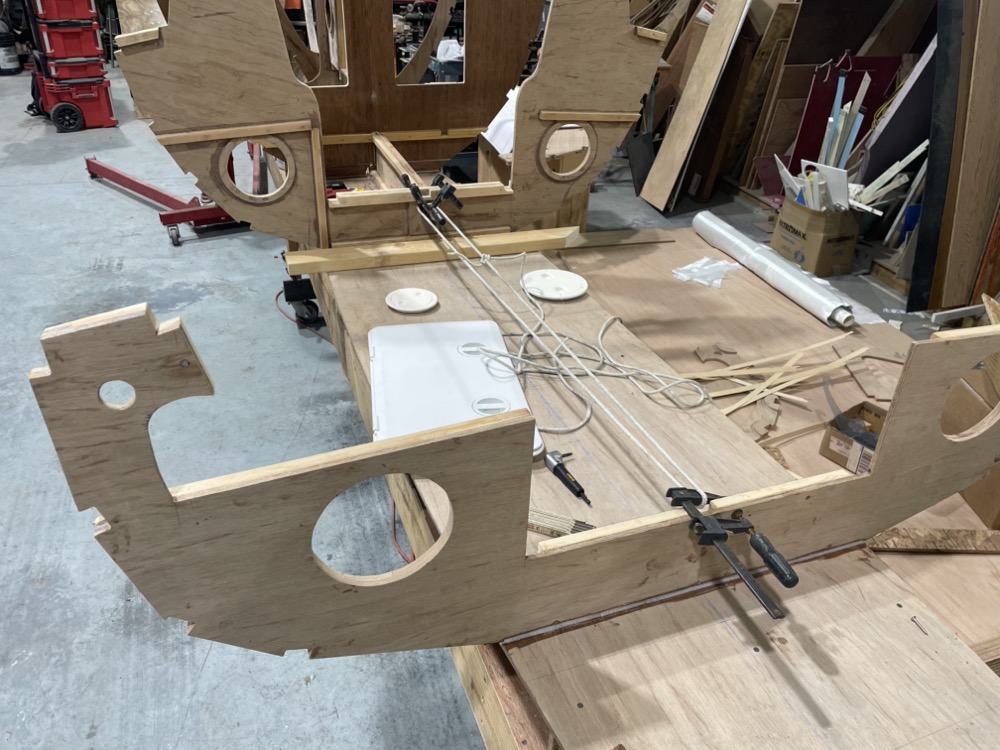
Next I made a plank pattern out of cardboard. I looked for some copper roves and rivets for the butt blocks, but in the end I just hot glued them on.

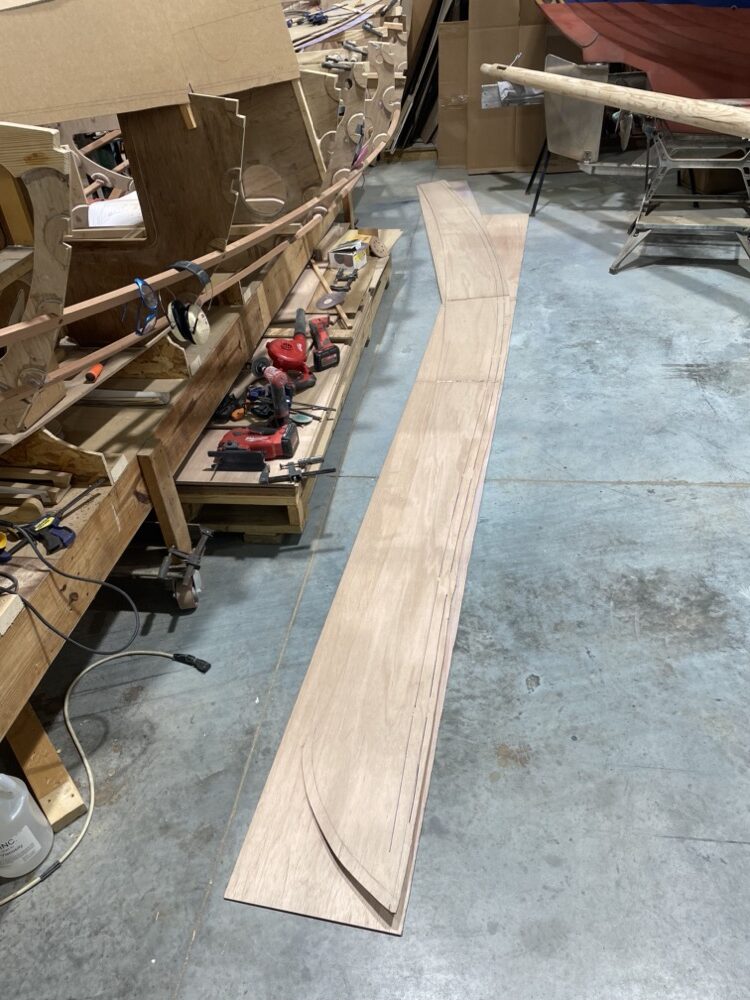
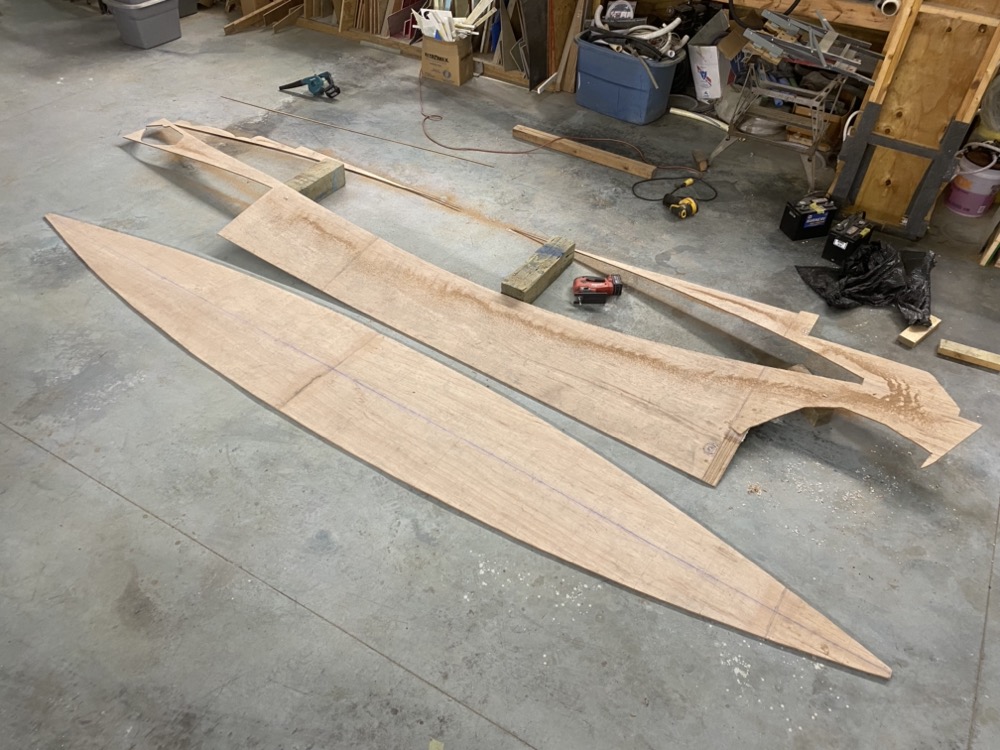
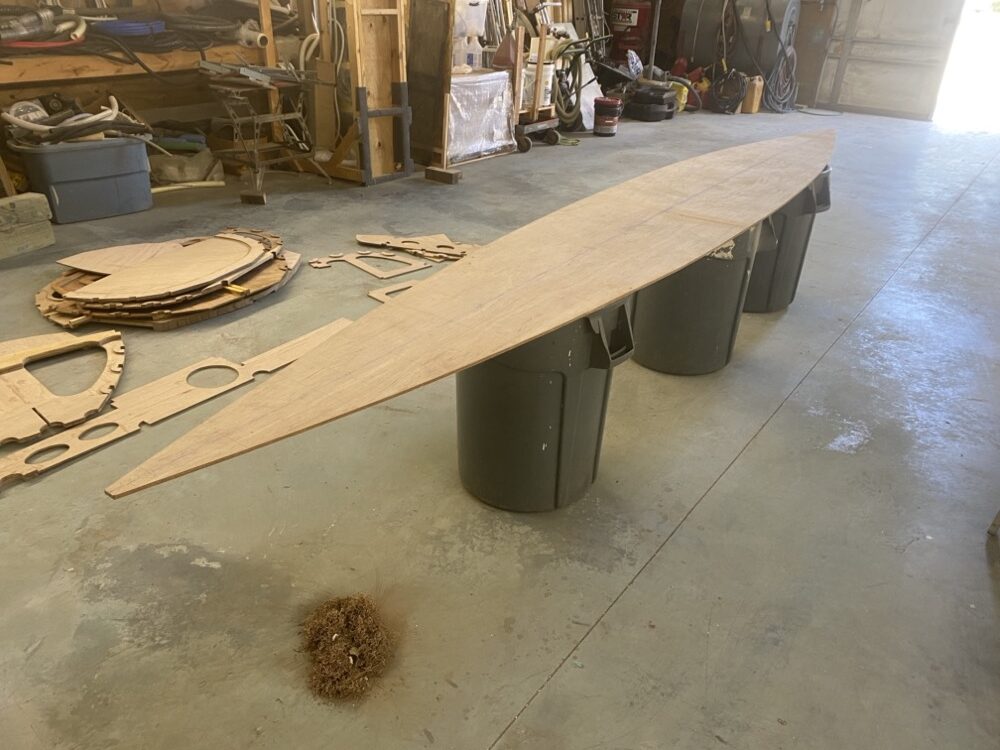
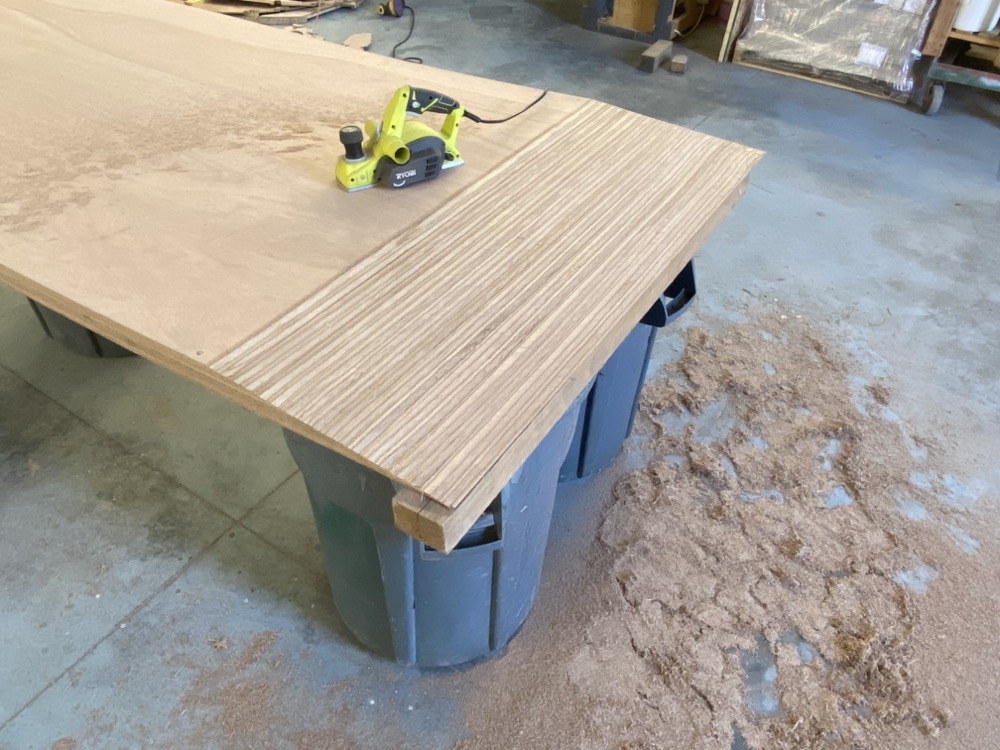
Using the cardboard pattern I scarfed up some ply to fit. After tracing I jigsawed about an inch oversize because I wasn’t sure if the cardboard would distort when I laid if flat. To clamp the scarf joint I used a group 24 battery sitting on top of a 2×4 wrapped in packing tape.

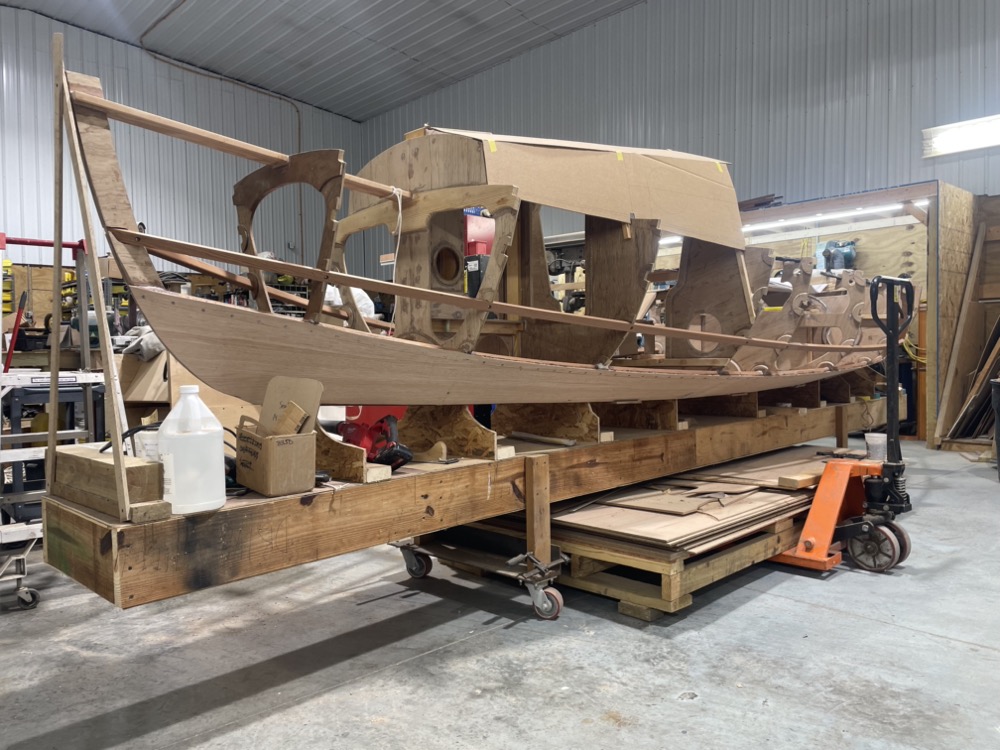
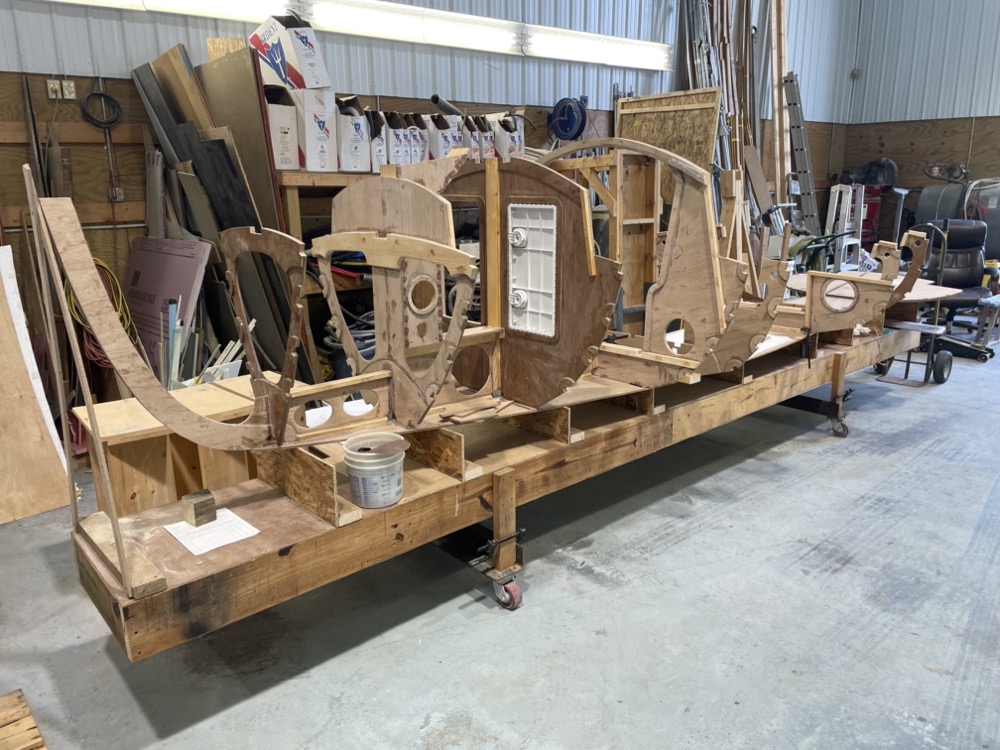
Once I got the port plank fitting nicely I used it as a template for the starboard side. I cut the top edge an inch oversize but the bottom edge fit the bottom panel almost exactly. Hopefully that means the boat is fairly symmetrical.

When dry fitting the port plank I found I had a bit of a pucker when I tried to screw the bottom of the plank up to the frames. I assume it was from distortion when I laid out the cardboard.

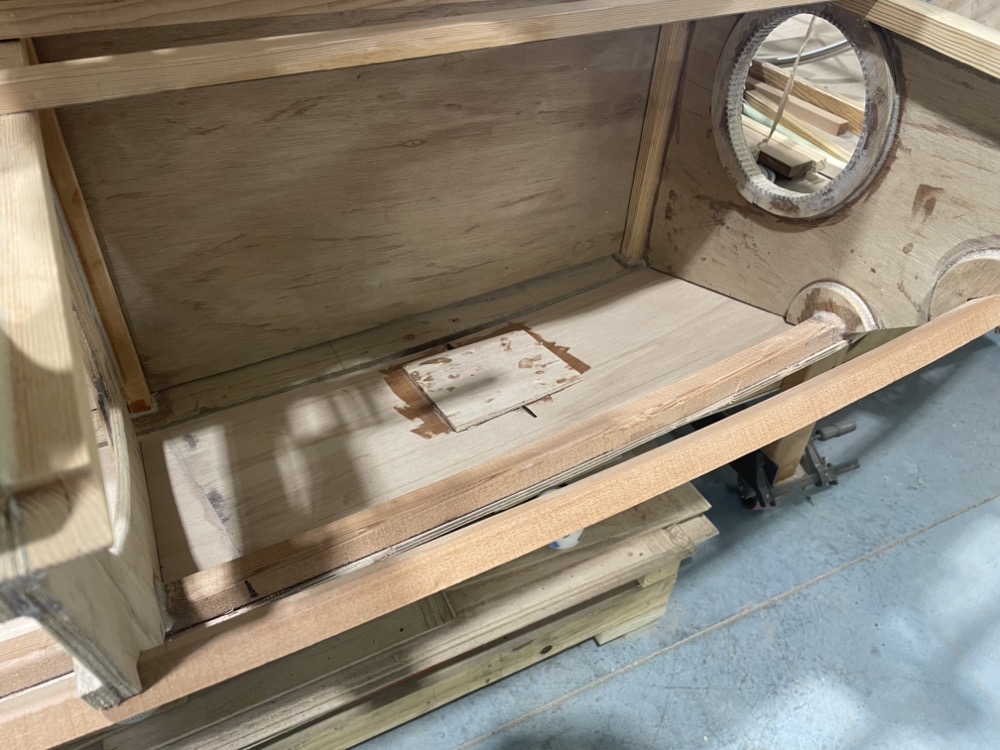
To fix it I cut a dart while the plank was on the boat and epoxied a butt block on. After this I used it as a template for the starboard side which fit really well.

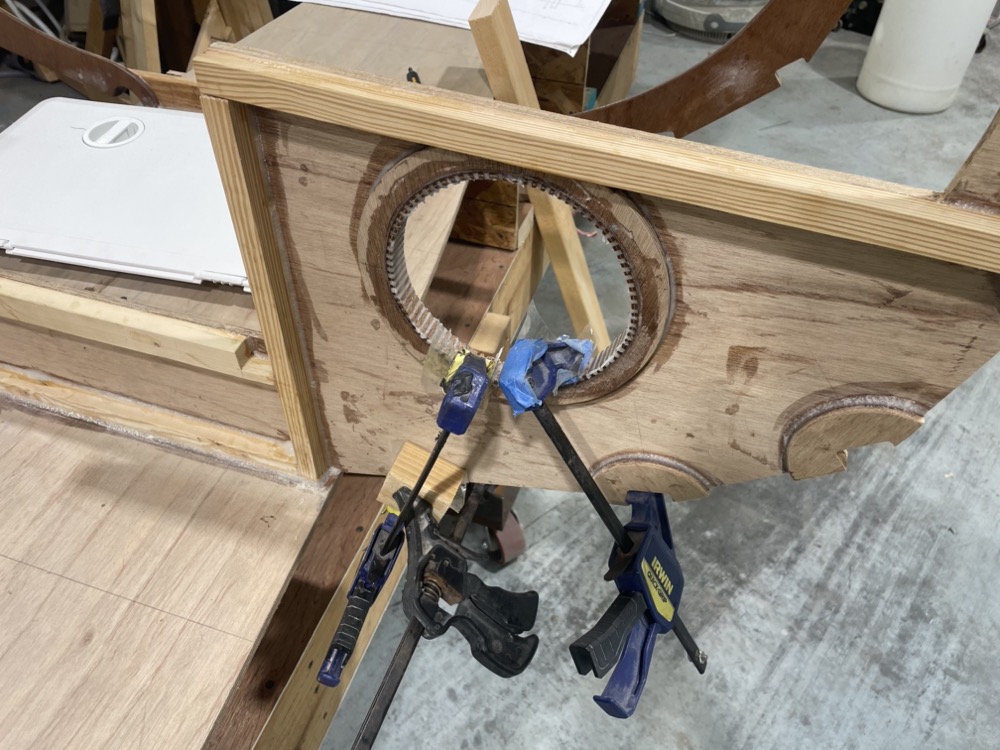
After gluing the plank on I chiseled most of the butt block off and sanded the remnants out with a die grinder. Then I beveled out the ply and made a plug to fit. 36 grit roloc disks make short work of scarfing! This plank will have fiberglass on the inside and either fiberglass or possibly kevlar on the outside, so strength wise I doubt it changes anything.

And after a 5 hour marathon session I got the starboard plank glued on as well. I’ve been putting a small popsicle stick radius of thickened epoxy at every joint in the build to make painting and eventual cleaning easier and it’s incredible how time consuming it is. Especially since I try to scrape up all the excess so I don’t have to chisel and sand it off later.

Long Steps Build #8

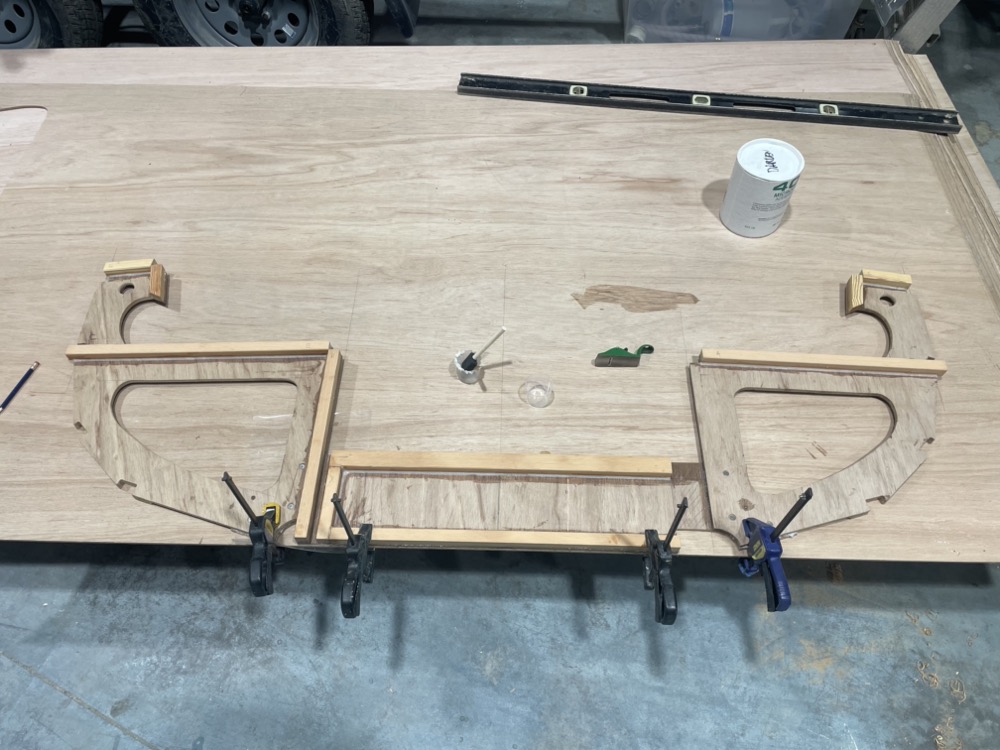
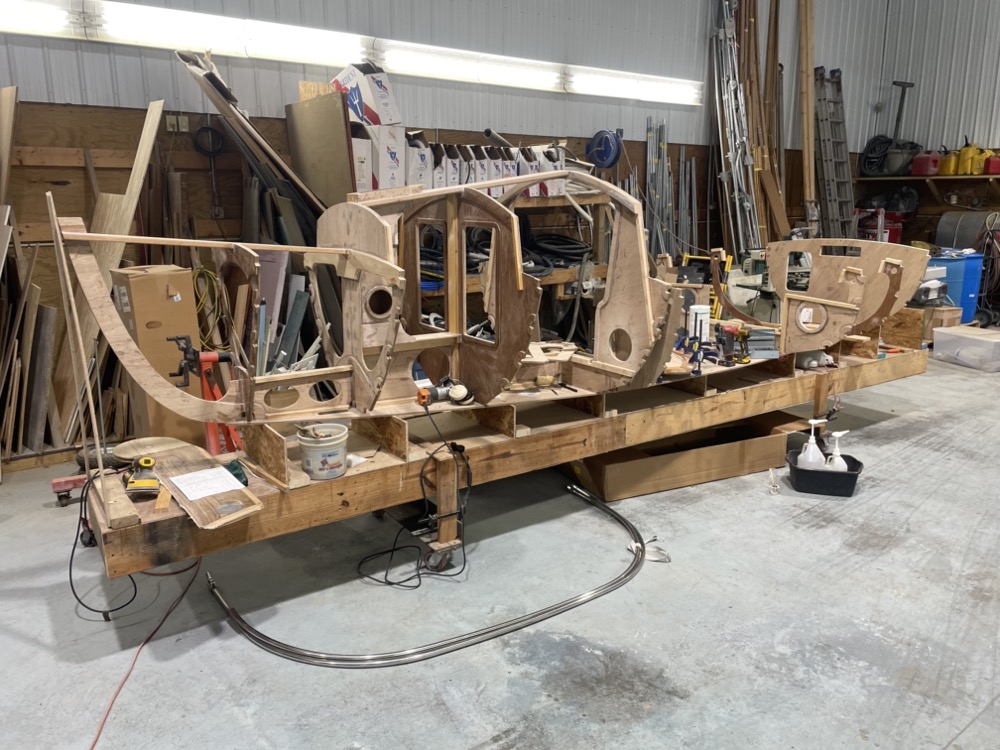
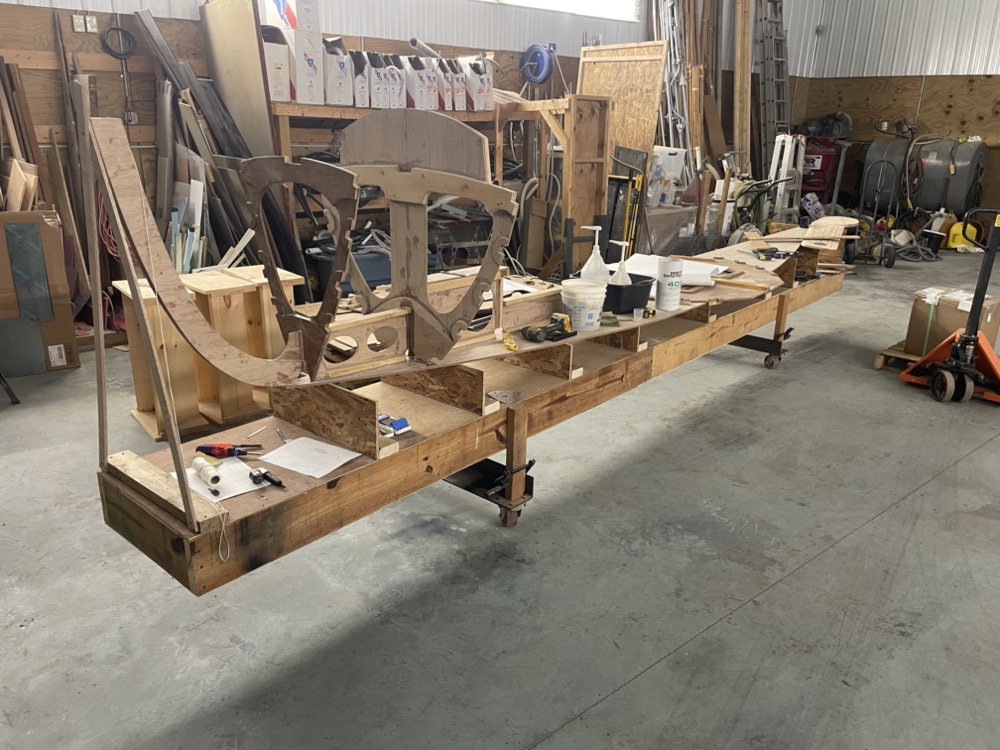
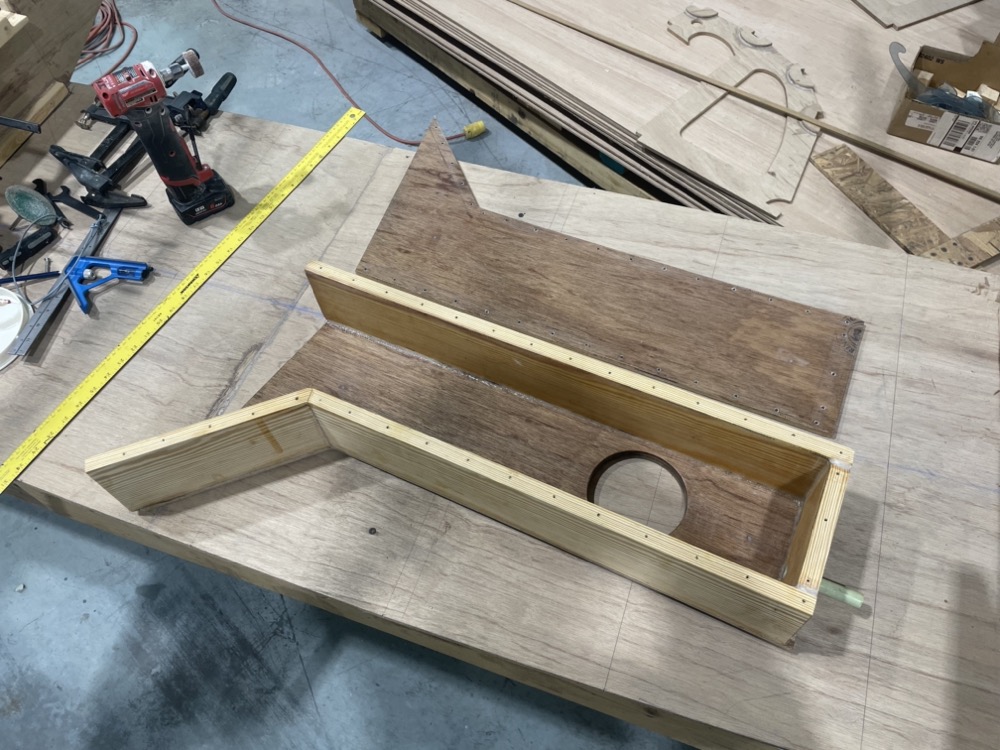
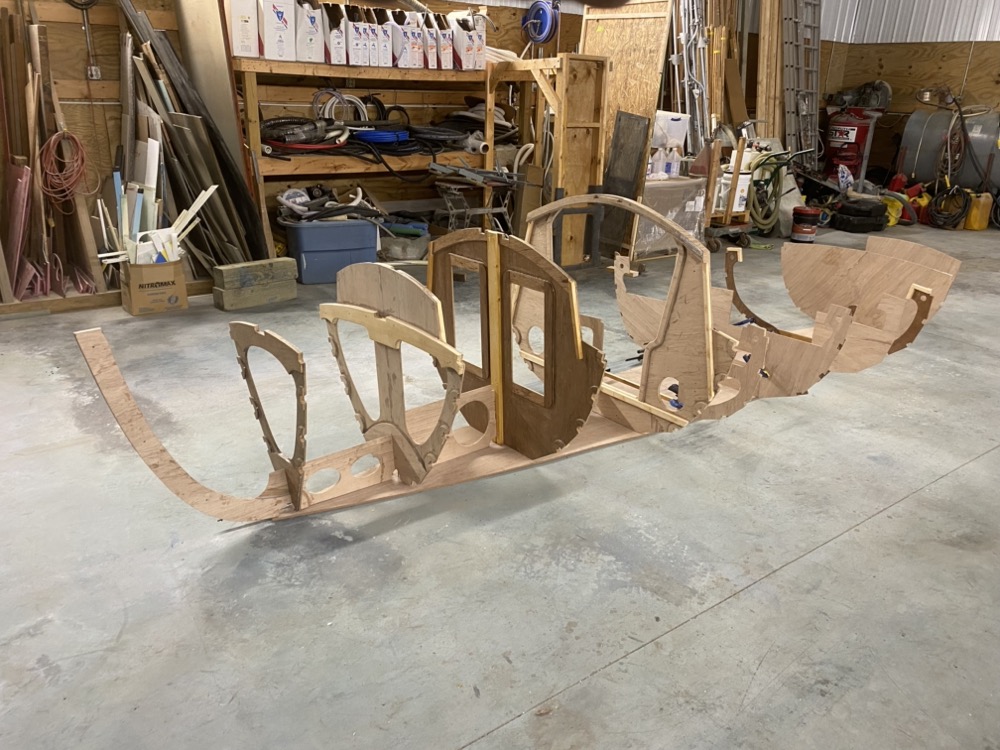
Finally I got the last bulkhead put together. The centerboard case makes up the front of the starboard side bench, so that hatched bit of ply gets cut away after the bottom two pairs of planks go on. The center section will form the end of the water ballast tank.

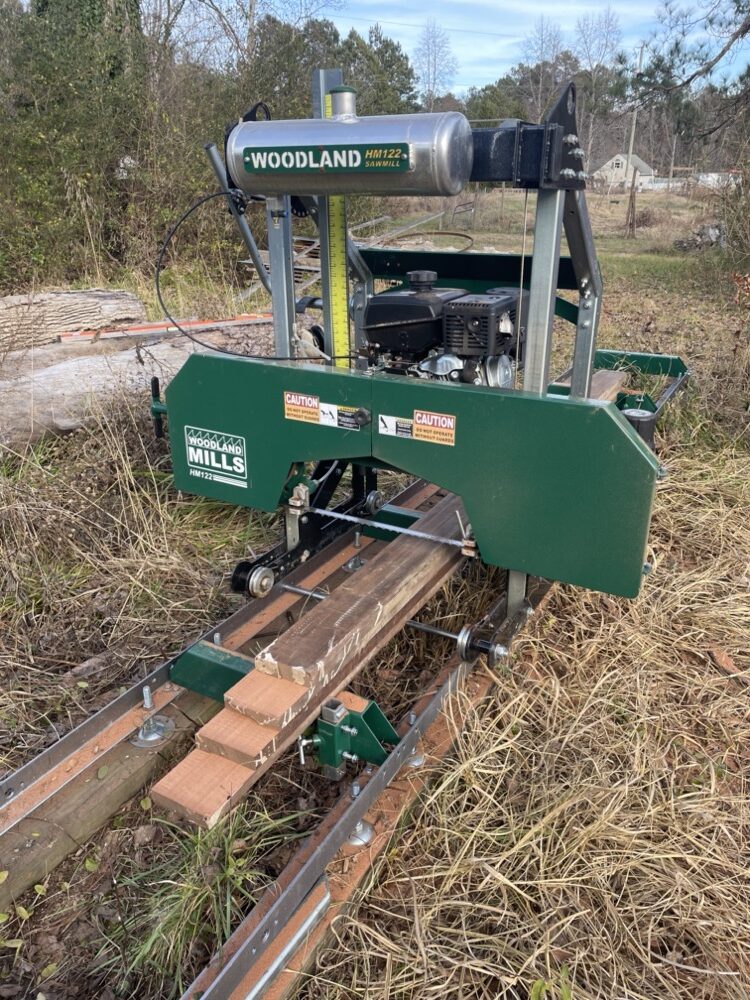
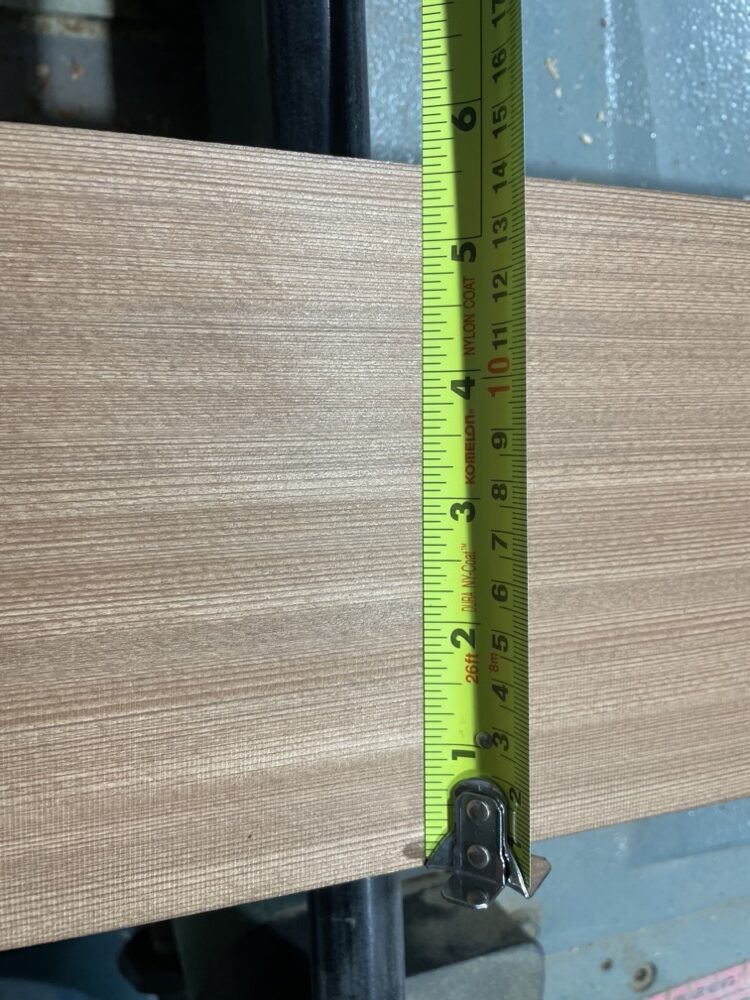
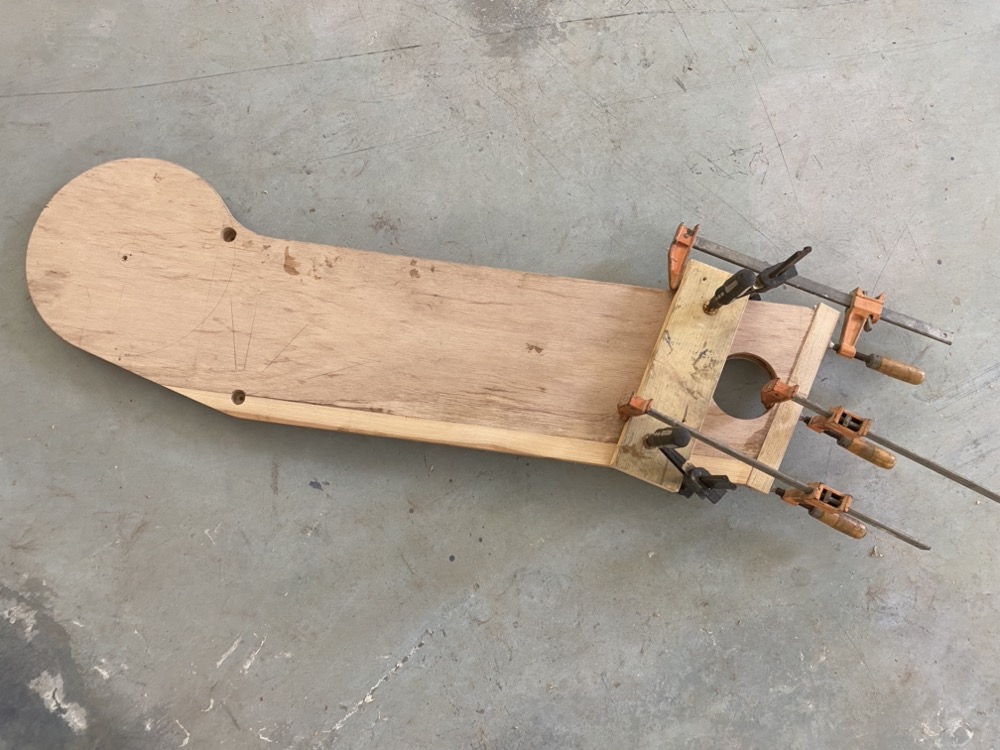
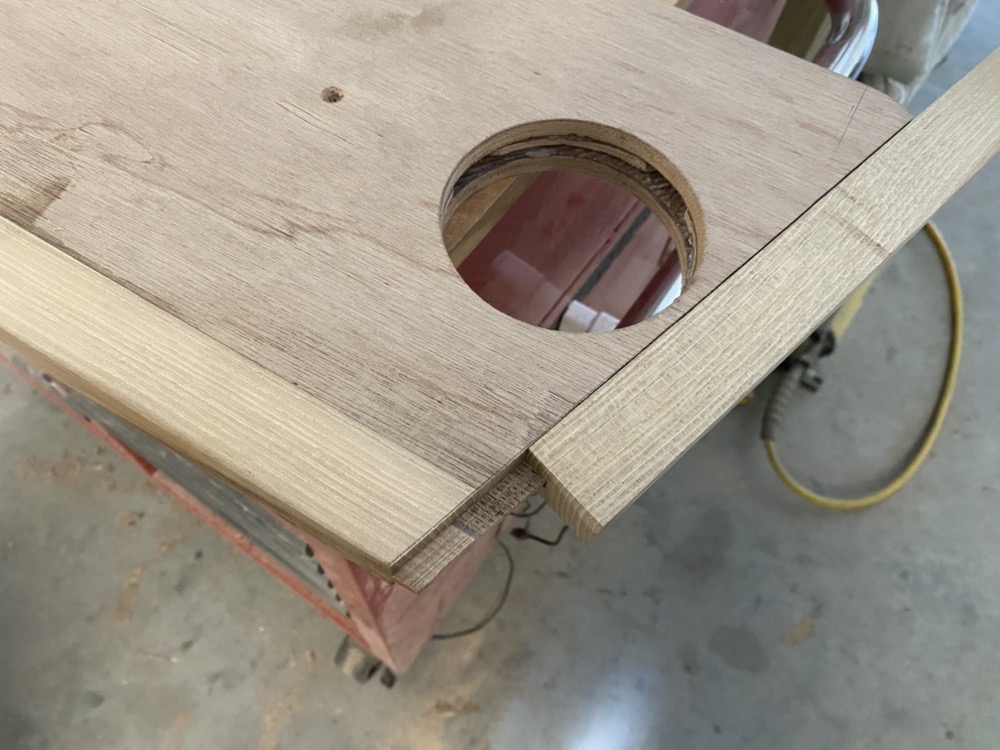
With the bulkheads all in place it was finally time to work on the stringers. For nearly 10 years I’ve had a 9.5′ long redwood 6×6 I found when I moved my metalworking shop into an old boss’s workshop. He had it for over 30 years and I’ve never really known what to do with it since it seemed too nice to cut up. I figured this was a worthy project so I took it over to a buddy’s sawmill and sliced it into four equal slabs. In a previous job I helped design and manufacture a portable sawmill and it was really interesting seeing how this company solved the same problems we came up against.

After running the slabs through the planer I found the tightest sections had about 45 rings per inch!

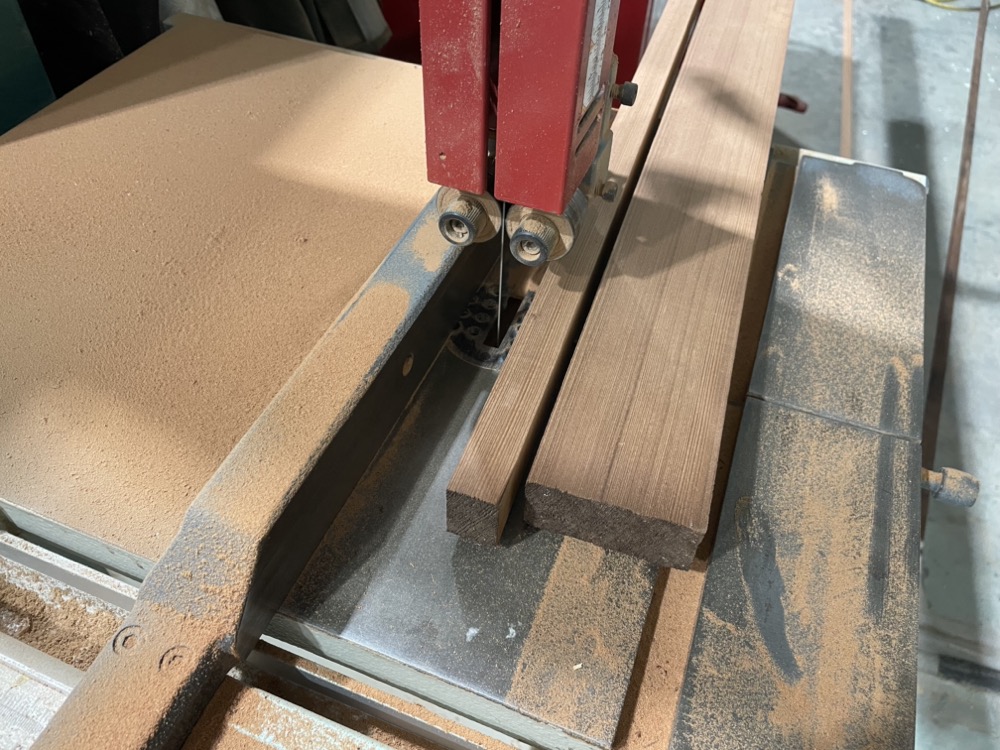
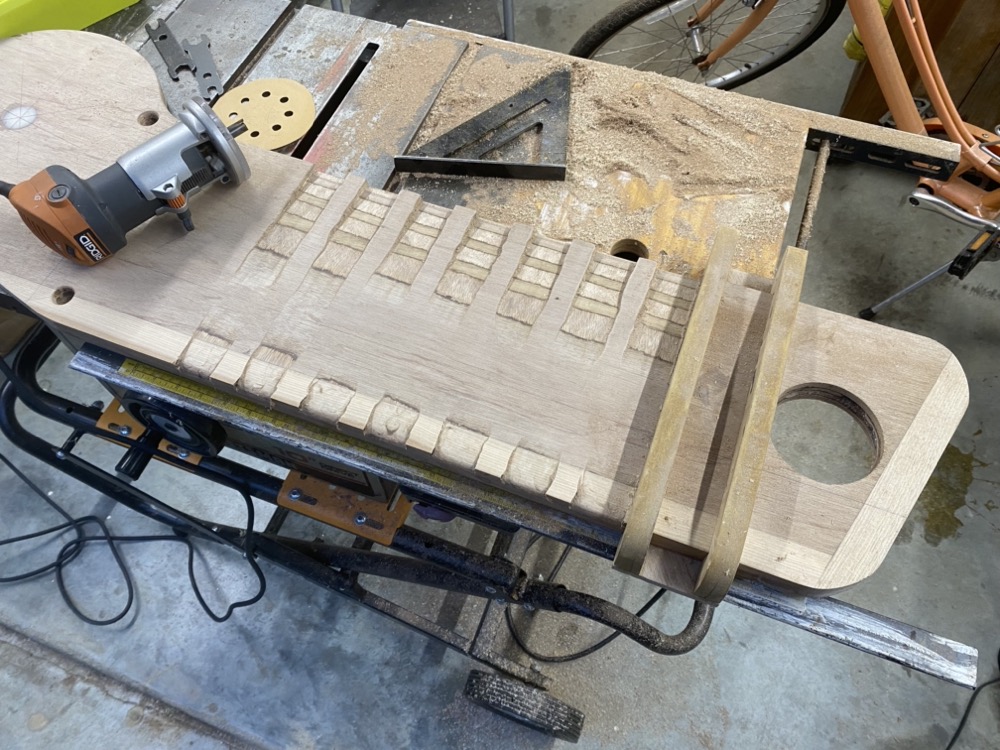
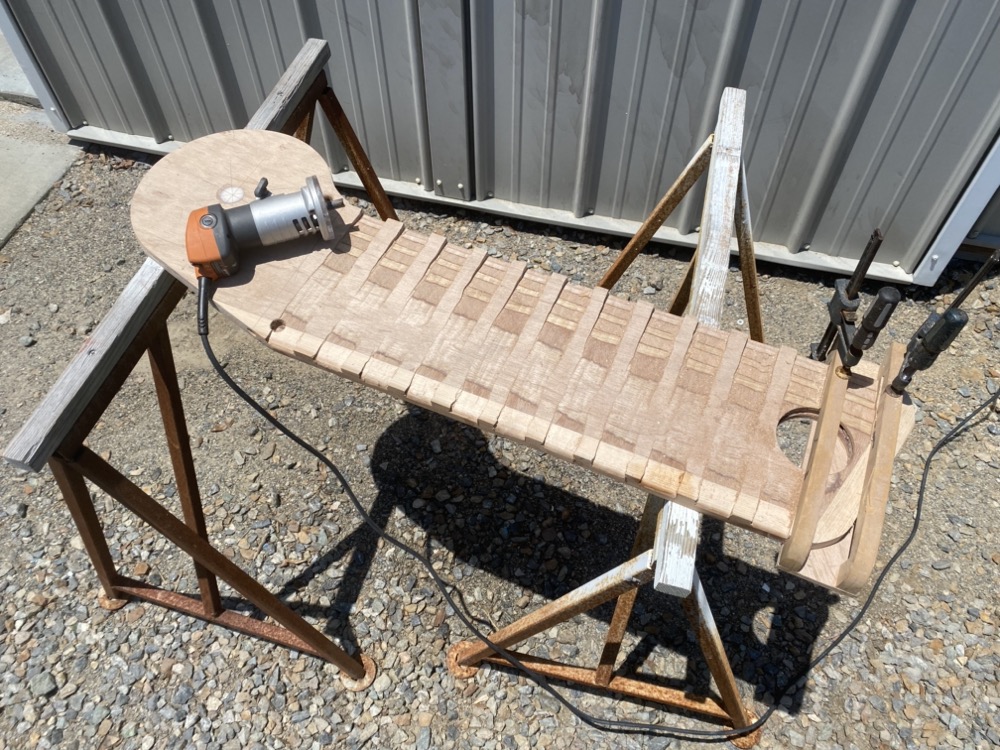
Next I ripped six strips per slab and planed everything to 30mm x 3/4″. This build has been a hodgepodge of metric and customary. The plans are metric but I’ve built most of the stuff that doesn’t really matter to customary so I can visualize what I need to make or make use of common material thicknesses. Originally I thought I’d use 1x material for the stringers so that’s what I made my stringer notch router jig cut.

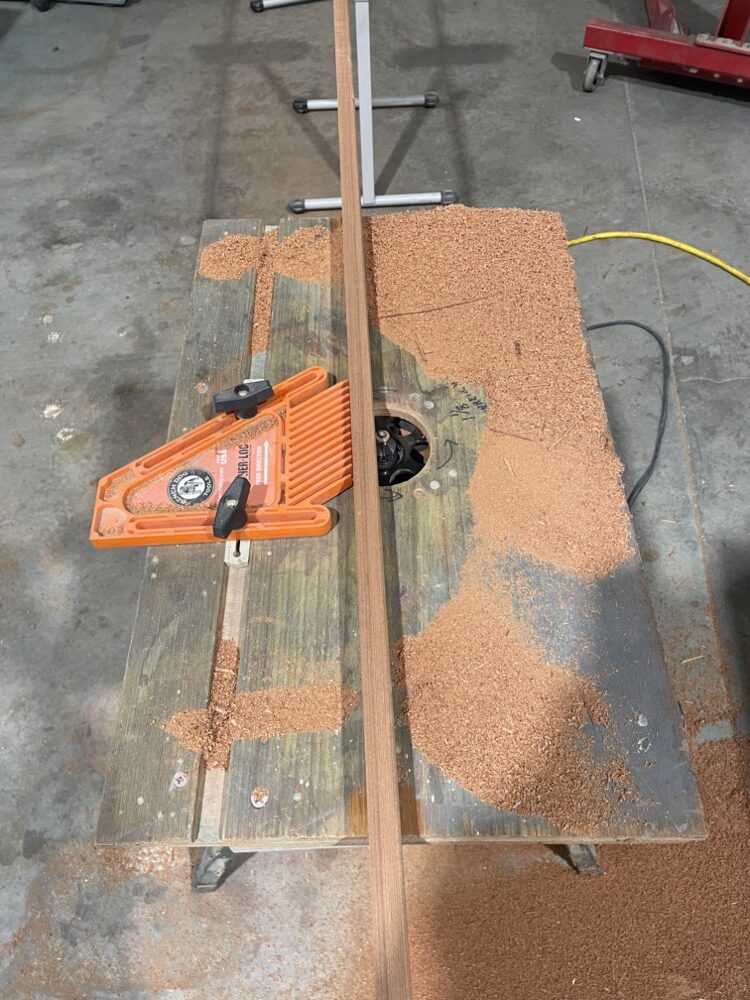
Finally I checked each strip for a bow and rounded over the edges on the inside of the curve. I figured it’s better to put the strips on the boat the way they want to bend rather than fighting them.

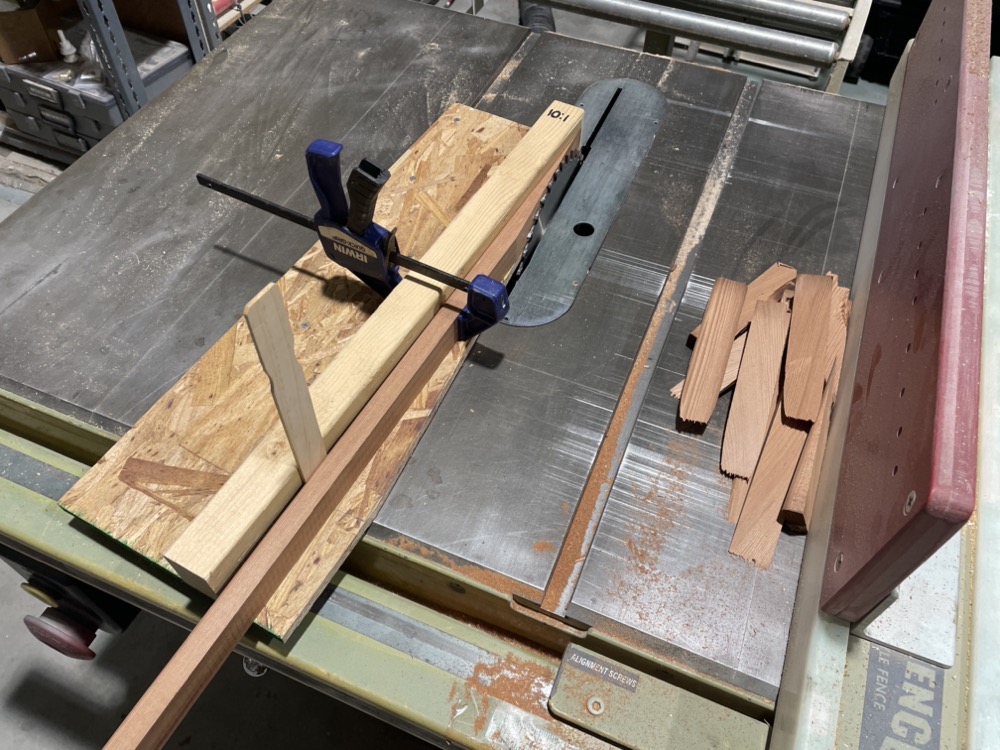
I’m going to need to do a lot of scarfing so I made a 10:1 jig. I think the fence might be a bit bowed or something because I found I needed a shim to keep the strips tight up by the blade.

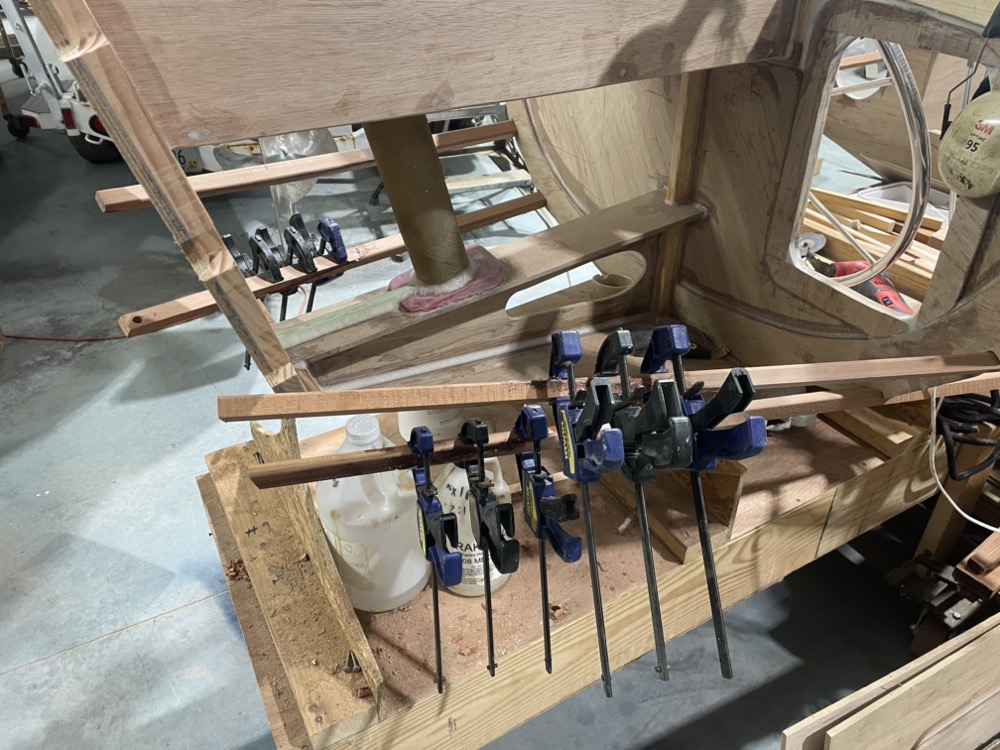
Gluing up the scarfed sections. I ran a 36 grit disk over the joints to really rip them up a bit before priming with neat epoxy and then clamping with thickened. Heat lamps help things along.

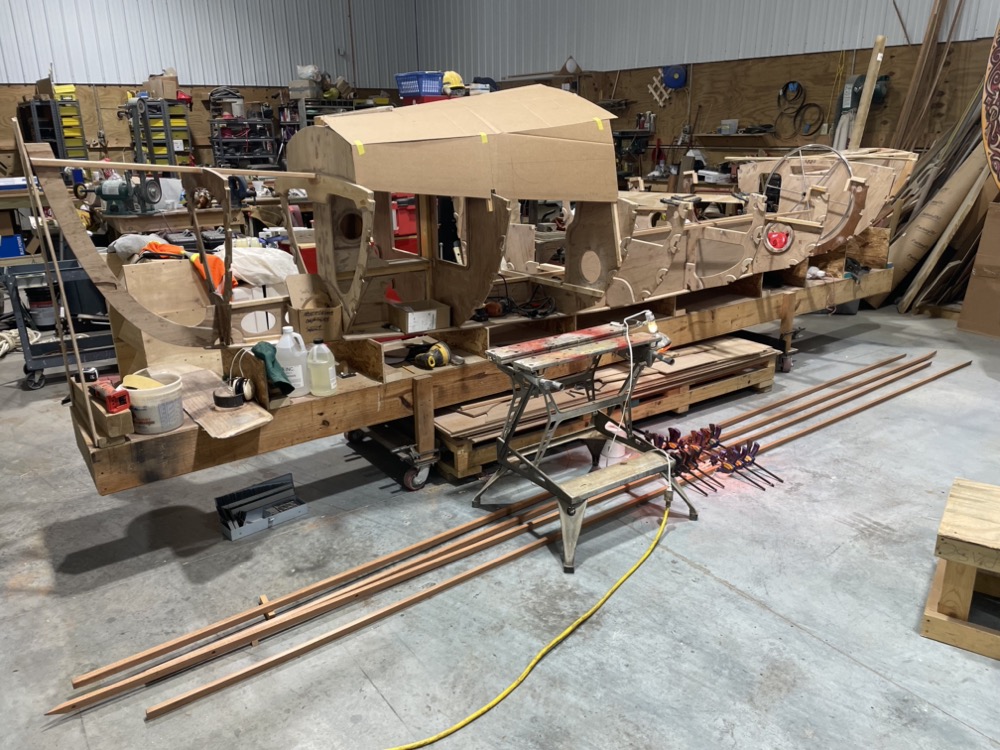
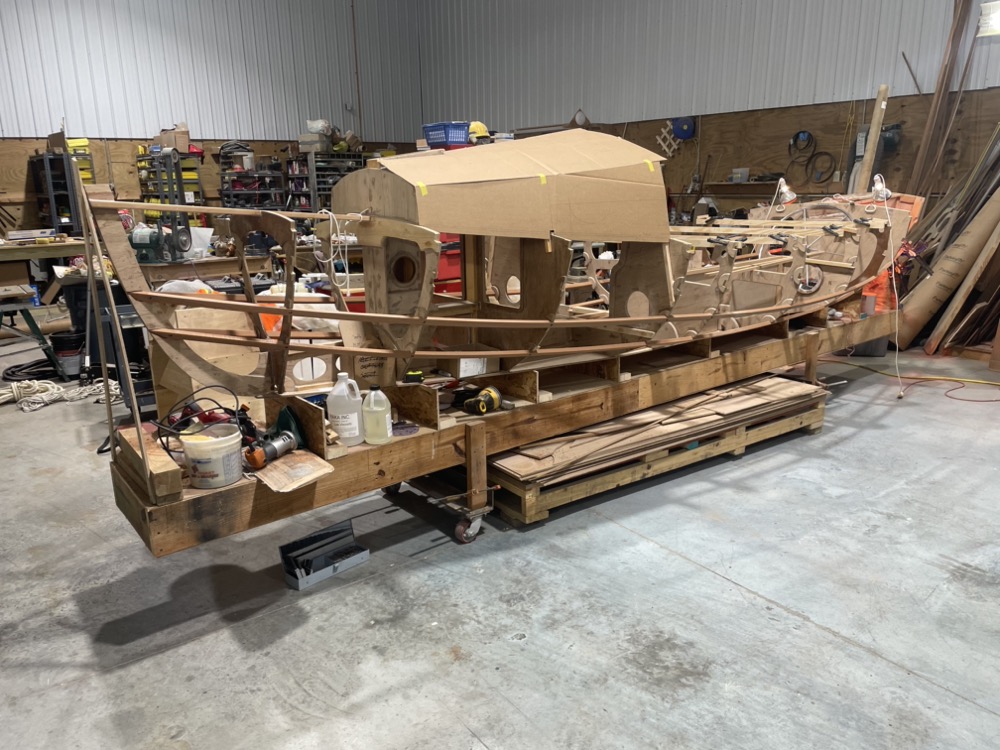
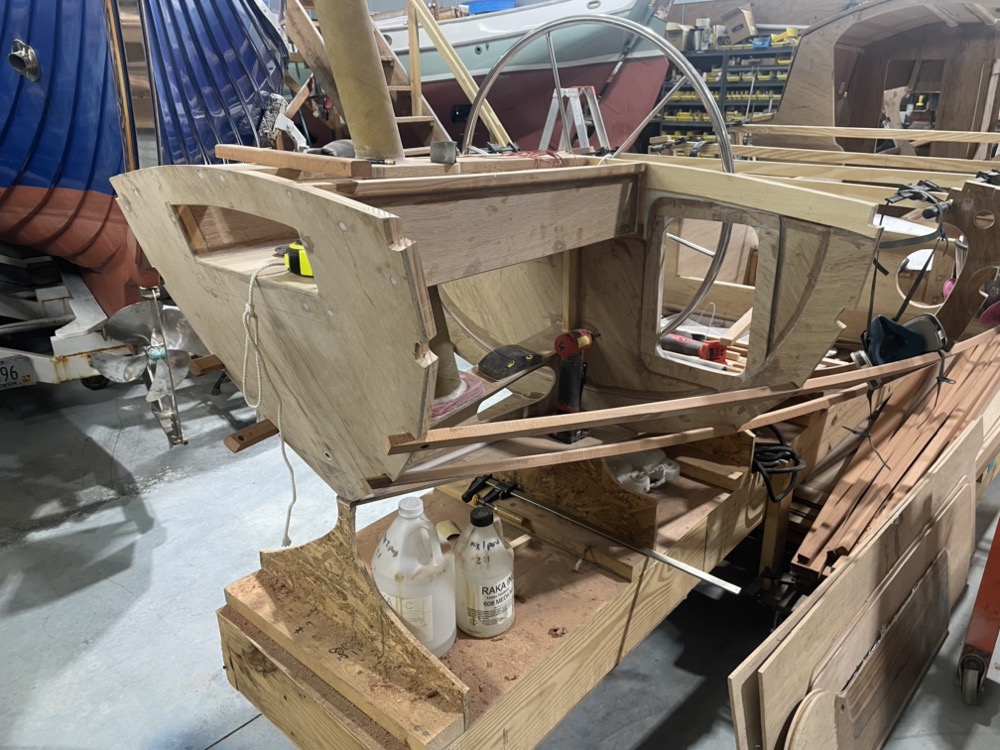
Got the bottom two pairs screwed into place. I had to do some beveling on the notches in the frame with a burr in a die grinder and one of the notches seems to be nearly an inch off to get the batten to lay fair. After dry fitting I’d let the forward half spring out and glue them in place. Then the next day I’d do the rear half of a stringer. I guess it helps prevent distortion, but mainly that’s all I could get done during a lunch break!

Unfortunately my strips were about a foot too short so I had to scarf a bit more on.

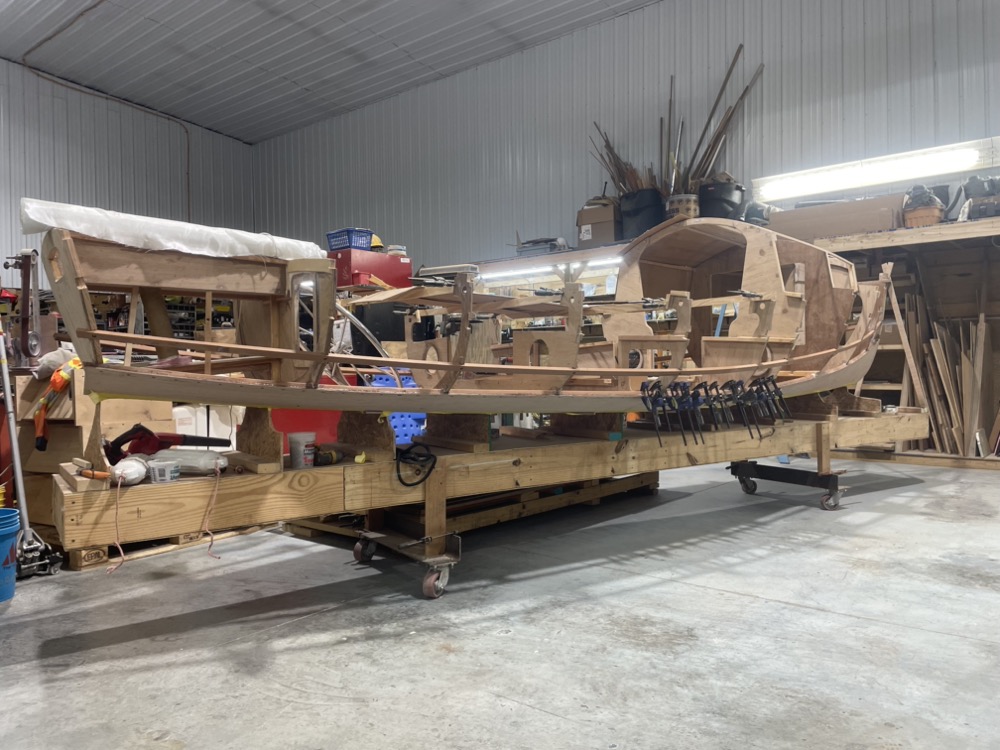
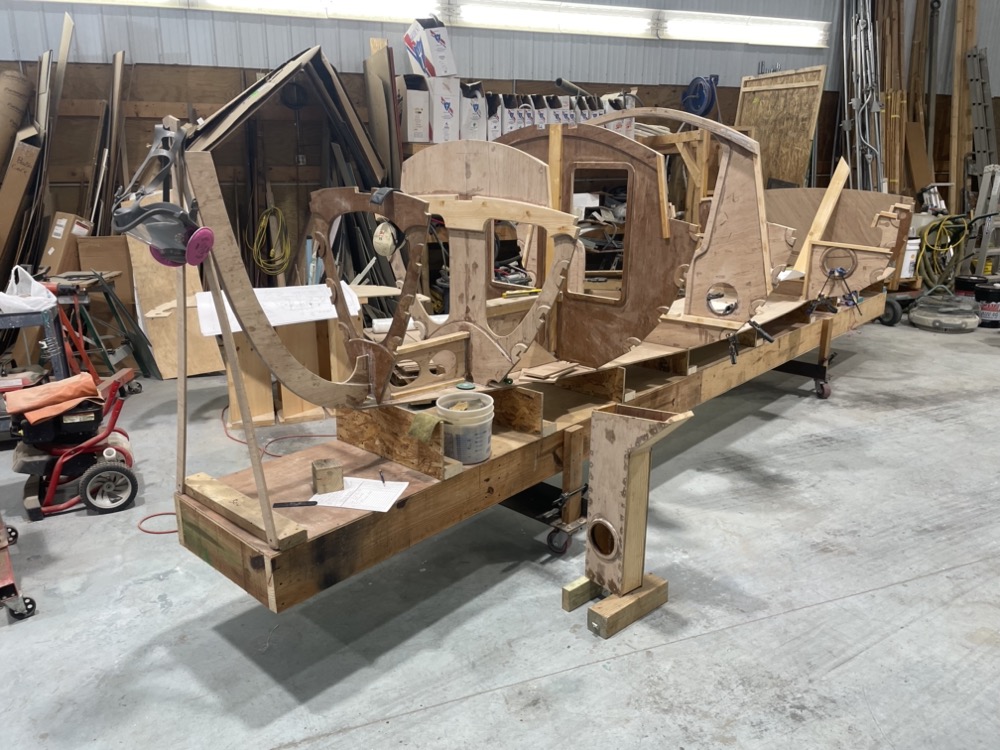
Finally the strips are in and fairly fair. Next up I’ll build some cardboard plank patterns, scarf my plywood, and put the bottom two pairs of planks on. I trimmed the OSB bottom panel supports so the planks can lap over the bottom without interference. I figure I’ll leave the plywood oversize and scribe it to the bottom panel.

Long Steps Build #7

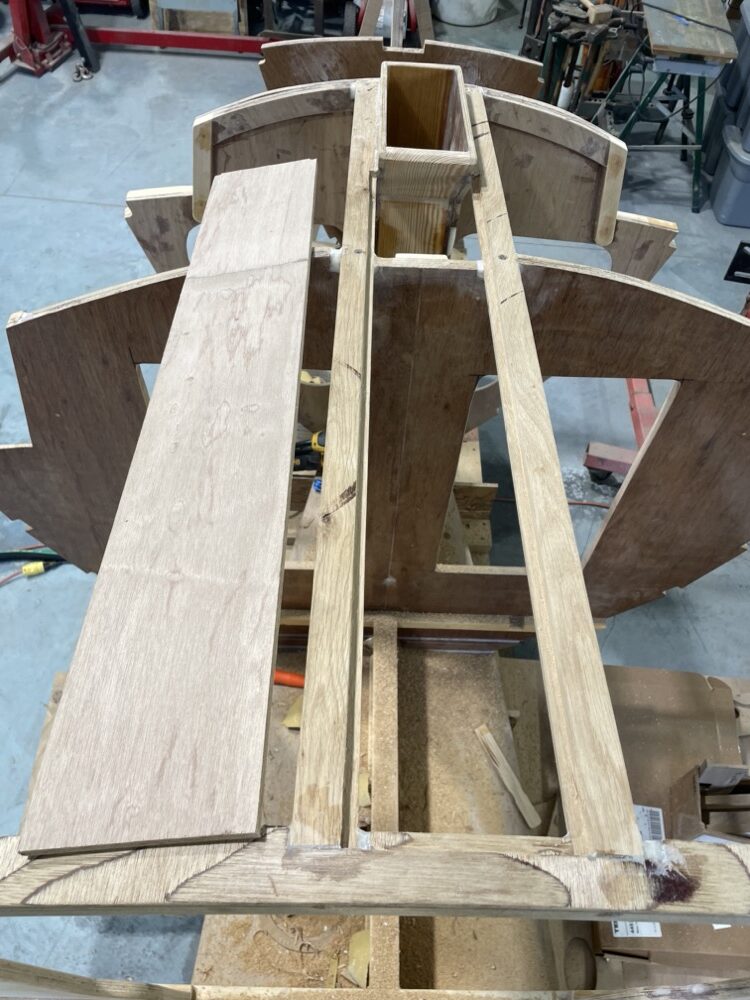
After installing the mast box I put in the white oak rooftop stringers along either side.

Then I routed and chiseled a rabbet for the 3/8″ ply filler piece.

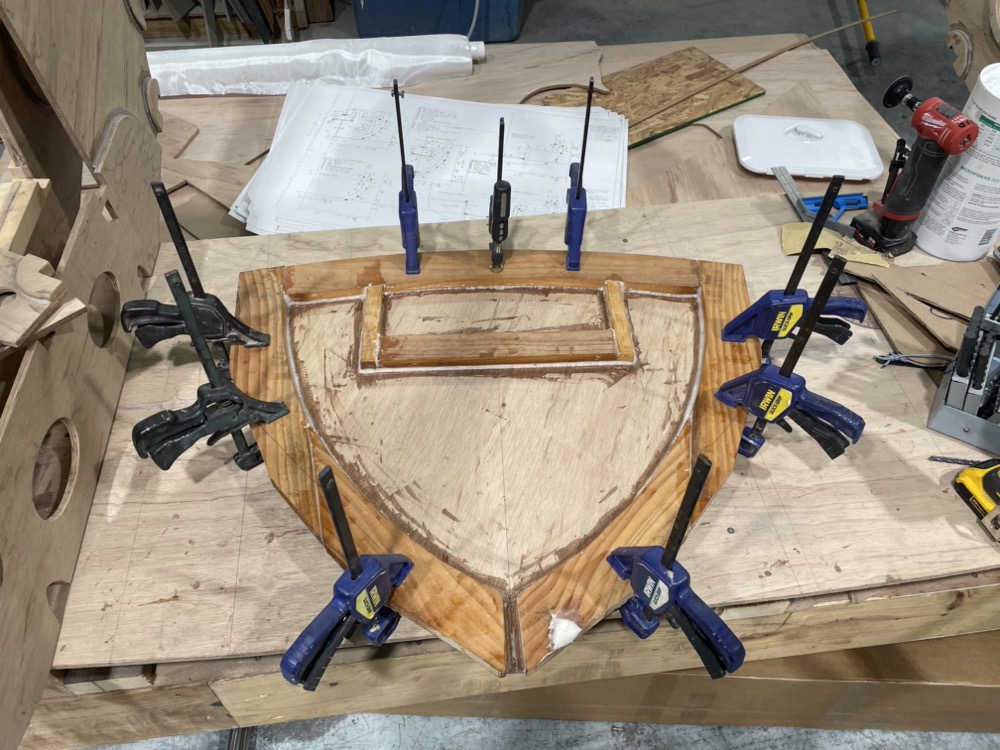
Working on the transom stiffeners.

After installing the spine piece I epoxied the transom in place. Lots of measuring trying to get it centered, square to the centerline, and tipped at 14º.

Building the tunnel for the tiller to rudder bellcrank.

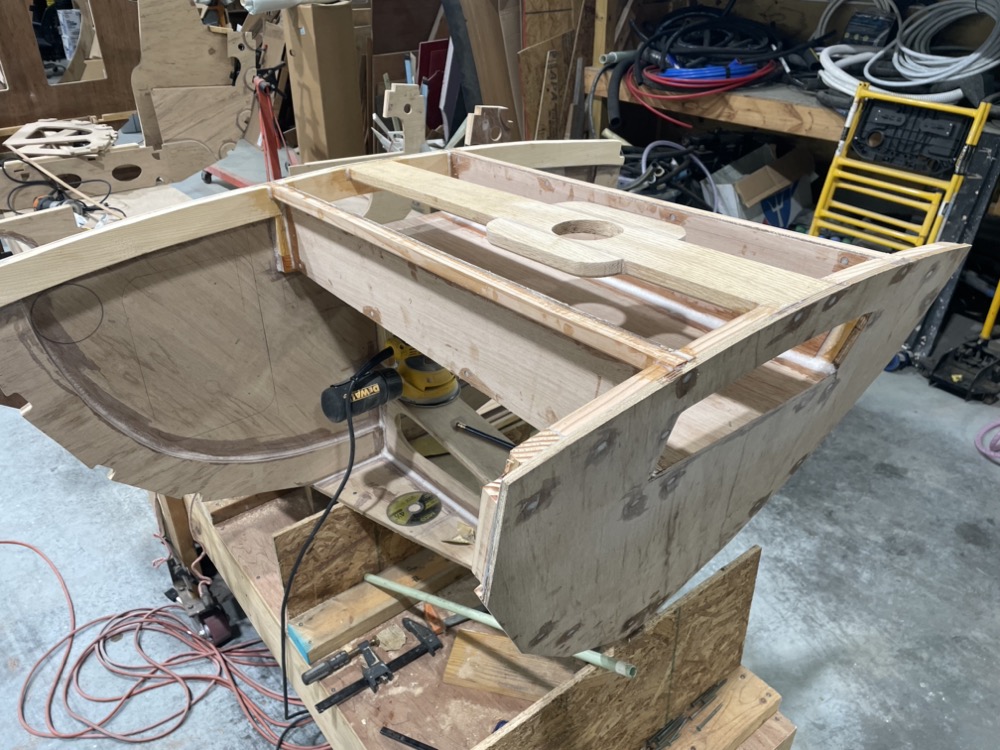
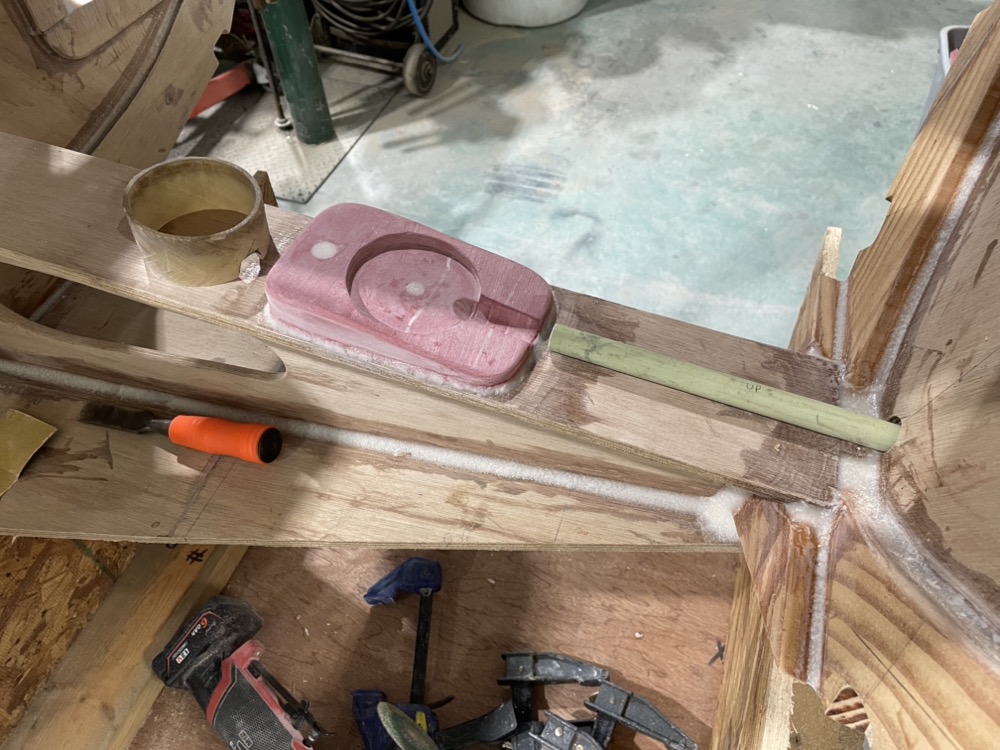
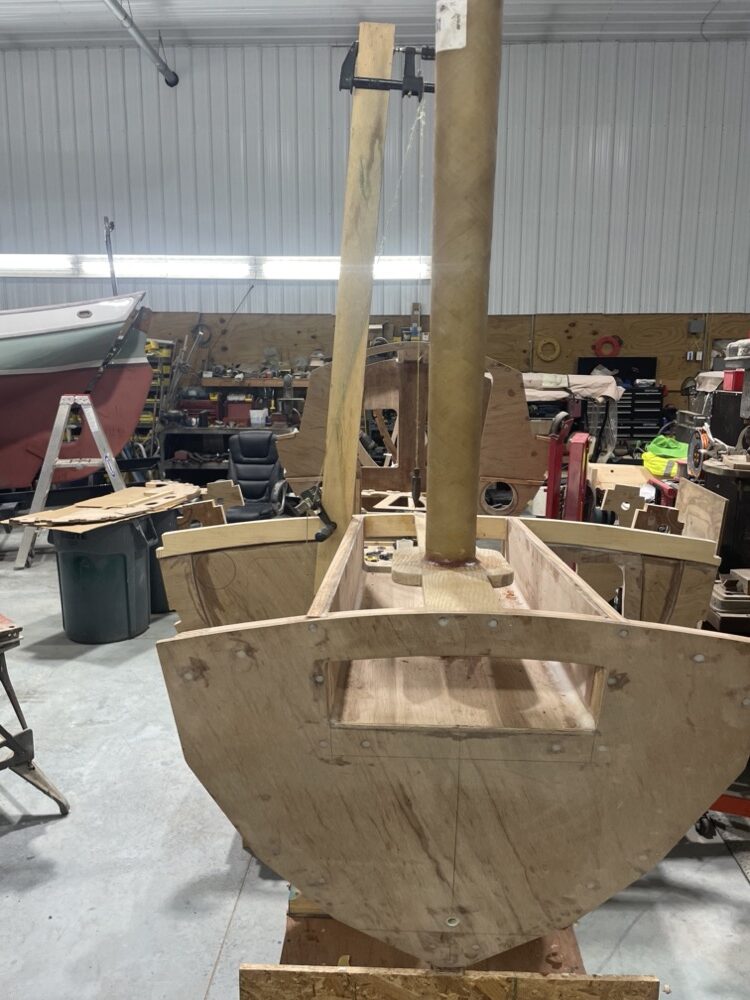
I wasn’t exactly a fan of the mizzen mast box design for a number of reasons. One, it takes up quite a bit of the already limited space. Two, I can imagine poking the mizzen through the deck and lining it up with the step could be difficult on the water. And finally I want something rot proof since it’ll be inaccessible short of major surgery. So I built the step out of FRP, mast guide from fiberglass exhaust tube, and a drain from G10 tubing.

Since the mizzen is raked I figured a plumb bob was about the best way I could think of to position the mast guide. Sighting down the edge to the hatches up forward looked pretty good too.

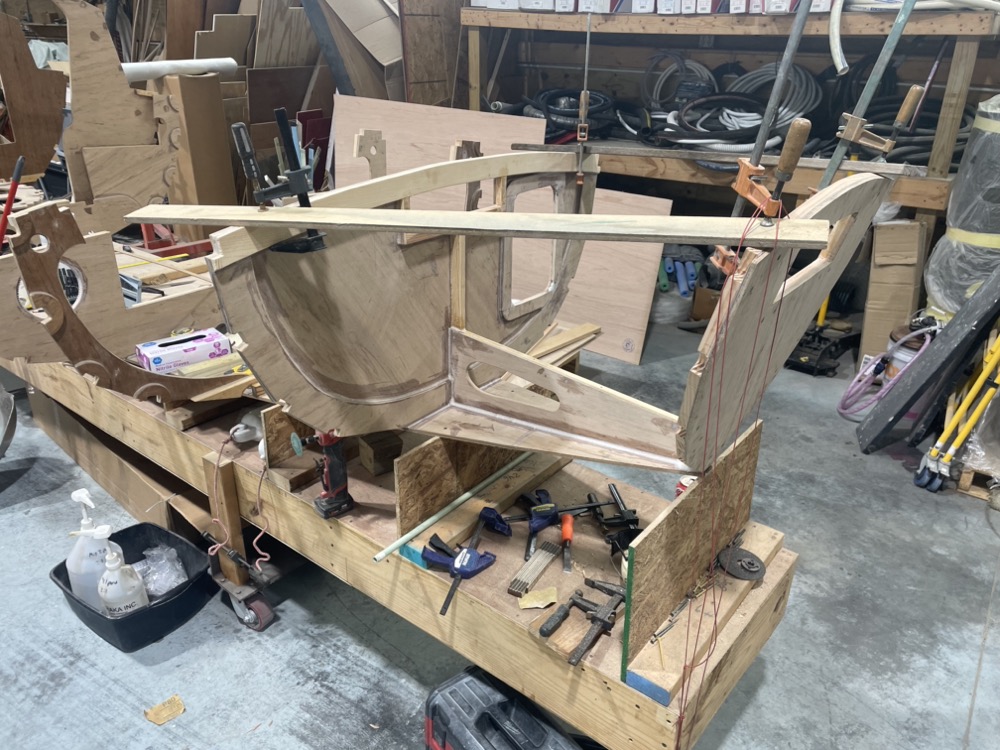
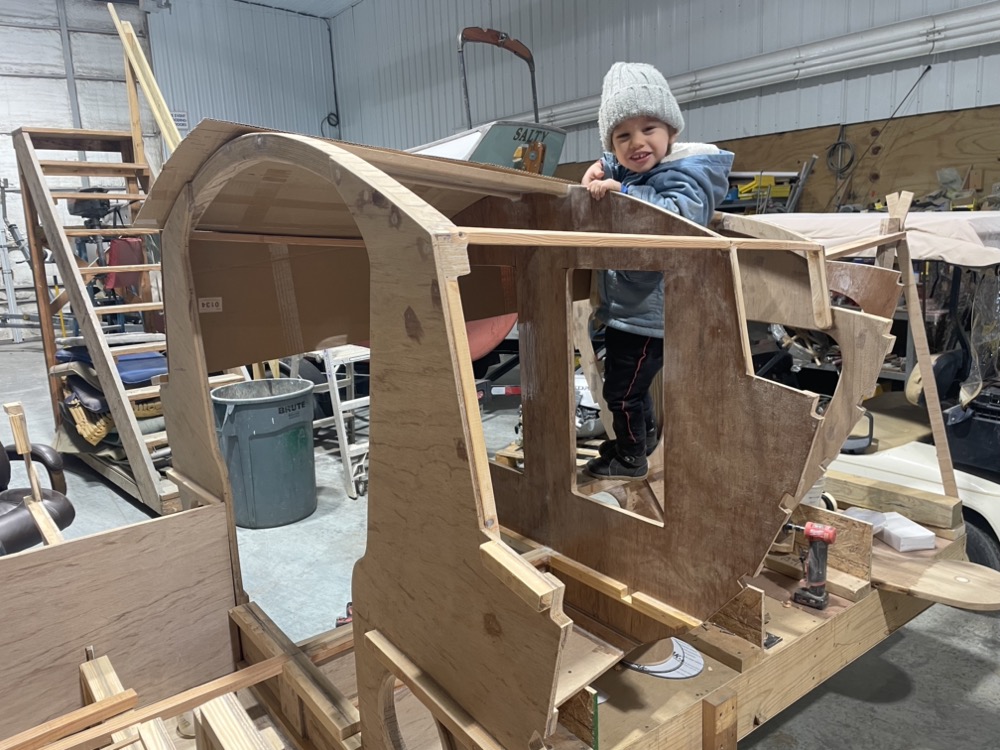
Up forward I added the roof carlins and made some cardboard templates of the cabin. I had two weeks off for Christmas and New Years so I managed to put in 3-4 hours a day on the build. In the mornings I’d bring my helper along to give my wife a break and then in the afternoon I’d get some actual work done during his nap. Here he is checking out his fo’c’sle accommodations.

Piankatank River 2024

October 12th, 2024

Nearly a year after my trip with the British Seagull 40 Plus I set out again with a four stroke 2hp Honda a friend gave me. It was another beautiful day… a slight chill in the air and not a cloud in the sky. I launched at the local boat ramp around 9am and started up the river. The goal was to find the right fork and explore further into the swamp since I didn’t have any specific time to be back home.

I didn’t take any pictures on the way up since it really felt like a continuation of the trip from last year. I saw the same guy fishing on his dock under the transmission lines, got stuck in the same place, and even ran out of gas 130 yards apart!

Here’s where I made a left and was able to continue two miles further up into the Dragon Swamp. Unfortunately it was right at low tide so the channel was narrow and downed trees were an issue.

Last year’s trip in yellow vs this year in green.

It’s hard to convey how beautiful it is back here. Everything was this vivid full green color with hints of fall colors in places. The river water was dark from leeching tannins of the 140 square mile swamp, yet clear enough that more than once I freaked out thinking I was about to hit a submerged tree yet it passed well under my centerboard. Sometimes it was hard to spot the next bend from the reflection of all the trees.

It got narrower…

and narrower…

And in a few places blocked entirely by guys fishing. One turn I took way too close to the inside trying to get around a pair of boats and I ran aground. They looked at me like I was nuts, but raising the centerboard and poling off with an oar had me free again in a few seconds.

Eventually I ran up on a fallen tree and could go no further. I bet at high tide I’d be able to get over it, so maybe next year. It looks like there’s 40-50 more miles of river that kayaks and canoes can navigate.

Look at all those cypress knees just waiting to rip your hull open!

On the way back down I swung over to check out the crane on the sunken barge. It’s a Northwest lattice boom crawler that I assume was used for dredging. Funny enough the radiator fan was still spinning in the breeze.

I ended up going 31 miles in 6:10 at an average of 5 miles an hour. I kept the throttle at the start position, or about half throttle. For fuel economy, I averaged 8.16 miles per 1 liter tank which works out to 30.89 miles per gallon or 0.16 gallons per hour. Nearly twice as efficient as the two stroke British Seagull.

I saw bald eagles, osprey, herons, kingfishers, pileated woodpeckers, a red tailed hawk, squirrels, a long nosed gar, and various other large fish I don’t know the names of. Not a bad day for $4.10 in gas!

Long Steps Build #6

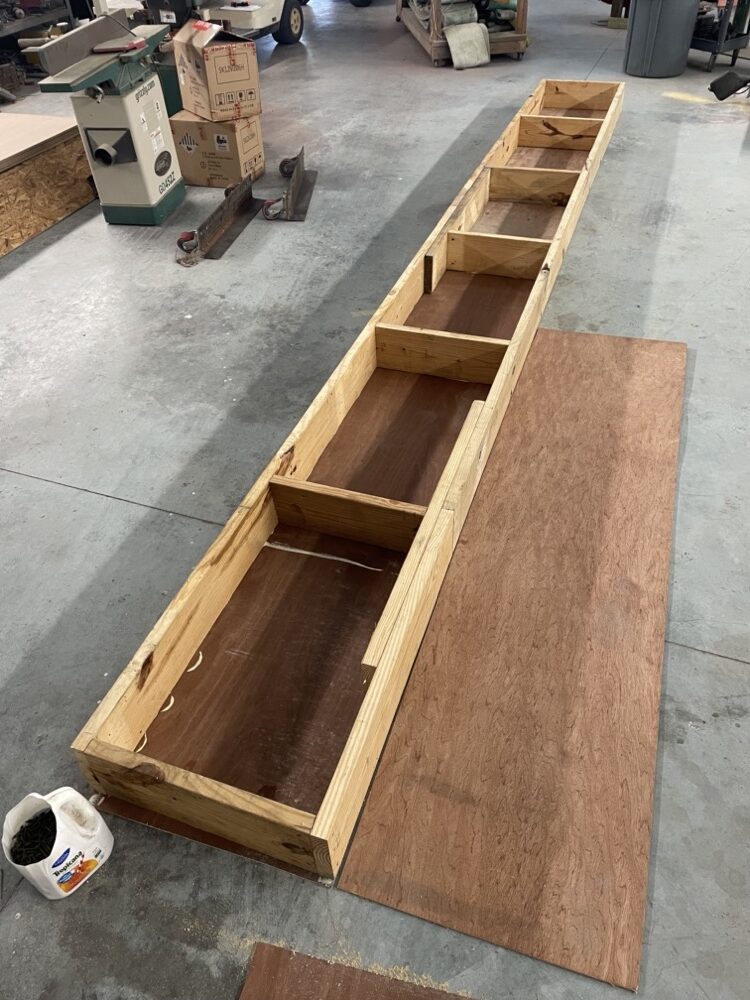
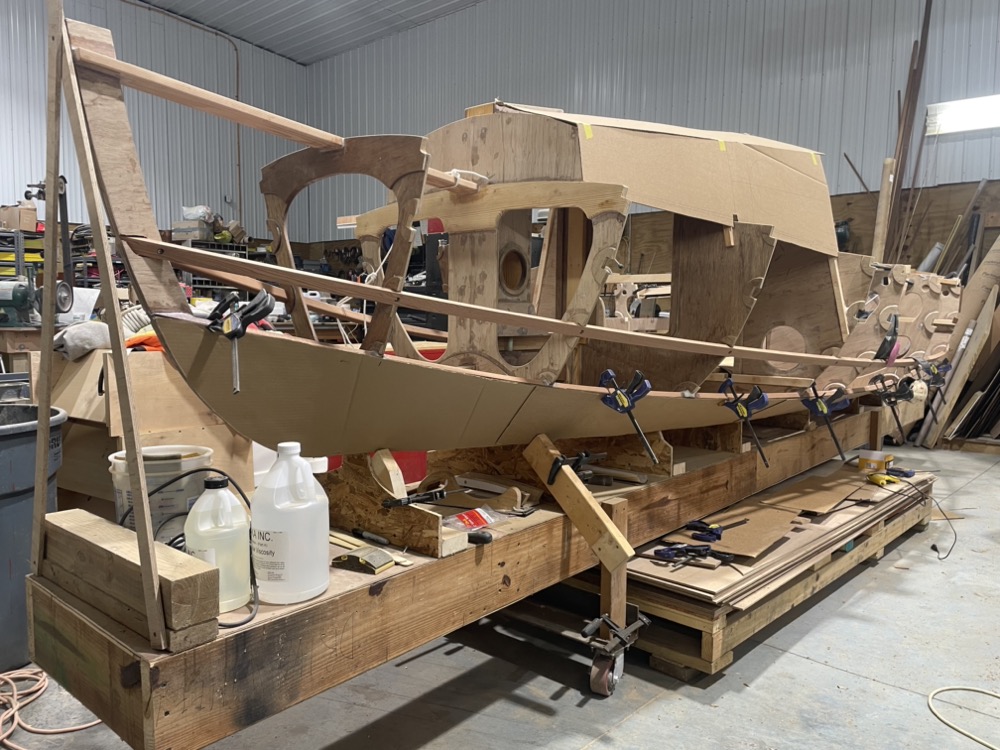
I built the strong back out of some 2×12’s and luan plywood I had laying around. I glued and screwed the plywood on to make a stressed skin box and I didn’t notice any sag when I picked one end up.

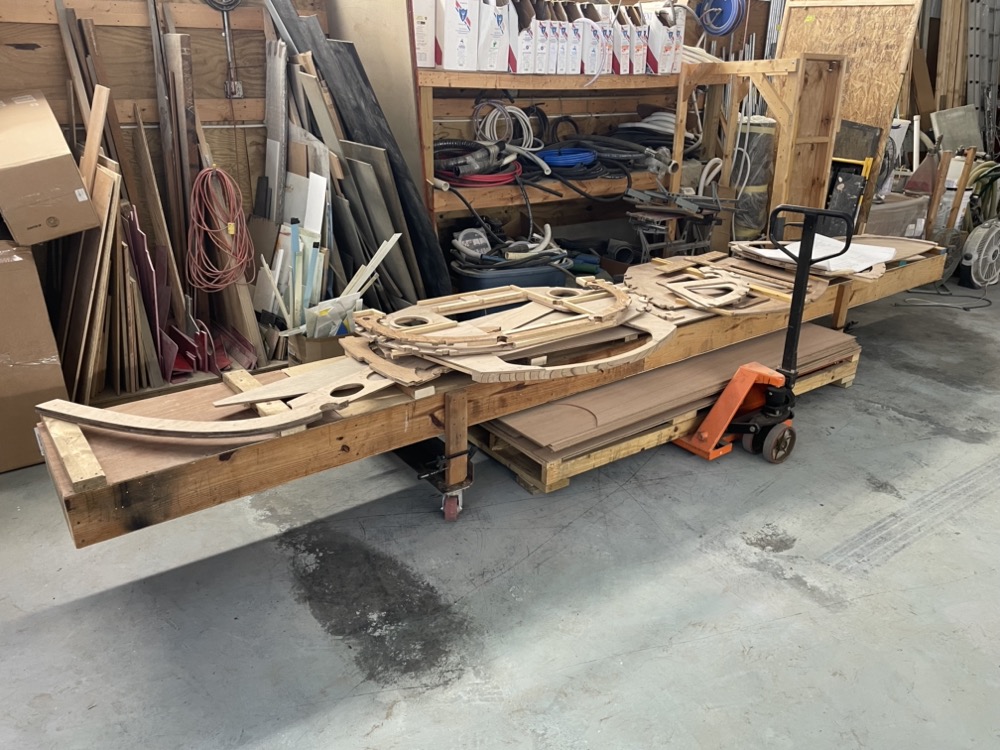
The legs are just long enough that I can store the remainder of my plywood underneath. The angle iron and casters are actually for moving my 2500 pound lathe. But since I don’t foresee needing to move it, they can stay on the strong back for a year or so.

Next I fastened down 2×4’s and chunks of the shipping crate my plywood came in to support the bottom panel. I made no special effort to make sure the strong back was square, flat, or level so I used a laser level and sharpied a waterline on the OSB panels. From that I could measure up to where the plans called for and trim off the excess. Plus I can always make sure the boat is level by checking the waterline with the level again.

With the supports trimmed I glued and screwed the spine and first two bulkheads.

The third bulkhead is glued in and I set up some of the others for motivation. I decided not to make my own hatches with a groove and surgical tubing so I cut off the lip to fit a 13″x23″ hatch.

I planed the bottom on an angle, but bulkhead #7 still needed some help to stay plumb while the epoxy set.

I spent two weeks of lunches building the box for the main mast. The plans don’t call for it, but I glassed the inside cause why not. There’s a piece of 5/8″ OD fiberglass tubing sticking out the bottom that will drain any rainwater or spray that gets in.

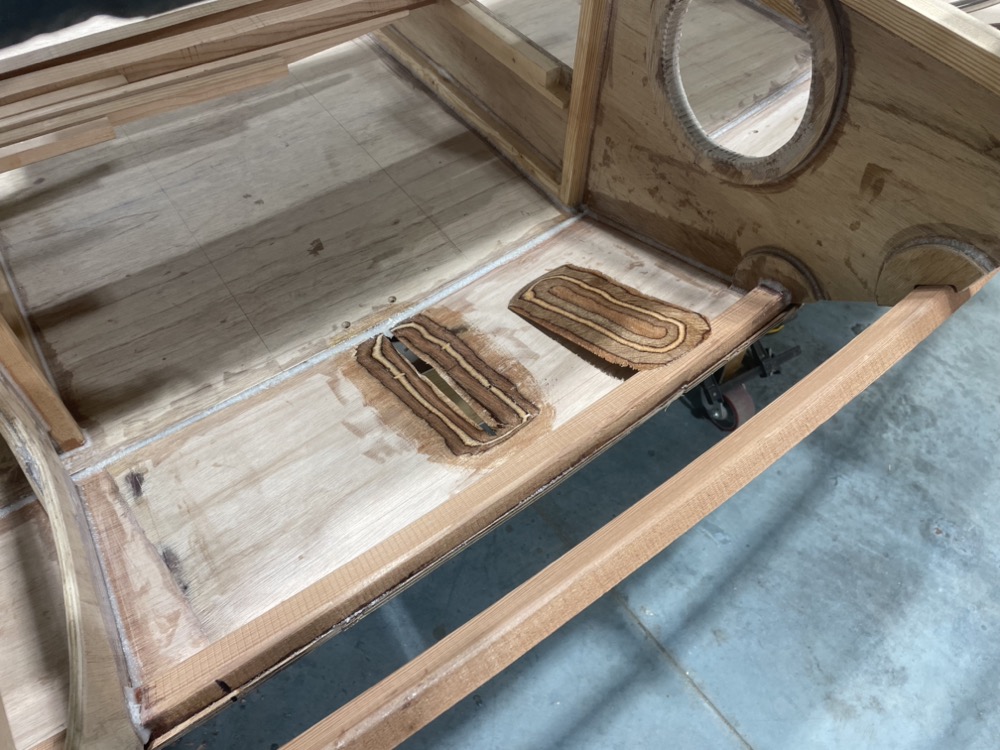
Somehow the hole for my access hatch got a little too big so I cut a ton of kerfs in a strip of ply and epoxied it in place. Later I cleaned the inside up with a flap wheel in a die grinder.

Mast box ready to go in.


Long Steps Build #5

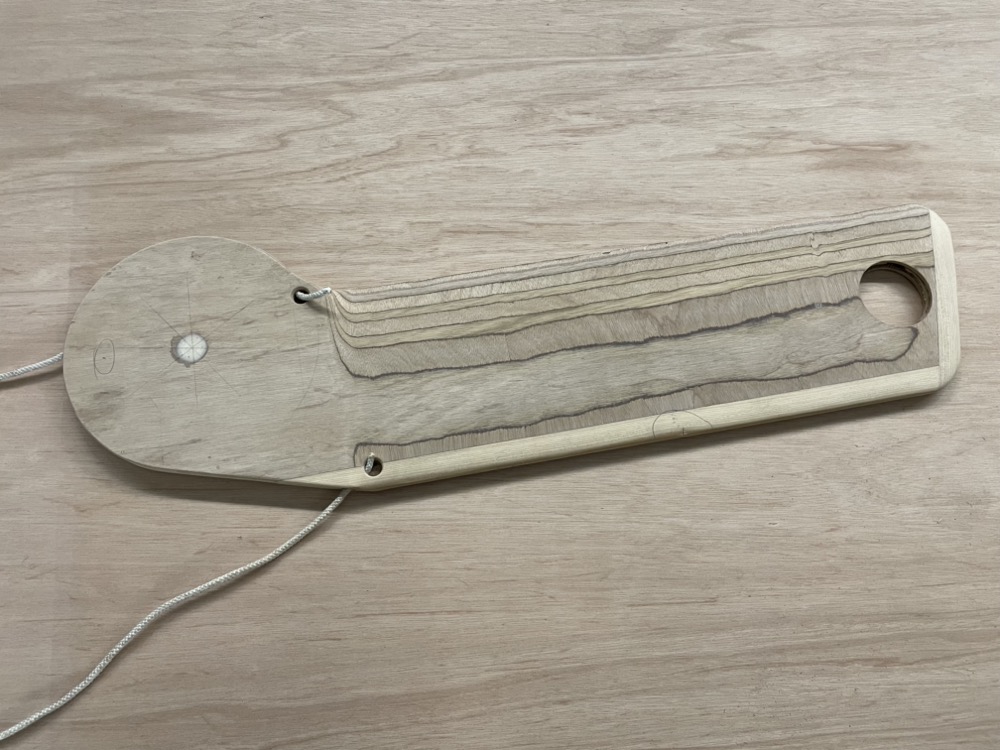
Lately I’ve wanted to complete an item since the boat is coming along all at the same pace so I decided to build the rudder. It’s laminated from a 1/4″ piece sandwiched between two 3/8″ pieces. Here I’m gluing on some oak edge protectors.

The edge protectors are tongue and groove and the hole is for lead ballast. I cut three little notches into the 1/4″ piece so the lead will flow in there and lock itself in place.

Next I made a router guide out of some MDF to cut the foil shape. It is tight enough to stay put on the rudder blank and I left the flat spots to I have something to index off of on the other side. The guide worked really well, better than I thought it would.

Towards the tip though it does need to be clamped on. A 36 grit Roloc disk in a die grinder makes short work of the flat spots and a DA sander cleans it up. It’s pretty easy to use the plys like a topo map to keep the shape right.

The holes are for stopper knots on the up and downhaul lines. The 1/4″ layer has a slightly smaller diameter so the two outside layers make flanges that guide the line around the pivot. I ran a drill bit on it’s side through there to clean up the epoxy and grind the wood into a nice smooth shape for the line to sit in.

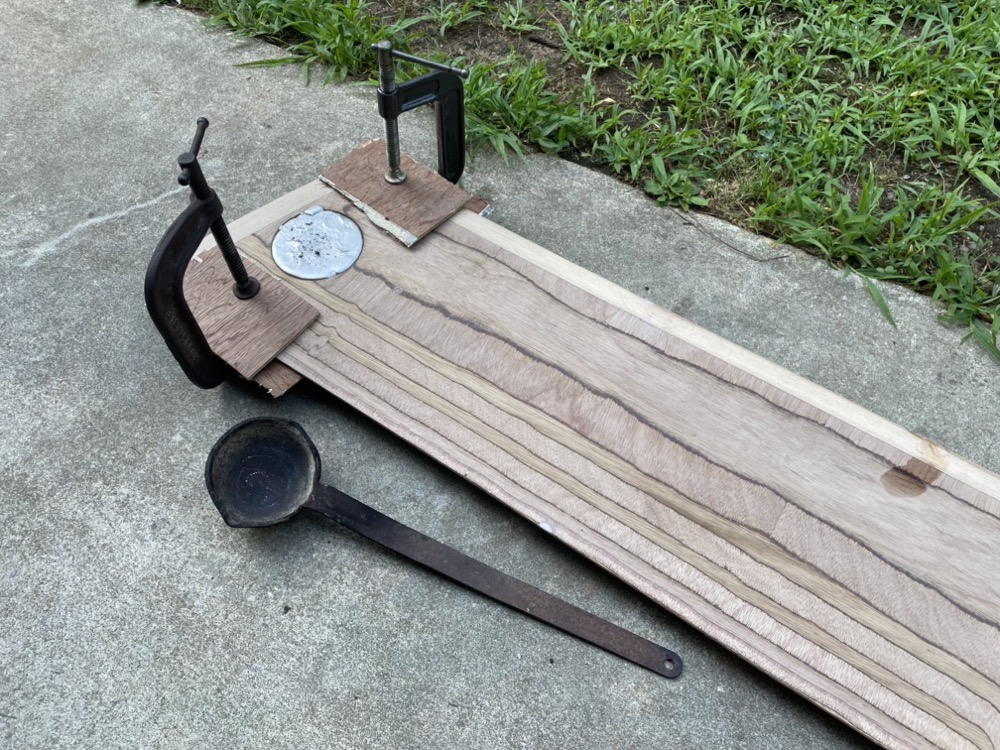
Next I melted some lead shot to pour into the tip. Just a thin piece of ply clamped to the underside kept the lead from leaking out.

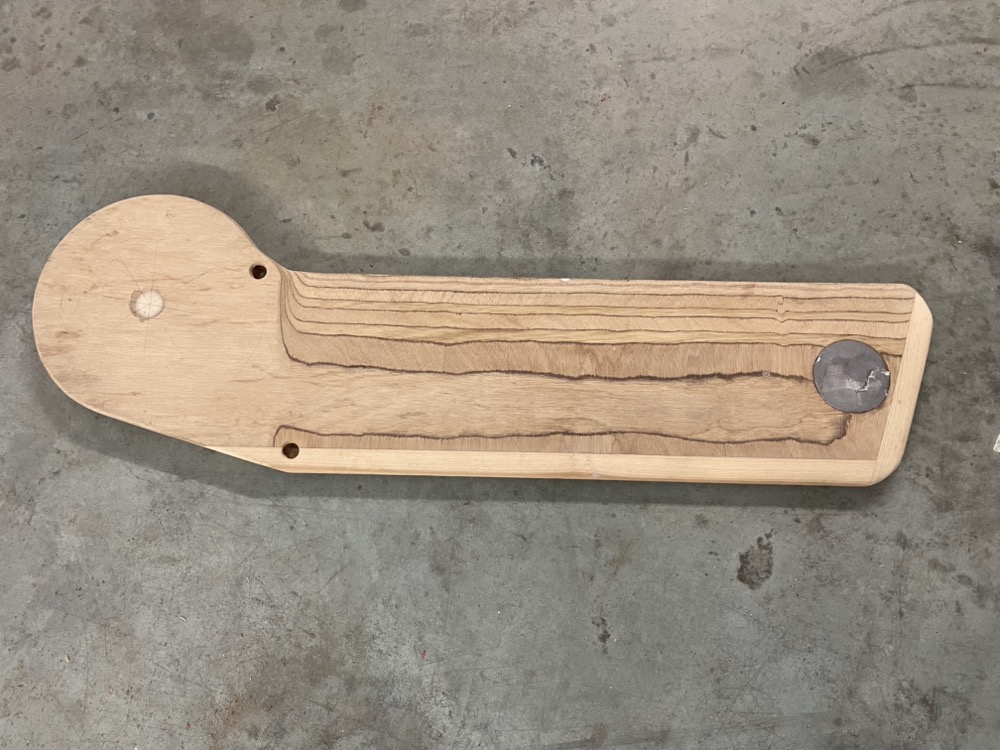
After a bit of power planing I brought the lead down to the level of the wood and after some minor fairing it’ll be ready for fiberglass!

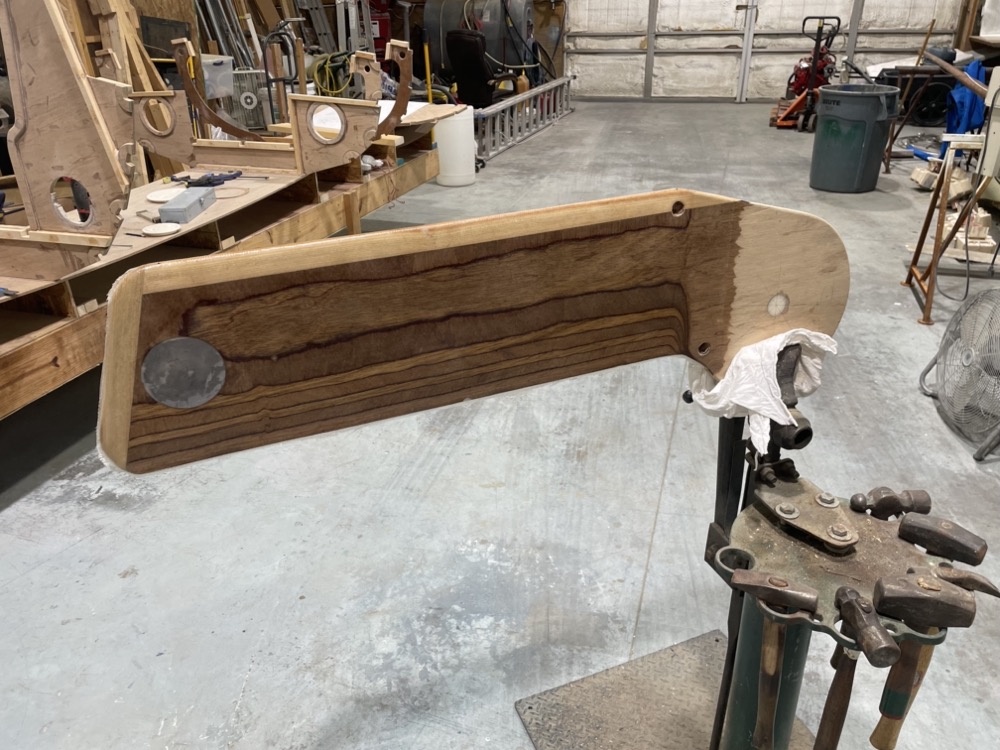
First I wet out the board with epoxy, then I put a ~3″ strip of 6oz fiberglass cut on the bias around the bottom of the tip. I pre-shaped it dry a bit and it conformed surprisingly well. Then I draped on some cloth and wet it out.


Hatteras 2024

8/31 – 9/7/2024

Off to Hatteras on North Carolina’s Outer Banks for our 2024 beach vacation!

Getting everything loaded up Friday night before the trip. I don’t know why, but every beach trip seems to be a flurry of packing right at the last minute. Thank goodness for my sailboat checklist!

I launched at the Village Marina on Saturday evening to motor the 2.5 miles back to the condo with my trolling motor. Dinkey’s and Breakwater restaurants were in full swing with music blaring and I got a lot of curious looks from people on the docks as I went by. I heard one guy wondering why the boat was so quiet.

It was really cool going through the narrow channel with houses on one side and marsh on the other. I have no idea how deep or wide the channel is, but there were some pretty big boats I passed along the way.

I stayed relatively close to the shore and as it got darker I didn’t realize I was in really shallow water. The centerboard grounded and the motor quickly got fouled with grass. Eventually I pulled out the oars and rowed back into the channel. I came across a number of PVC pipe markers in “The Slash” but it was too dark to know what they meant, so I just stayed as close to them as I could.

Eventually I made it to the condo and got the boat tied up.

My slip was nearly at the end of the canal and we had a good view from the third story looking out towards the sound.

Unfortunately during our stay a storm came up the coast and most the week was super windy or pouring down rain. Sunday looked like the best opportunity for anything boat related so my wife and son and I took the boat out for a quick trolling motor cruise.

We nosed up pretty close to the Slash Creek Bridge on route 12 before turning around. A few weeks after we left North Carolina Department of Transportation started a 4.5 million dollar project to replace the wooden bridge with a concrete one which is supposed to be finished by the end of May 2025.

Heading towards a narrow cut around the pair of islands in The Slash. We later ran out of water and drifted into the marsh a bit before I could get the oars rigged and row us back to deeper water.

Back to the dock at our condo.

Here’s our track. 1.4 miles in 28 minutes.

Strong winds kept the boat pushed over towards the finger pier for days. It was kind of funny how lopsided the scum line was when I hauled out on Saturday. My bilge pump and LiFePO4 battery kept most of the rain water out, although there’s no real sump so the bottom collects an inch or so of water.

We were smack in the middle of the purple with 45 mph gusts.

One morning looking out the window I saw this center console stuck in basically the same area I drifted into. It took him a while, but eventually he wiggled off.

On Wednesday when it was super windy we took the ferry over to Ocracoke. The ferries used to hug the point before looping around, but I guess the inlet has shoaled up enough that they need to head north east before turning towards Ocracoke. What used to be a 45 minute ride is now more like 1:25. It was one of the roughest trips I can remember with quite a bit of spray coming over the bow. Every now and then we’d hit a wave just right and there’d be a loud thud and a couple times I wondered if we’d hit the bottom.

Henry had a fun time on the ferry. We rode the River class Floyd J. Lupton over and he got to wave at the W. Stanford White along the way. These are newer ferries with an off center island so there are three rows of cars on one side and one on the other.

On the island we checked out the inside of the lighthouse, hiked the Springer’s Point nature trail, got lunch at Eduardo’s, drove out on a deserted beach for Henry’s nap, went to the Village Craftsman and Ragpicker, got ice cream at the Slushy Stand, and checked out a few areas of personal significance. Ocracoke is my favorite beach vacation spot since I grew up going there most years. But I have to say it’s just not the same anymore. Everything is way more commercialized and touristy than I remember and I don’t think it’s just from rose colored glasses of nostalgia.

On the way back we rode the Hatteras class Chicamacomico. These are the older style ferries with a center island and two pairs of rows that I remember as a kid. I remember climbing up the steps to the lounge area smelling the salt air and feeling the wind blowing in my hair. I never went into the lounge much since I didn’t like the smell of all the smokers.

Friday was actually pretty decent so we made the most of it on the beach. The waves were still really rough and erosion from the storm was pretty wild. It was into the dunes in a lot of places and almost broke through Highway 12.

I took my Freiberger sextant along and made some practice sights. Someday when I have time (hah!) I’ll reduce them and see how far off I was.
Actual location: 35°12’14.8″N 75°42’21.3″W on 9/6/2024
Sight one: 13:20:11 – 31º 29.0′
Sight two: 15:19:23 – 52º 31.1′
Sight three: 16:56:27 – 60º 41.8′

Pretty soon the week was over and it was time to head home. Of course it had to rain Saturday morning when I wanted to haul out, but it was super calm and that was what was important. I put on a rain jacket and left right at sunrise.

With the benefit of research I figured out where the channel was and swung out much wider into the sound to avoid the shallow spots.

Turns out, it’s well marked if you know where to go.

Entering the cut to Hatteras Harbor.

Another guy came blasting up behind me but fortunately slowed down a bit as he got closer.

Village Marina is ahead and on the left, to the right is the main entrance out of the harbor. A ferry was going by before it turned out into the sound and back towards Ocracoke.

Back at the ramp where I hauled out. Later at the condo I got the spars all secured and the cover back on for the trip home. It rained all five hours on the way back!


Gwynn’s Island 2024

June 29th, 2024

Launching just across the bridge at Gwynn’s Island with a full load of beach stuff and the stowed sailing rig.

We motored 2.5 miles out to the sandy southern tip of the island in about 45 minutes. I didn’t keep track of the watts consumed, but it was slow going against the wind, tide, and chop. A couple of times we’d hit a wake and almost come to a stop.

About 50 feet from shore the amps suddenly shot up and progress ground to a halt. Fortunately it’s quite shallow and I could jump out to pull us to shore. I was surprised by how loose the grass was to still foul things up. I later swapped to the stock propeller but didn’t get a chance to test its weed shedding ability.

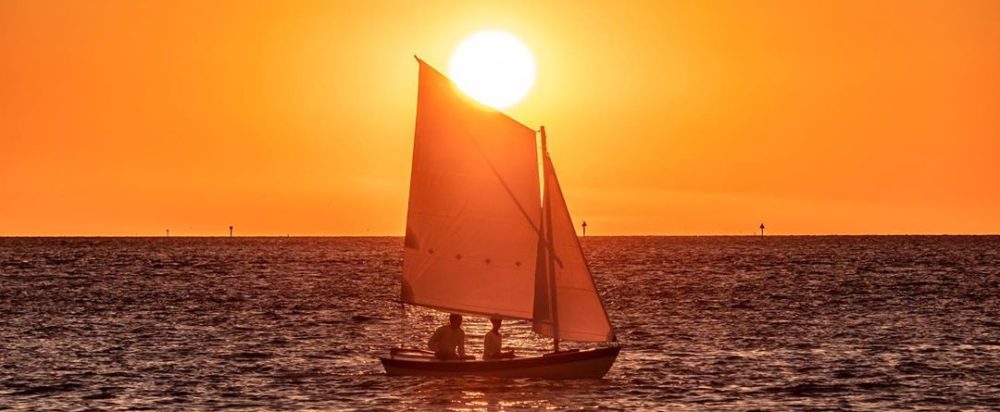
After getting our umbrella set up I started getting the rig together. We were the second boat out to the point and the other couple seemed pretty interested in what I was doing. I’ve only ever seen one or two sail boats out here amongst the horde of power boaters.

I haven’t sailed since last summer’s trip to Kure Beach and it took a bit of time to get the lines on the snotter running right. It’s so easy to get halyards outside of the jib sheets or the reef lines inside the sail’s robands. I put in a preemptive reef since it was blowing a good 10-15 with some gusts.

Eventually I got everything set and took off. Once I got some sea room I hoisted the jib which took a few tries to get tensioned enough. If I wasn’t building a Long Steps I think I’d build a homemade roller furler for it.

I didn’t take any pictures from the boat since I just bought a new phone and didn’t have a case for it. After getting the jib set up I headed downwind along the shore and then tacked my way back upwind to the beach for a 7.4 mile trip in 1.5 hours. It was slow going since everything was against me… the wind, the tide, a short and steep chop, and a reefed sail. The best I could do was a 150º tacking angle. Despite sailing at 5-6 mph on each tack, I only made 1.3 mph toward my destination. I’ve heard it’s often faster to row upwind than it is to sail and I think this might be some good evidence!
After lunch and Henry’s nap a ton of boats showed up. I thought the wind might keep them away, but a friend said more than likely it just takes a while for them to sober up from Friday night and get going.

Henry had a great time sitting in the sternsheets wiggling the tiller as the boat hunted back and forth in the wind.

Finally it was time to pack up and head home. I decided we could sail back to the ramp since it was dead downwind. I dispensed with the jib so there’d be fewer lines in the way and less things to keep track of.


Long Steps Build #4

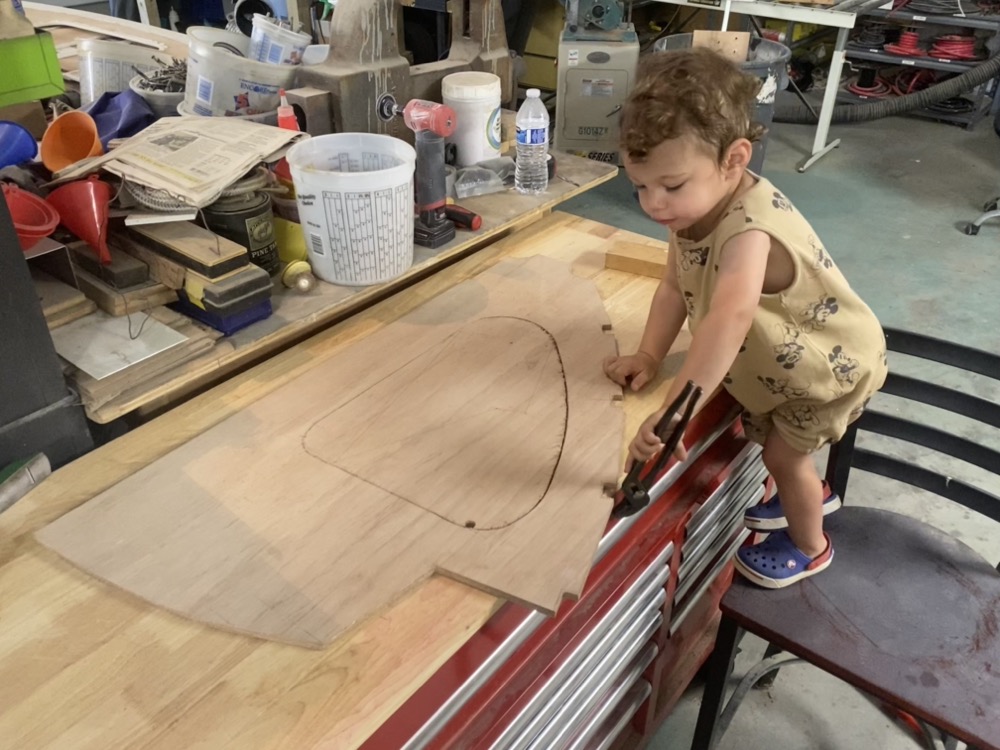
Slowly plugging away at more parts. My lunch hour consists of wolfing down a sandwich in about 10 minutes and then spending the rest of the time drawing or cutting out stuff. Later at home after supper I’ll often epoxy the parts together and work on the CAD drawings for the next day. Usually on the weekend I take my helper along to give my wife an afternoon to herself and he helps poke at the parts with some channel locks. Please excuse the pile-o-crap end of my coworker’s bench… I really need to put a wall up between it and my toolbox.

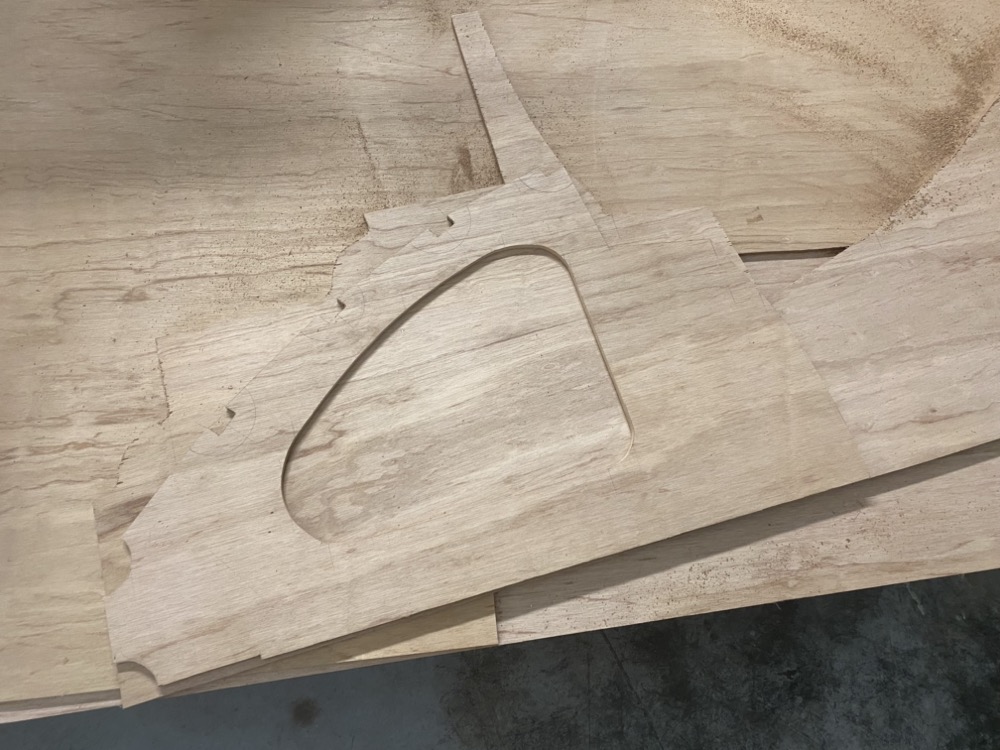
After cutting out the first half really accurately I lay it out on the last remaining bit of my sheet of ply. I’ll trace around it and cut it 1/4″ oversize, then screw the two pieces together and do the final trimming with a router and flush trim bit. I’ve been really pleased with how my CAD drawing and nesting the parts has worked out.

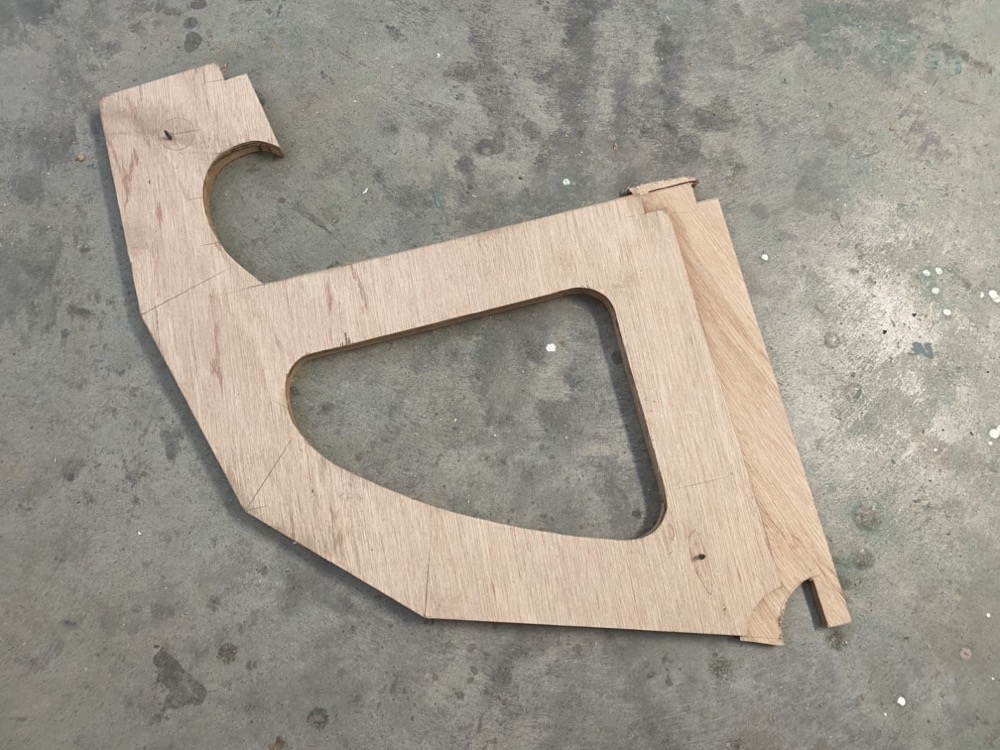
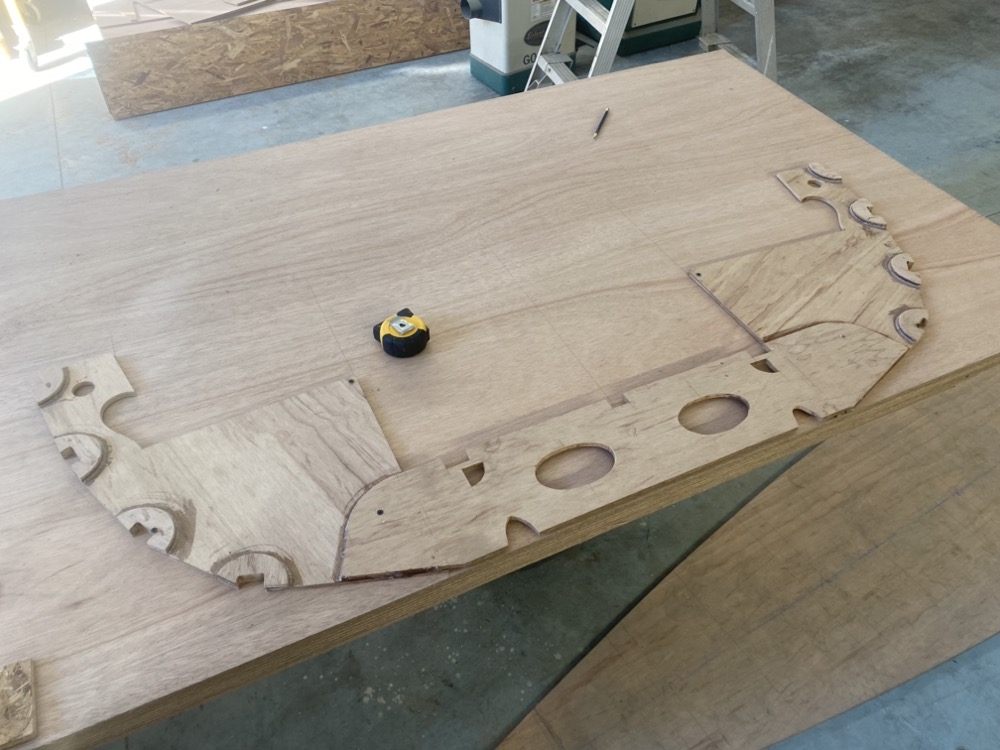
Two of the bulkheads aren’t symmetrical due to the offcenterboard, so I used the smaller side as a router template and drew in the missing part. Easy enough to bandsaw and plane that to size.

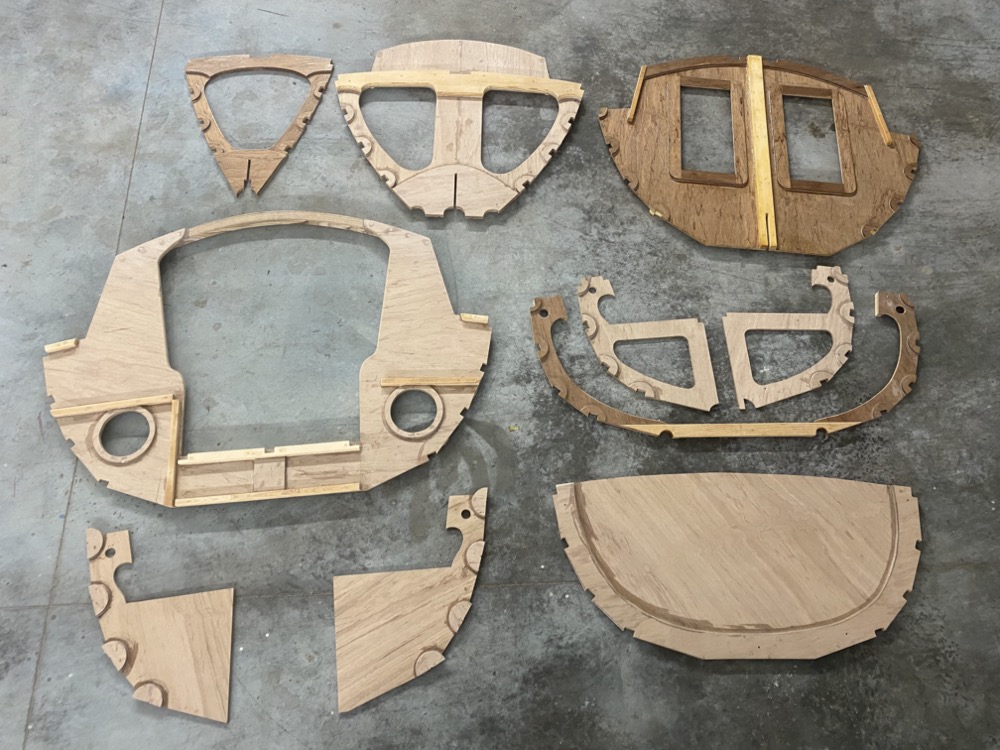
Here’s 8 of the 10 bulkheads in various stages of completion. On one hand it really bugs me that nothing is complete, but then again there’s always something I can use that last little bit of thickened epoxy on. I guess everything will get done at about the same time.

A few of the bulkheads are in two parts with asymmetrical sides so I found it easiest to mark a centerline and screw the parts to a sheet of ply with a few carefully measured reference points.

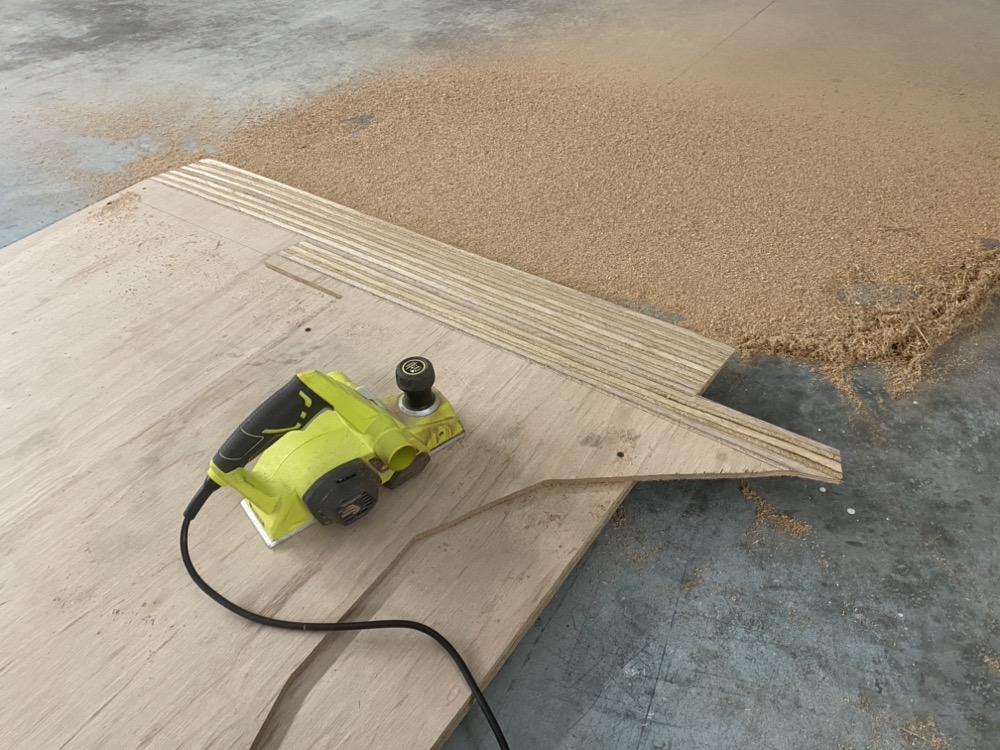
My wife and son are out of town for a week visiting family, so I’ve been staying at work till 9pm and making a lot of headway. I’ve finally got all the 3/8″ parts cut out so it was time to scarf the leftovers for the bottom panel. I’m doing an 8 to 1 scarf, so just draw a line 72mm back from the edge, screw the stack of wood together, and start planing until you end up with a slope from the line down to a feather edge. I gave this router the full Lou treatment and it is a real joy to use. https://youtu.be/_a1HCqK5i-A

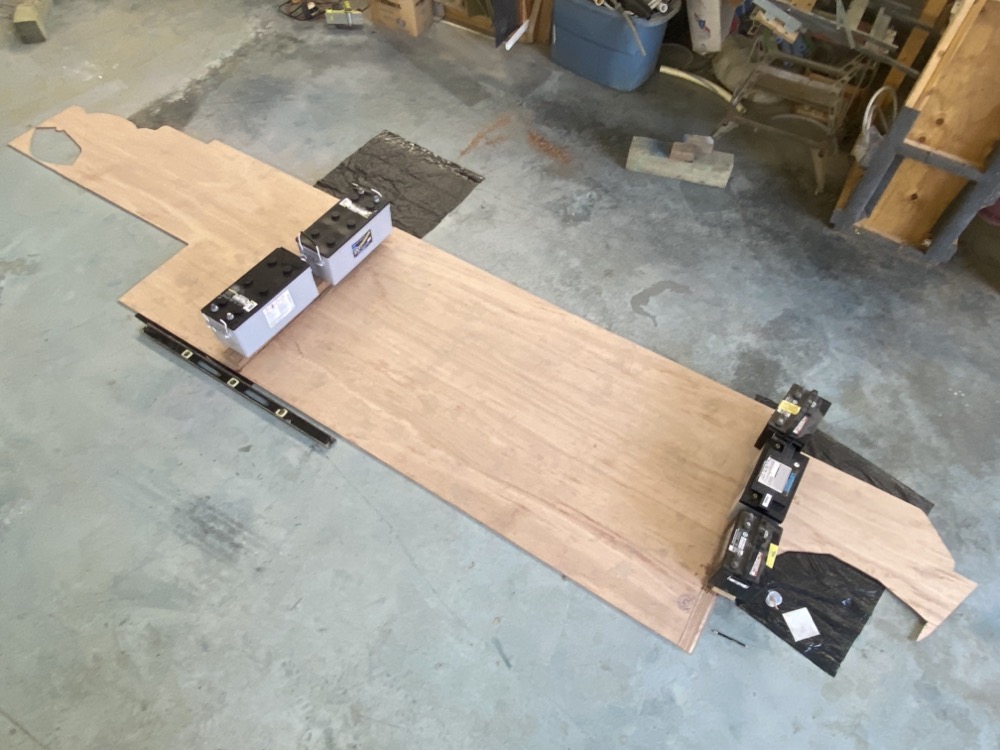
Next I epoxied the sheets together and used some old batteries and 2x4s to concentrate the weight right on the scarf. The bottom panel will run from between the cut out parts on the left, through the full sheet, and halfway into the section on the right. One side of the centerboard case will come out of the bottom along with two layers of rudder.

After the epoxy cured I struck a centerline and laid out the bulkhead locations and points for a batten to define the edge. The scarfs came out pretty good and a light sanding got them pretty flat. I’ll get the centerboard case and two rudder blanks out of the section that’s left.

Next I took the edge down to the line with a little plane.

I set up all the frames on the bottom panel and finally got a look at the size which is both bigger and smaller than I imagined. It’s been a little difficult to get a sense of scale working with just a CAD model and metric dimensions. It’s bigger in the sense that while it’s only half a sheet of plywood longer than my First Mate, there’s way more storage space and I’m really going to enjoy the open center aisle for sleeping. It’s also smaller in that it feels like a totally doable project. When I was cutting out endless bulkheads and looking at my giant stack of plywood I really began wondering if I’d bitten off more than I could chew. I’m still quite a ways away from setting up a strong back since I need to get the bulkheads complete, but it was nice to stand there holding an imaginary tiller and thinking about going on adventures next year.

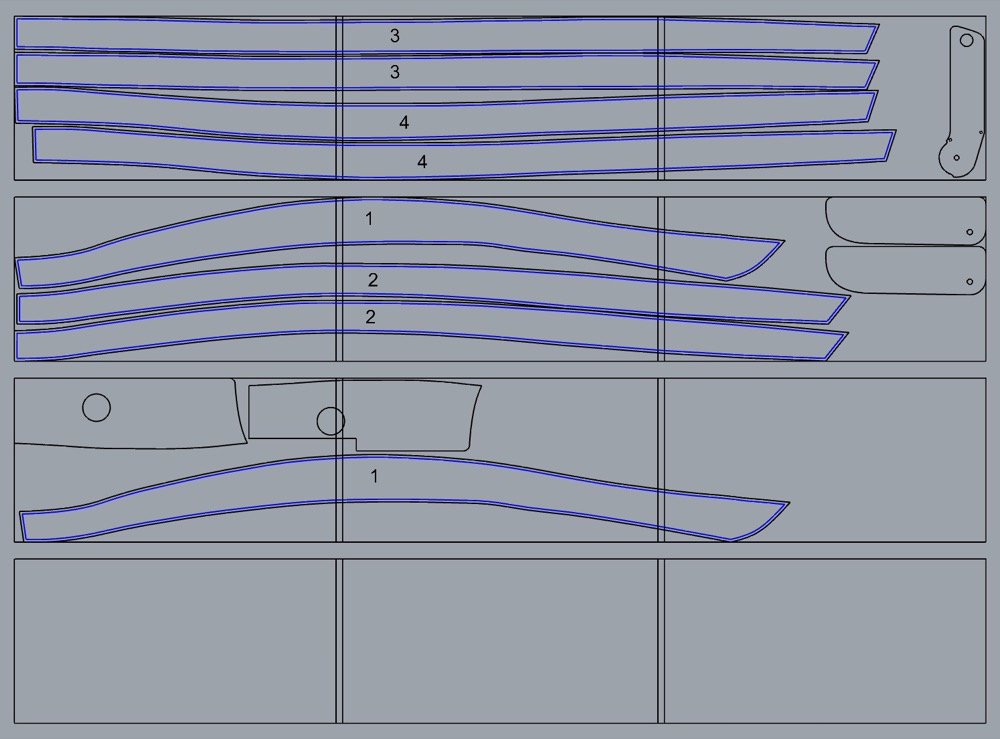
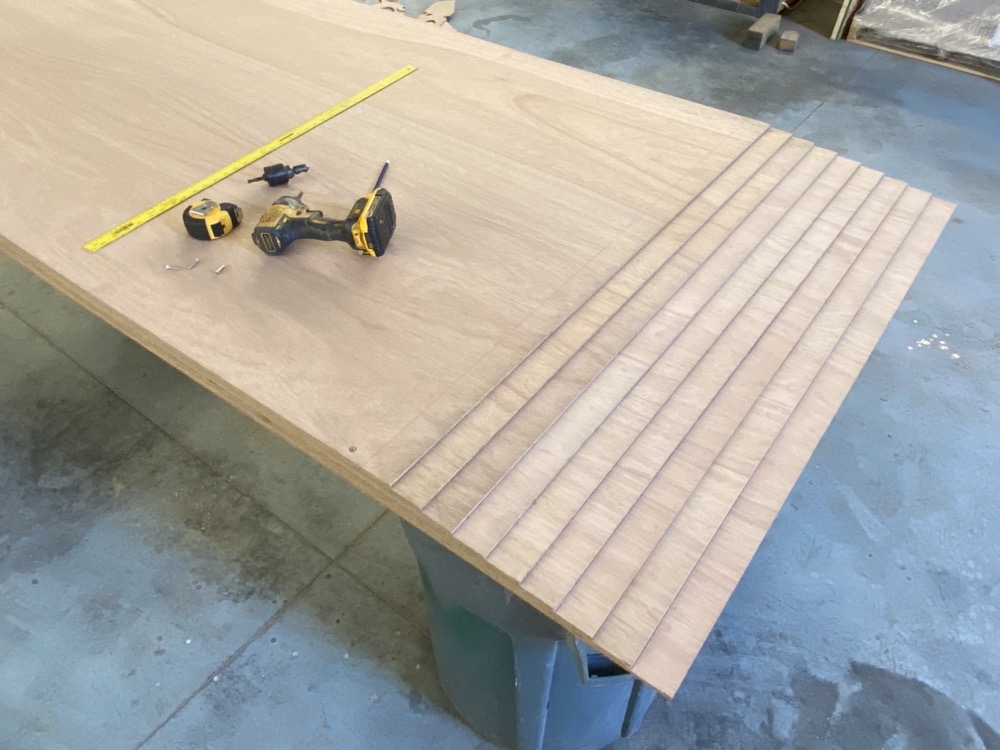
Try as I may there’s just no way to get all eight planks out of six sheets of plywood without doing a bunch of crazy angled scarfs. While I was in the scarfing mode I decided to get nine sheets ready for whenever I get to planking.

I set each sheet back 50mm from the edge and screwed them together in countersunk holes.

It took about 20 minutes to knock the corners off. I still need to do some hand planing I think up at the top, but it’s pretty good.


Long Steps Build #3

A lot of the bulkheads have doublers where the stringers pass through to give you some more meat to screw into. So I cut out a bunch of circles with a 4″ hole saw and split them down the middle with the bandsaw. It’s been good way to use up the odd shaped offcuts. Then I epoxied them on with a single screw through where the notch gets cut out.

Cutting 70 some odd notches sounds tedious to do by hand and a good way for errors to creep in so I made a jig for a router. I first draw a line perpendicular to the lower strake right at the corner, then align my jig and mark out the notch. I score the line and jigsaw out the waste so there’s less to cut with the router and then clamp down the jig.

My little trim router does pretty well with a 1/4″ bit. When I first made the jig it cut a little deep so I glued a strip of paint stirrer along the fence and redid the notch.

Farther aft the plank angles are more extreme and the jig really sticks out a lot.

Lately I’ve been putting some of the bulkheads together. I’ve got numbers 1 and 3 just about done while I’m still working on number 8. I drew a centerline on a sheet of plywood and screwed the ribs to it so I could glue on a piece of hardwood. I’m happy to see that the gunnel ended up being less than 1/16″ off of where the plans say it should be. I also tried routing a groove in the access panel for a surgical tubing seal but my jig slipped and I wasn’t happy with how it turned out. So I filled it with thickened epoxy and I’ll try again after making a better jig.

This is the “complanionway” into the little cuddy cabin. The deck beam is laminated from four pieces of 3/8″ ply and I had about 1/2″ of springback after it was glued up and out of the jig. That’s a little more than I expected, so I’m thinking I’ll laminate on another strip and saw it to shape. The missing cleats on the starboard side of the bulkhead is where the off centerboard trunk will go and you can also see the self draining floor with what will become the end of the water ballast tank.